

@Lorenzo Protocol Risk management used to be the quiet, background machinery of finance—the sort of discipline people only discussed after something had gone wrong. Today it feels more like the main act, especially as digital markets churn faster than most of us can refresh a screen. I’ve spent the last decade watching everything change, feeling both impressed and uneasy along the way. What used to feel steady now shifts fast and with a kind of charged energy. And the people doing well? They’re the ones who treat that uncertainty like something to study, not something to fear. That’s where Lorenzo’s approach, something he calls his “Volatility Strategy Vaults,” caught my attention—not because it promises certainty, but because it tries to create structure in a world that refuses to sit still.
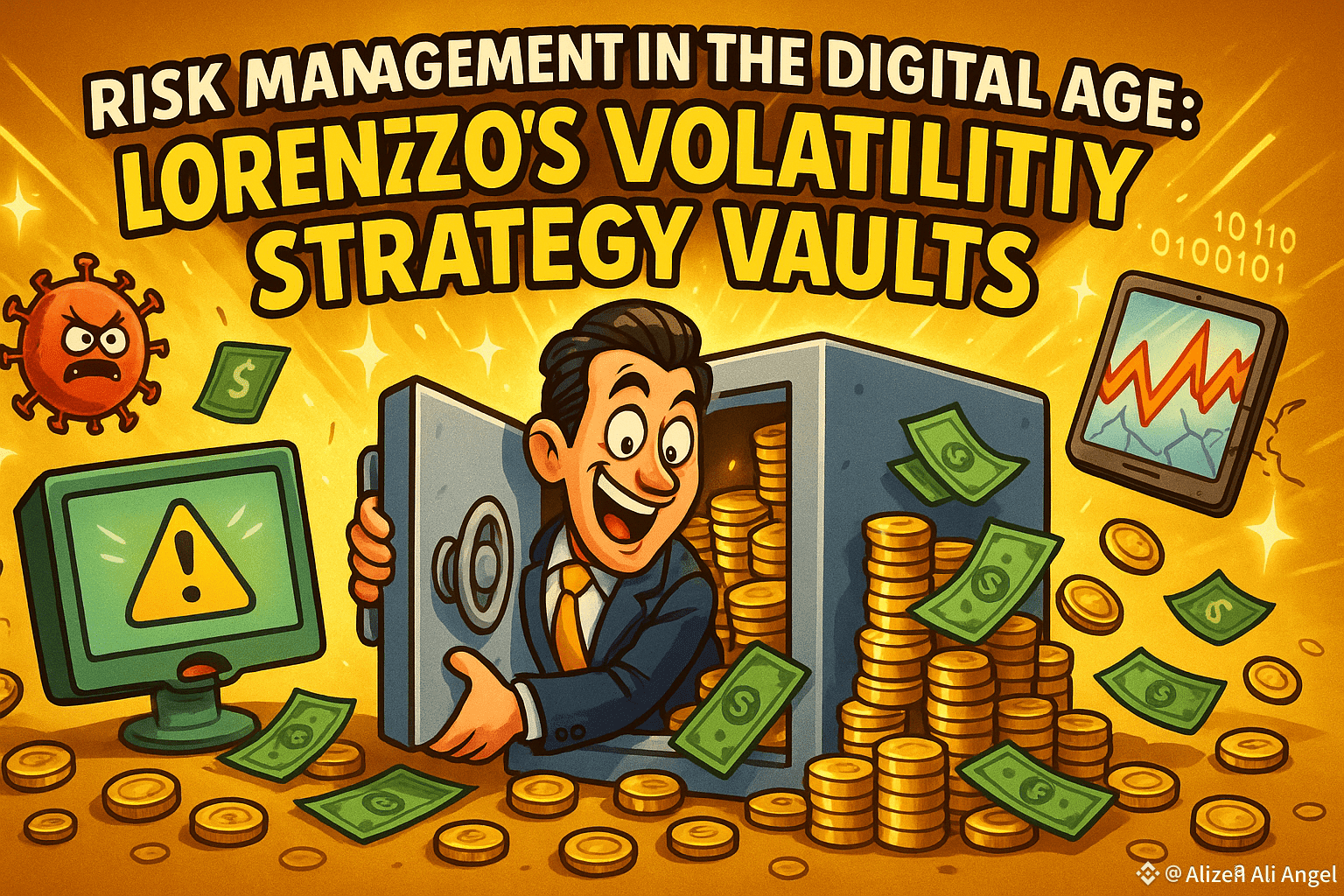
The phrase itself sounds almost antique, like something you’d find in the basement of an old trading firm, tucked beside dusty ledgers and forgotten data tapes. But the idea is very much of this moment. Digital risk has turned fluid; traditional guardrails don’t work the way they used to. Algorithms interact with each other in unpredictable patterns. Retail traders mobilize overnight around a single post. Macroeconomic shocks echo through tokenized assets before policymakers have time to react. In this environment, many investors are looking for strategies that acknowledge the wildness rather than smoothing it over. Lorenzo’s vaults, at least in concept, take volatility as a starting point instead of a variable to be suppressed.
When I first heard him explain it, I found myself thinking back to the early years of crypto markets. Everyone talked about upside—few wanted to talk about the way prices could fall twenty percent before breakfast. I learned the hard way that risk management isn’t something you bolt on after enthusiasm fades; it’s the frame holding the entire structure together. Lorenzo seems to get this. His design isn’t about chasing the perfect entry or timing the perfect exit. It’s about creating a set of responsive, insulated compartments—vaults—that adapt as the environment shifts. Not rigid, not overly engineered. More like tide pools, each tuned to behave differently as the waves move in and out.
Why does this matter right now? Partly because the digital age has brought us an odd contradiction: information moves faster than ever, but our ability to interpret that information hasn’t kept pace. Markets react before we can absorb the meaning of the data. Automated systems amplify tiny signals into major swings. People make decisions inside storms of noise. When you’re operating in that kind of reality, you need strategies built to accept uncertainty rather than fight it. You need frameworks that allow for mistakes, recalibration, and the occasional moment of stepping back to remember why you’re in the market at all.
Progress in this space has been real. Five years ago, most retail investors barely considered risk beyond basic stop losses. Now I see people actively asking about hedging, scenario planning, and cross-asset exposure. Institutions, too, are shifting. They’re not just making bigger models anymore—they’re making models that actually stop and question themselves. It’s a small shift on the surface, but it matters. Risk management is less about trying to predict everything and more about putting yourself in a good place to react as things change. Lorenzo’s vaults fit neatly into this trend because they act like containers for different market moods: one for high turbulence, one for calm stretches, one for transitional phases where direction is uncertain. None of them aim to outsmart the market entirely; they’re more like training grounds for discipline.
I sometimes wonder if we’re reaching a point where volatility itself will be treated as a kind of asset—something you learn to harvest rather than fear. There’s a weird comfort in that idea. Volatility, after all, doesn’t lie; it tells you exactly how much disagreement exists about the future. It shows you where conviction is strong and where it fractures. Learning to manage that energy feels less like building a fortress and more like learning to sail. You adjust your weight. You read the wind. You don’t assume the ocean owes you anything.
That’s probably why strategies like Lorenzo’s resonate with me. They recognize that we’re not just dealing with numbers on screens but with shifting human behavior amplified by machines. The digital age has turned every investor into both a participant and a signal generator. Anything you do can be mirrored, countered, or magnified by an algorithm half a planet away. To navigate that, you need systems that stay grounded even when the environment doesn’t. The way he describes it, vaults are basically a reminder that managing risk isn’t about cutting off options—it’s about creating headspace so you can actually make good decisions.
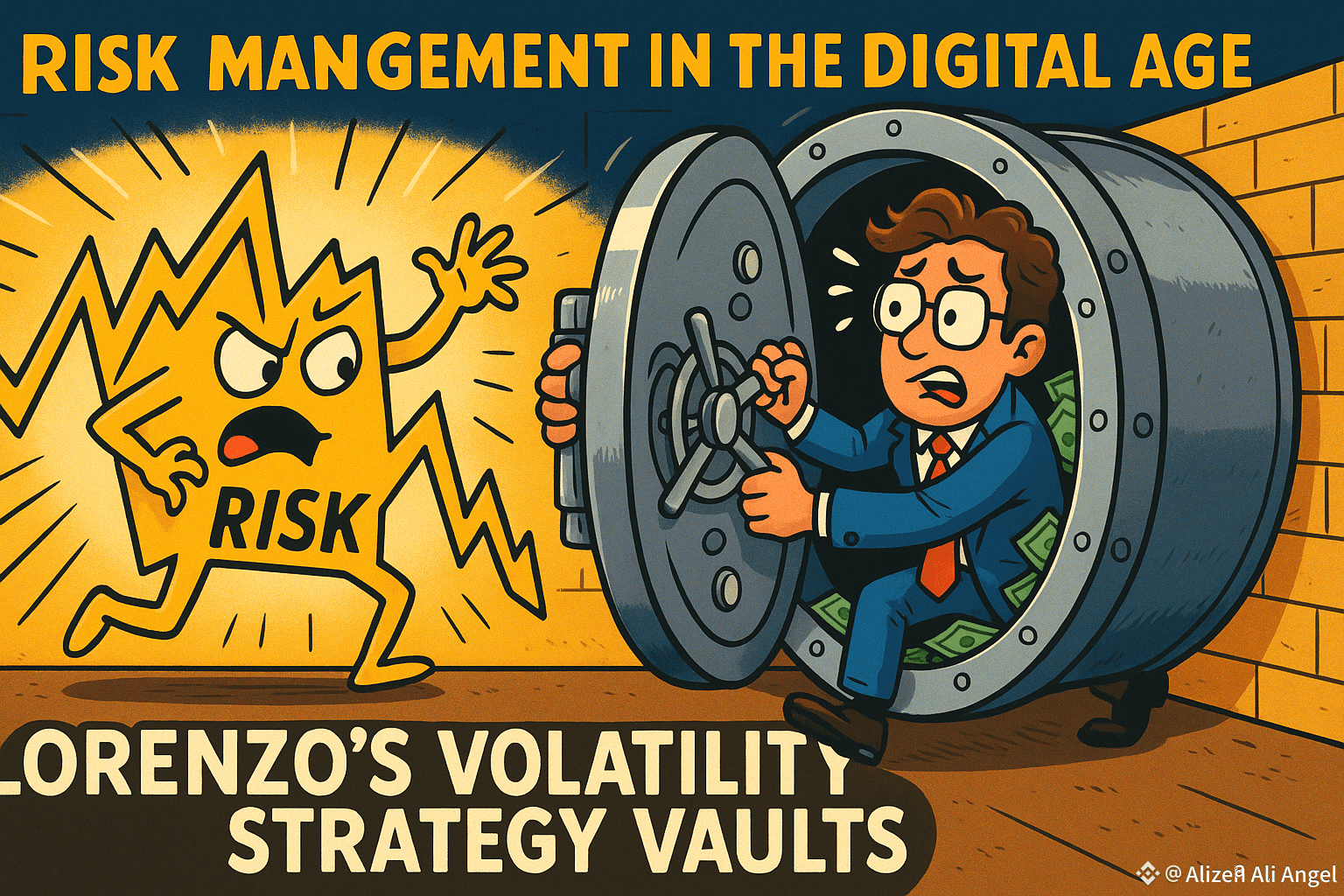
And there’s something kind of nice about a strategy that openly admits it can’t see everything. Right now, a lot of us feel stuck between excitement and instability, and it shows.
Inflation rises, tech advances, political tensions ripple into markets, and everyone is searching for ways to stay anchored. If there’s a lesson I’ve taken from my own years watching markets transform, it’s that humility goes further than bravado. The best risk frameworks aren’t the ones that brag about certainty; they’re the ones that help you stay in the game long enough for your decisions to matter.
What makes this moment especially interesting is that risk management, once seen as the cost of participation, is becoming a source of creativity. People are experimenting with new ways to structure portfolios, track volatility, and design systems that adapt in real time. Strategies like Lorenzo’s don’t rise because they promise perfection; they rise because they offer stability without pretending the world is stable.
And maybe that’s the real shift of the digital age: embracing the fact that volatility isn’t an interruption to the market—it is the market. Everything else is commentary.


