
Examining the Transformation of Player Roles and the Evolution of Engagement Models
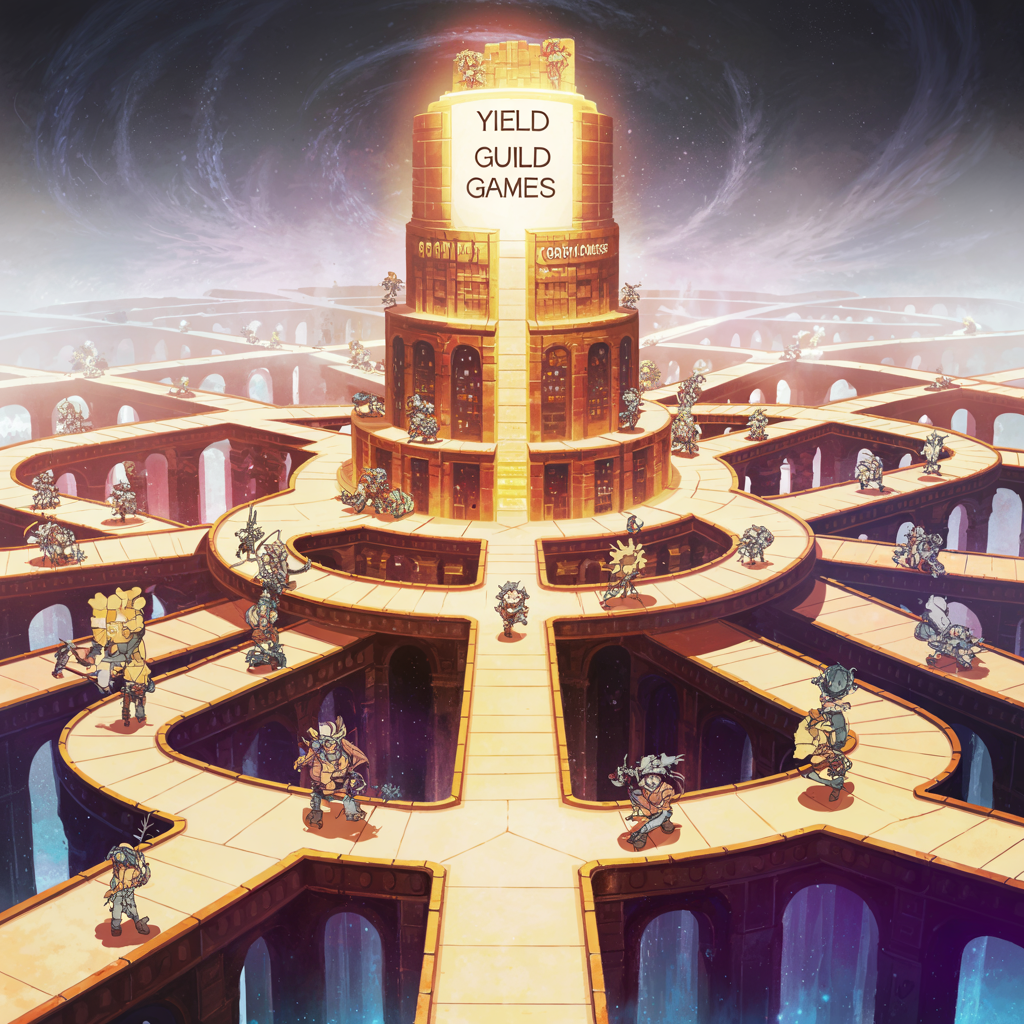
The ecosystem that has developed around Yield Guild Games is now showing a conceptual shift regarding how participation is defined, measured, and managed. This shift relates not only to how players interact with various game titles but also to how the network formulates a structure that allows each community element to contribute meaningfully to strengthening the internal foundation. The architecture of participation that has formed reflects a systematic effort to build an environment that can be measured for quality, monitored for effects, and maintained for continuity.
In that structure, involvement is no longer considered a passive activity. Every action taken by players has implications for the stability and direction of the ecosystem. Participants enter an organized space, where contributions are not merely playing activities, but also representations of competence and commitment to the paths established by the network. This model creates an internal discipline that enhances the quality of interactions over time as players move according to parameters that demand consistency.
If previously the guild narrative revolved around access and opportunities, it has now shifted towards the formation of role structures. In that architecture, participants can occupy different positions based on capabilities and the ability to perform specific tasks within a collaborative space. This structure allows for clearer differentiation of roles, so the success of the network no longer depends on the homogeneity of activities, but on the accuracy of functions performed by various layers of the community.
Cross-game interactions connected to YGG then show how this network manages the distribution of participation through selective and measured processes. Not all games have the same impact on the strategic direction of the network, so the selection of titles and the placement of players follow curation based on organizational needs. This concept creates continuity between internal strategies and industry dynamics, enabling the network to manage external volatility without sacrificing internal stability.
Moreover, the increasingly mature architecture of participation generates new value in the form of a collective understanding of community responsibility. Players begin to operate within a framework that demands professionalism on a community scale, where success is measured not just by individual outcomes, but by the level of alignment of contributions across layers. This relationship strengthens the sense of ownership of the ecosystem, making the network more adaptive as its social foundation becomes stronger.
Role mapping and contribution management like this provide space for deeper integration between players, partners, and game developers. The previously pragmatic collaboration patterns are now transformed into a structure that can channel community energy in a directed manner. Through alignment of player functions with the needs of the network, a more stable and sustainable flow of value is created, allowing YGG to remain relevant even as the industry experiences rapid changes in patterns.
Conclusion
The transformation of the participation architecture in Yield Guild Games demonstrates how this network is moving towards a more structured and resilient model. By placing players within a measurable role structure, systematically managing contributions, and maintaining the continuity of relationships between the community and the broader ecosystem, YGG has successfully developed a foundation that allows for both responsive and stable growth. This approach reinforces its position as a modern guild network capable of enduring long-term dynamics.


