
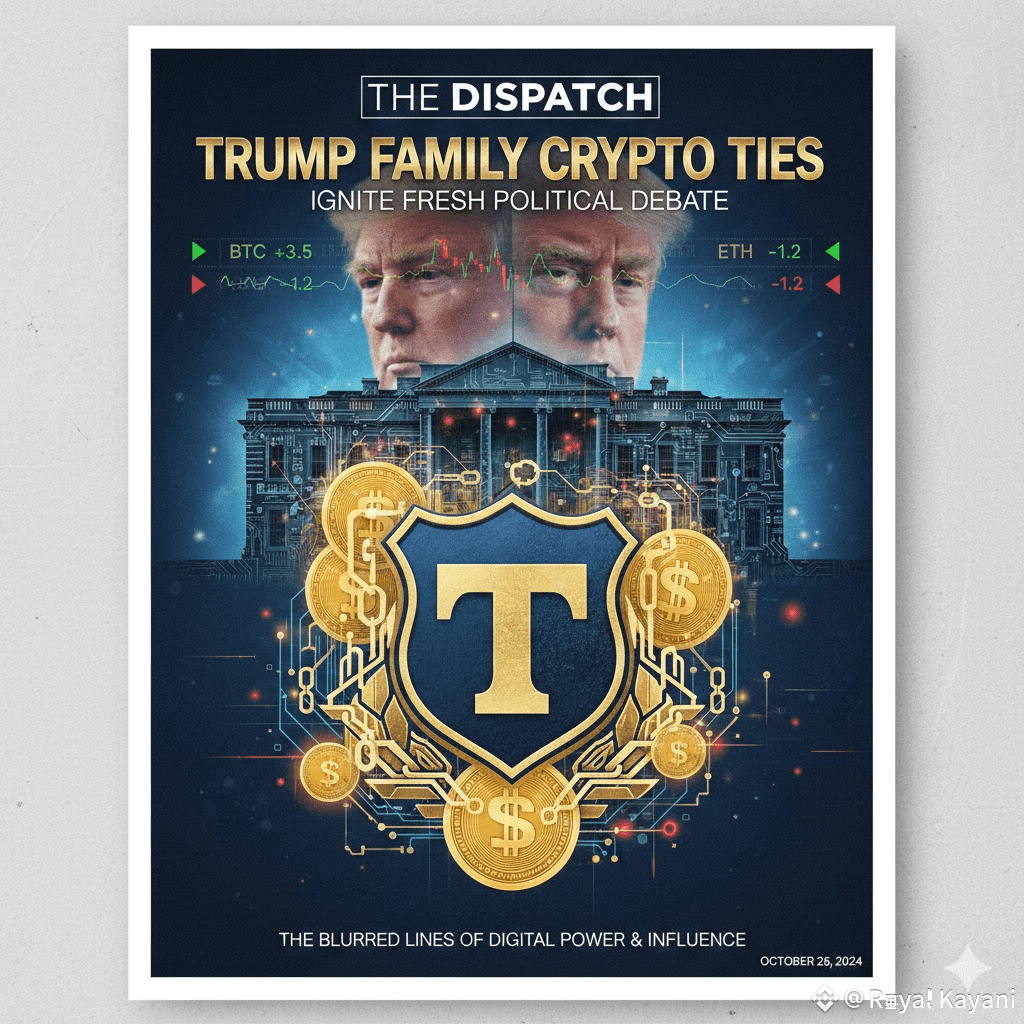
The Trump family’s growing association with cryptocurrency ventures is reigniting political debate in the United States, highlighting the increasingly blurred lines between digital assets, influence, and power. As crypto $LINK continues to move from the financial fringes into the mainstream, any connection between high-profile political families and blockchain-based businesses draws instant scrutiny.
Recent reports and public disclosures have fueled discussion over whether these crypto-linked efforts represent genuine innovation and financial interest—or strategic positioning ahead of potential regulatory and electoral shifts. Supporters argue that involvement in crypto reflects market reality, innovation, and support for financial freedom. Critics, however, warn of potential conflicts of interest, regulatory favoritism, and the risks of politicizing an already volatile sector.
The debate is unfolding at a pivotal time. U.S. regulators are tightening oversight of digital assets, while voters are becoming more aware of crypto’s role in economic policy, campaign funding, and national competitiveness. Any perceived alignment between influential political families and crypto businesses amplifies fears that regulation could be shaped by private interests rather than public good.
For the broader crypto industry, the moment is double-edged. Political attention brings visibility and legitimacy, but it also increases the likelihood of stricter rules and sharper public scrutiny. Whether these ties ultimately help normalize crypto adoption or trigger regulatory backlash remains uncertain.
What is clear is that cryptocurrency is no longer separate from politics. As digital assets weave themselves into power structures, debates over ethics, transparency, and accountability are set to intensify—making crypto not just a financial issue, but a defining political one as well.
#BitcoinPolitics #Web3Politics

