

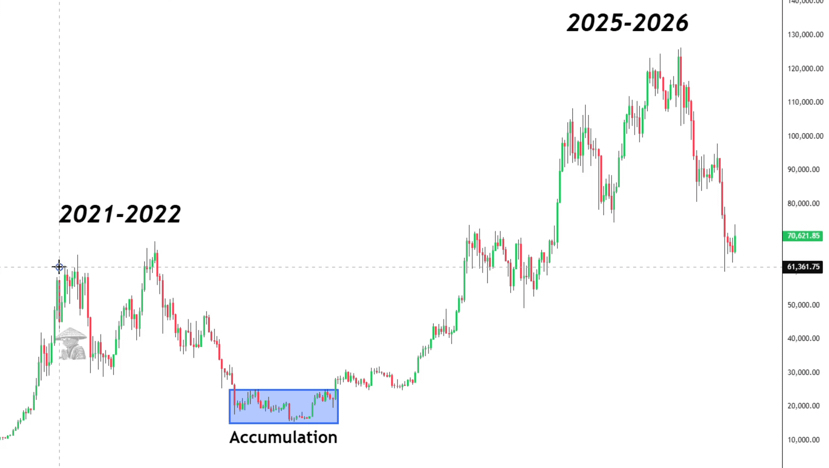
The reaction at that level was fairly decisive. Instead of accepting higher prices, the market rejected the move and began rotating lower, bringing price back toward the 69,000–70,000 USD zone. This range is particularly important because it previously marked the upper boundary of the earlier consolidation structure.
From a structural perspective, this area now acts as a key test. When a market breaks out of a range, it often revisits the breakout zone to confirm whether the level can transition from resistance into support. If Bitcoin manages to stabilize around the 69–70K region and hold above it, the recent breakout would still remain structurally valid. In that case, the rejection at 73K could simply represent a temporary liquidity sweep before continuation.
Liquidity dynamics also reinforce why this area matters. Traders who entered on the breakout often place defensive stops below the previous resistance zone. If price remains above the level, those positions stay intact and confidence gradually rebuilds. But if the market begins to accept prices below that range, those stops can become the fuel for a deeper rotation.
That is where the next structural zone becomes relevant. A clear loss of the 69–70K region could pull price back toward the previous trading range, where the 60,000 USD area stands out as the next meaningful support pocket.
Psychologically, failed breakout attempts tend to create hesitation across the market. Buyers become cautious after seeing resistance hold, while sellers start testing whether momentum has shifted. This tension often produces increased volatility before the next directional move becomes clearer.
For now, the focus stays on how the market behaves around the 69–70K area. Whether this level holds as support or breaks down will likely determine whether Bitcoin continues building upward momentum or returns to a broader consolidation phase.
