
I was going through Midnight’s block reward section, nothing too deep at first. Just reading, trying to get a sense of how they’re thinking about incentives and supply.
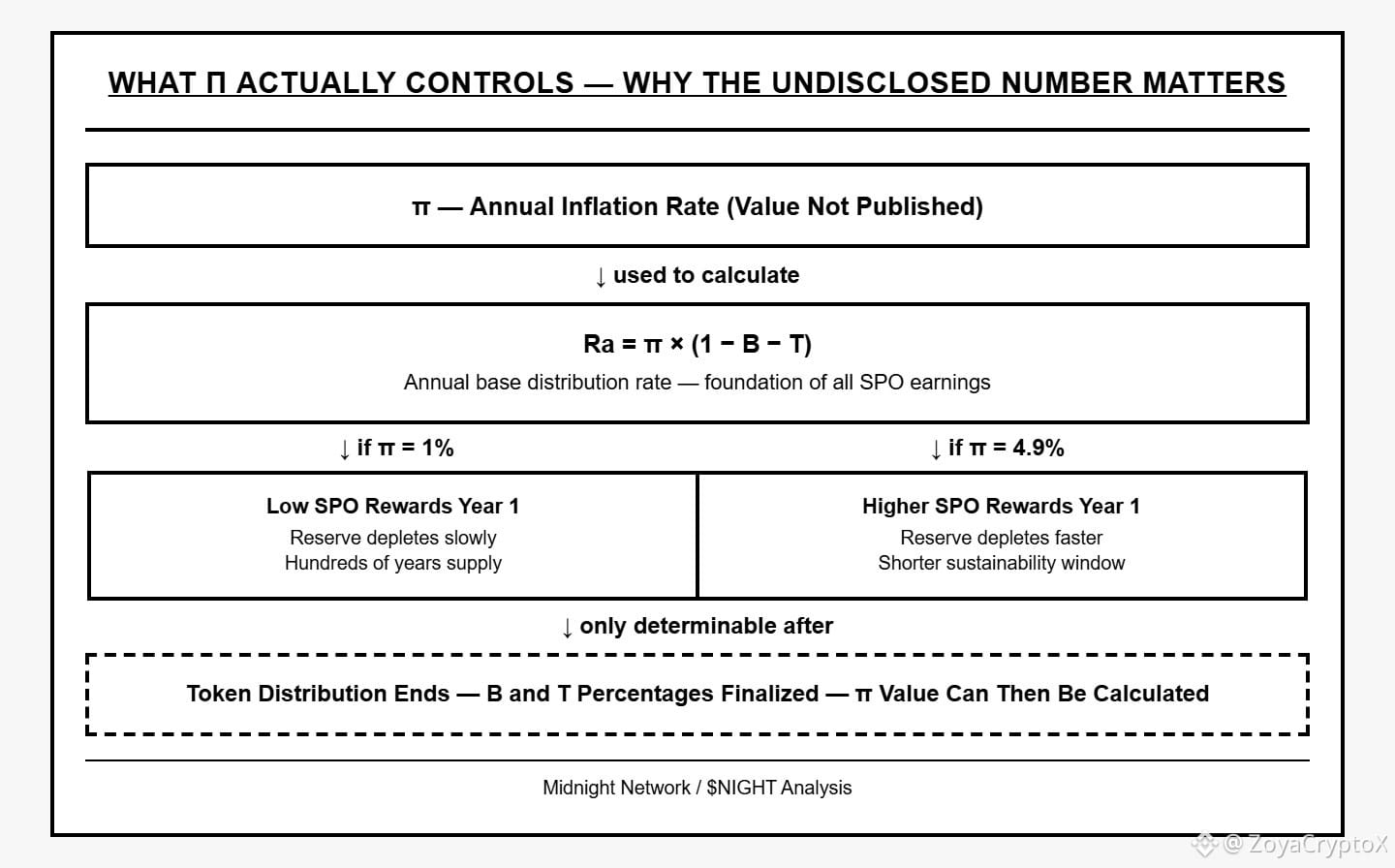
And then I hit that line.
They say their inflation rate (π) is lower than Ethereum’s ~5% and Cardano’s ~7%.
Cool. Sounds responsible. Almost the kind of thing you want to see.
But then I paused and thought—okay… so what is π?
I went back. Read it again.It’s not there.
Not hidden. Not explained later. Just… not given.
And that kind of changes the whole feeling of the claim.
Lower Than Doesn’t Mean Much Without a Number
Because think about it lower than 5%” can mean a lot of things.
It could be 1%, which would actually be pretty conservative.
Or it could be 4.9%, which technically fits the statement, but doesn’t really feel that different.
And those two scenarios? Completely different outcomes over time.
So now instead of feeling reassured, you’re kind of left guessing.
What They Mean by Inflation Is Also Different
Another thing I noticed this isn’t inflation in the usual sense.
They’re not just printing new tokens endlessly. They’re releasing tokens from a Reserve into circulation through block rewards.
So it’s more about how fast supply unlocks than total supply growing out of nowhere.
That’s actually a thoughtful design.
But here’s the catchif you don’t know π, you don’t really know how fast that unlocking happens.
So again, you’re back to estimating something that should probably be clear.
The Comparison Feels a Bit Too Clean
Then there’s the comparison itself.
Putting Midnight next to Ethereum and Cardano sounds nice, but those are already established networks. Big ecosystems. Real usage. Fee markets.
Midnight is still early.
So comparing them purely on inflation percentages feels a bit like comparing a startup to a fully running company just based on growth rate.
It’s not wrong but it doesn’t tell the whole story either.
Why This Actually Matters
The value of π isn’t just some technical detail sitting in the background.
It directly affects:
. how fast rewards come out
.how long the Reserve lasts
.how attractive it is for validators early on
Even a small difference in that number can change the entire experience over a few years.
So when that number isn’t there, you’re not just missing a detail—you’re missing the core of the system.
So What’s the Real Take?
Honestly, this doesn’t feel like something shady.
It feels more like the design isn’t fully finalized yet… but the comparison is already being used to make it look strong.
Which is fair in one way—but also a bit uncomfortable in another.
Because you’re being asked to trust a direction, not a defined number.
Final Thought
Lower inflation sounds great on paper.
But without the actual value behind it, it’s kind of just a promise floating in the air.
And in crypto, numbers
are everything.
Until π is actually shown, you’re not really evaluating the system you’re imagining it.
@MidnightNetwork $NIGHT #night #NIGHT
