
The first time I tried to prove something about myself online without handing over everything, it felt oddly impossible. You either share the document or you don’t. There’s no middle ground. That’s the quiet tension @MidnightNetwork is trying to resolve, and the more I look at it, the more it feels like this isn’t just a technical tweak. It’s a shift in how trust itself gets built.
Right now, most compliance systems work like floodlights. If a platform needs to verify your age, your location, or your financial history, you end up exposing far more than necessary. That’s not a bug. It’s how the system was designed. Over 70 percent of data breaches in the past two years have involved identity data, which tells you something important. The problem isn’t just bad actors. It’s that we keep centralizing information that doesn’t need to be centralized in the first place.
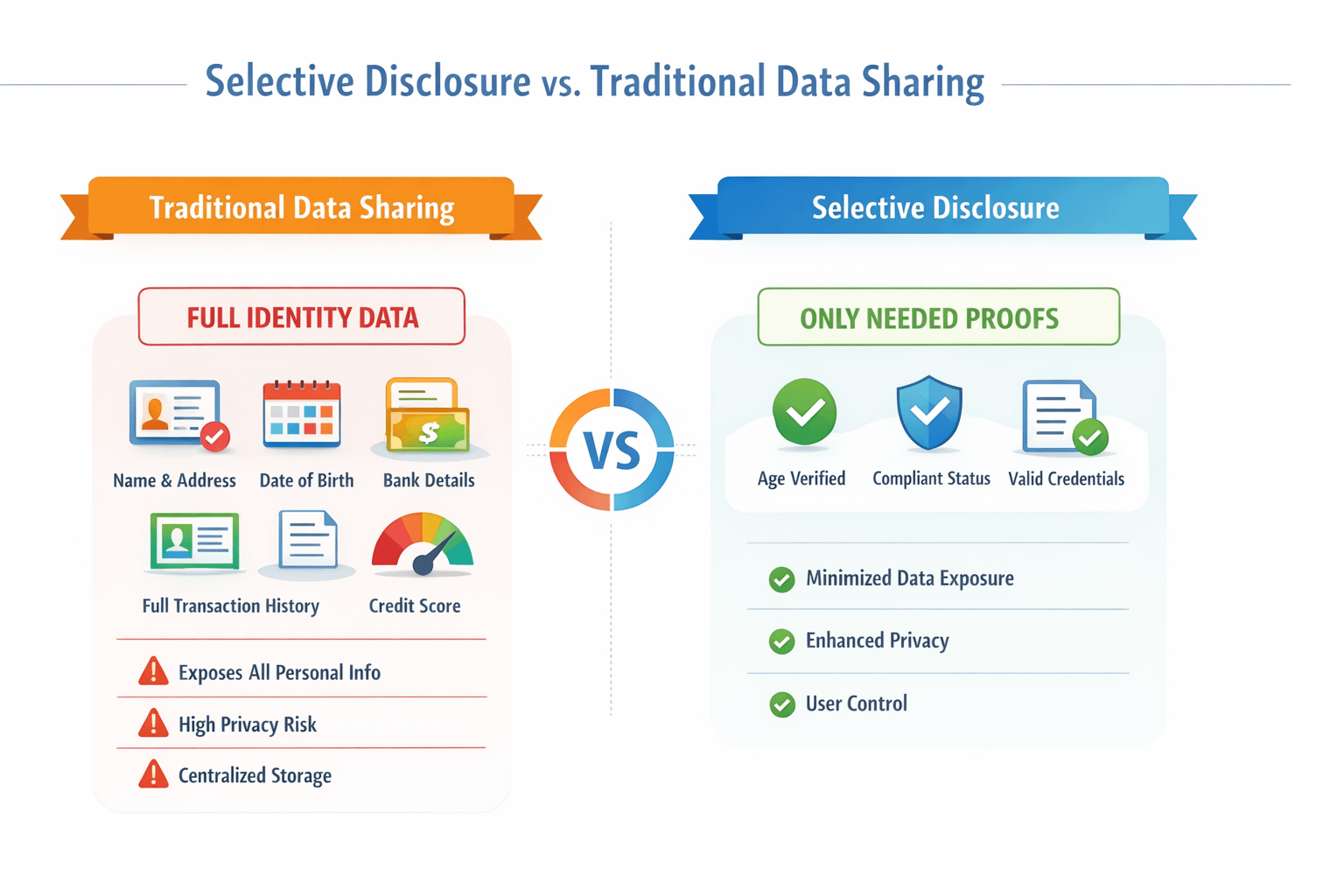
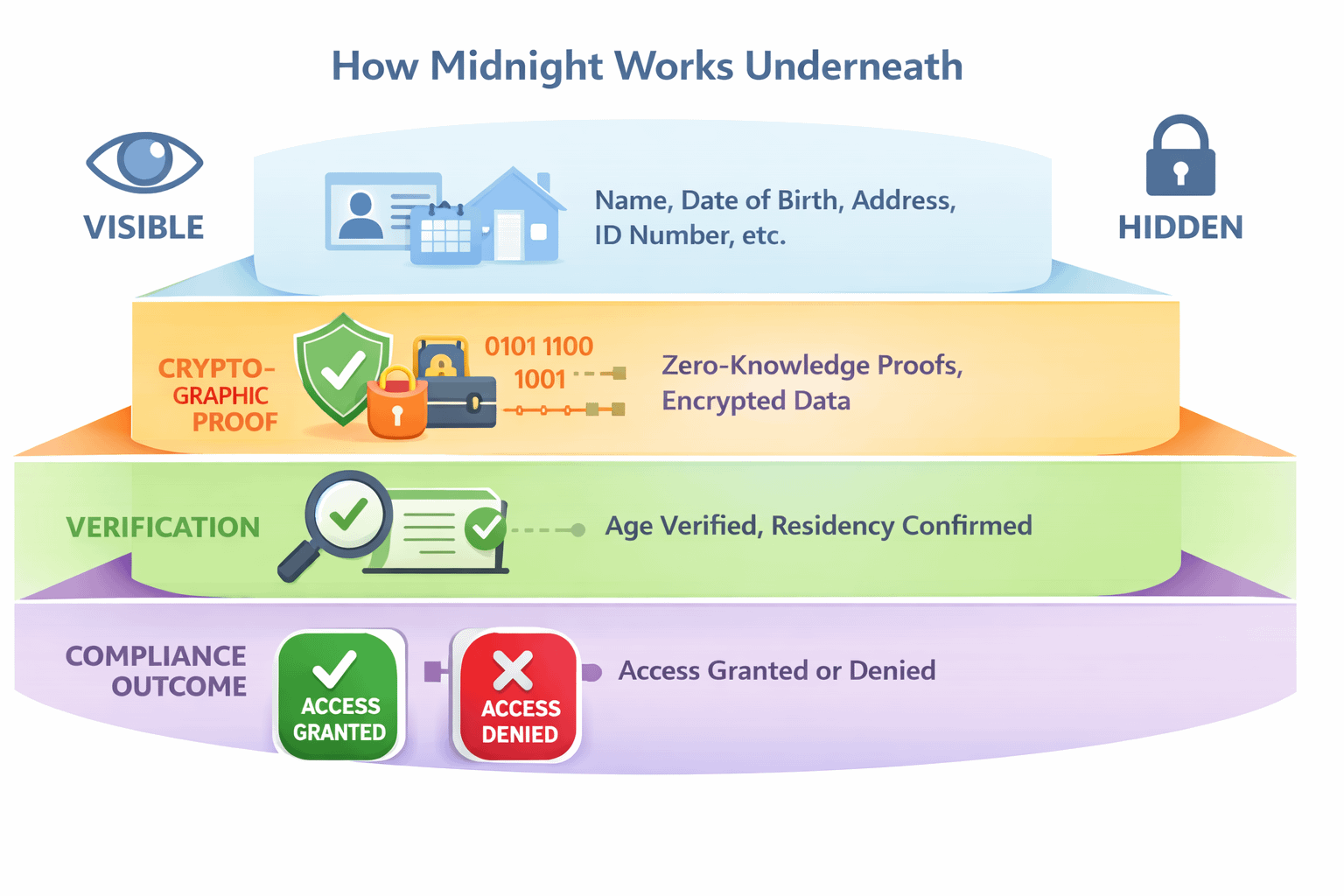
Midnight approaches this differently by leaning into selective disclosure. On the surface, it sounds simple. Prove what matters, hide what doesn’t. But underneath, it’s doing something more subtle. Instead of sharing raw data, you’re sharing proofs. That could mean confirming you’re over 18 without revealing your birthdate, or verifying you meet compliance rules without exposing your entire transaction history.
Understanding that helps explain why this matters now. Regulatory pressure is tightening across crypto markets. In 2024 alone, over 120 jurisdictions introduced or updated digital asset compliance frameworks. That number matters because it shows the direction of travel. Platforms can’t ignore compliance anymore, but users are increasingly unwilling to sacrifice privacy to meet those demands.
That tension creates a bottleneck. If you force full disclosure, users pull back. If you allow full privacy, regulators push back. Midnight sits in that narrow space in between, trying to satisfy both sides without fully pleasing either.
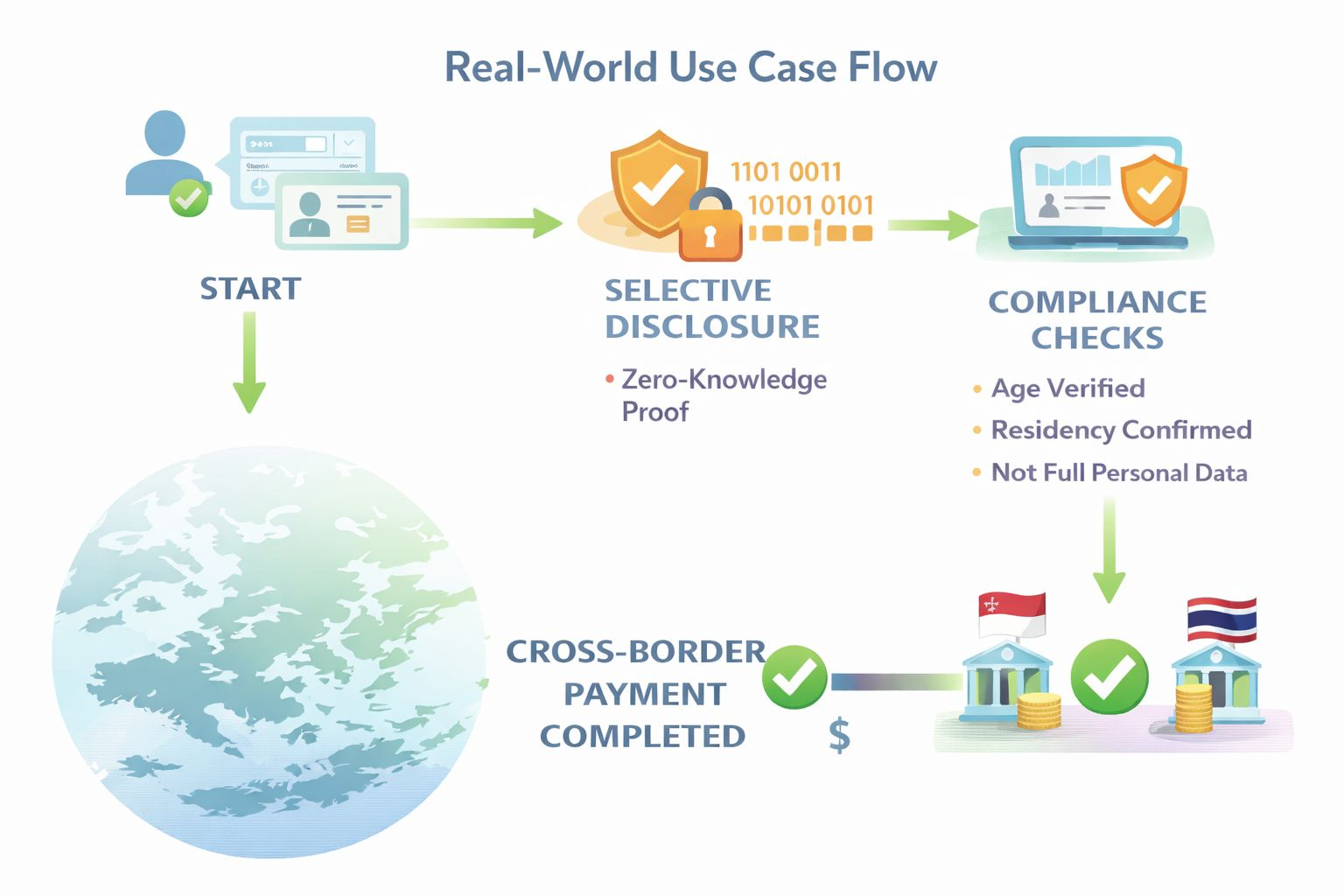
Take a real-world case like cross-border payments. A company needs to prove it’s not interacting with sanctioned entities. Today, that often means exposing detailed transaction flows to intermediaries. With selective disclosure, the system can confirm compliance conditions without revealing the full dataset. What’s happening on the surface is verification. Underneath, it’s cryptographic proofs doing the heavy lifting. What that enables is a kind of minimal trust exchange, where only the necessary truth is revealed.
Meanwhile, that same mechanism can apply to DeFi. Right now, institutional capital still hesitates to enter decentralized systems at scale. One estimate puts institutional participation in DeFi at under 10 percent of total volume, which is low considering the trillions managed by those players. The missing piece has always been compliance visibility. Midnight’s model gives them a way to meet regulatory expectations without abandoning the privacy that makes DeFi appealing in the first place.
But this isn’t risk-free. Selective disclosure introduces complexity, and complexity tends to create new failure points. If the underlying proofs are flawed or poorly implemented, the system can give a false sense of security. There’s also a social layer. Regulators may not fully trust cryptographic assurances yet, especially when enforcement depends on interpretability, not just mathematical correctness.
What struck me is that Midnight isn’t trying to eliminate trust. It’s trying to reshape where trust sits. Instead of trusting institutions to hold and protect data, you’re trusting the structure of the system itself. That’s a quieter kind of trust, less visible but more foundational.
If this holds, it lines up with a broader pattern across the market. We’re moving away from transparency as exposure and toward transparency as proof. You don’t need to see everything to verify something. That idea is starting to show up in zero-knowledge systems, in identity layers, even in how exchanges are experimenting with proof-of-reserves.
Early signs suggest users respond well to this. Privacy-preserving tools have seen steady growth, with some protocols reporting 2 to 3 times increases in usage over the past year. But adoption will depend on whether this can stay usable. If proving something becomes as complicated as sharing everything, people will default back to the old model.
What this really reveals is that the future of compliance might not be about collecting more data. It might be about needing less of it.
And if that’s true, then the systems that win won’t be the ones that know the most about you. They’ll be the ones that can prove just enough.
