

Key Highlights
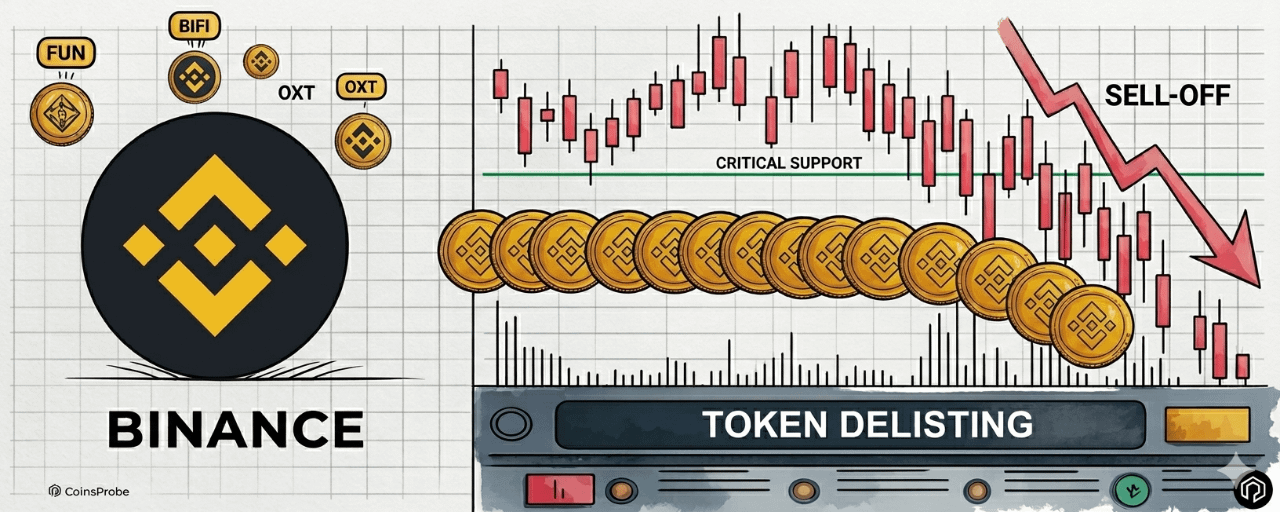
Binance will delist 6 tokens including FUNToken, Beefy Finance, and Orchid on April 23, 2026.
FUNToken (FUN) led the losses, plunging over 23%, followed by double-digit drops across most affected tokens.
The delisting follows Binance’s routine review of liquidity, volume, and project activity.
Trading will stop on April 23, while withdrawals remain open for a limited time after delisting.
Binance has officially announced the removal of six cryptocurrencies from its spot trading platform: Beefy (BIFI), FIO Protocol (FIO), FUNToken (FUN), Measurable Data Token (MDT), Orchid (OXT), and Wanchain (WAN). The delisting will take effect on April 23, 2026.
The announcement was shared today on Binance’s official site, directing users to the full support page for details.
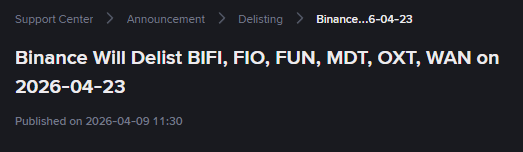 Binance De-Listing Announcement/Source: Binance
Immediate Market Reaction
Following the news, the affected tokens experienced sharp declines in the last hour. Here is the current snapshot of their performance:
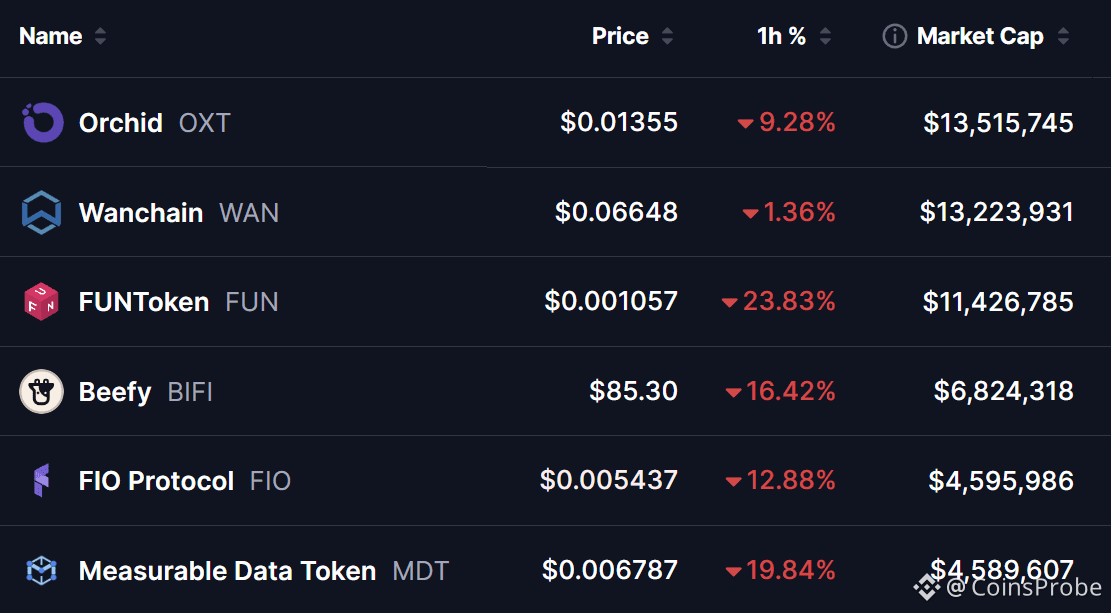 Binance De-Listing Tokens Prices/Source: Coinmarketcap
As shown in the table above:
FUNToken (FUN) dropped the hardest with a -23.83% plunge in the last hour.
Measurable Data Token (MDT) fell -19.84%.
Beefy (BIFI) declined -16.42%.
FIO Protocol (FIO) was down -12.88%.
Orchid (OXT) lost -9.28%.
Wanchain (WAN) saw a milder drop of -1.36%.
Market caps for these tokens currently range from approximately $4.5 million (FIO and MDT) to $13.5 million (OXT).
What Traders Need to Know
According to Binance’s delisting policy outlined in the official announcement:
Spot Trading Suspension: All trading pairs for these six tokens will be removed on April 23, 2026, at approximately 03:00 UTC (check exact timing in the announcement).
Deposits: Will be disabled shortly before or on the delisting date.
Withdrawals: Will remain open for a limited time after delisting, giving users a window to transfer assets to external wallets or other supported exchanges.
Other Services: Any leveraged, futures, or margin positions related to these tokens will be handled according to Binance’s standard procedures.
Binance regularly reviews listed assets based on criteria such as trading volume, liquidity, project commitment, network stability, and regulatory compliance. Tokens that no longer meet these standards are periodically delisted to maintain the overall quality of the platform.
Quick Profile of the Delisted Tokens
Each of the affected tokens represents a different segment of the crypto ecosystem:
BIFI – DeFi yield optimization platform offering automated vault strategies
FIO – Focused on improving blockchain usability with human-readable addresses
FUN – Used in gaming and online casino ecosystems
MDT – Aims to enable secure data sharing and monetization
OXT – Powers a decentralized VPN and privacy-focused network
WAN – Designed for cross-chain interoperability and asset transfers
Recommendations for Holders
Users holding any of these tokens on Binance are advised to:
Act before April 23, 2026 – Sell on Binance or transfer to another exchange/wallet that still supports the asset.
Monitor withdrawal status – Ensure you withdraw in time before services are restricted.
DYOR – Research if these projects continue to have active communities or utility on other platforms.
Delistings from major exchanges like Binance often lead to reduced liquidity and further price pressure. Holders should manage their positions carefully.
This delisting reflects Binance’s ongoing efforts to curate a robust and liquid trading environment. Stay updated as the April 23 deadline approaches.
Disclaimer: The views and analysis presented in this article are for informational purposes only and reflect the author’s perspective, not financial advice. Technical patterns and indicators discussed are subject to market volatility and may or may not yield the anticipated results. Investors are advised to exercise caution, conduct independent research, and make decisions aligned with their individual risk tolerance.