
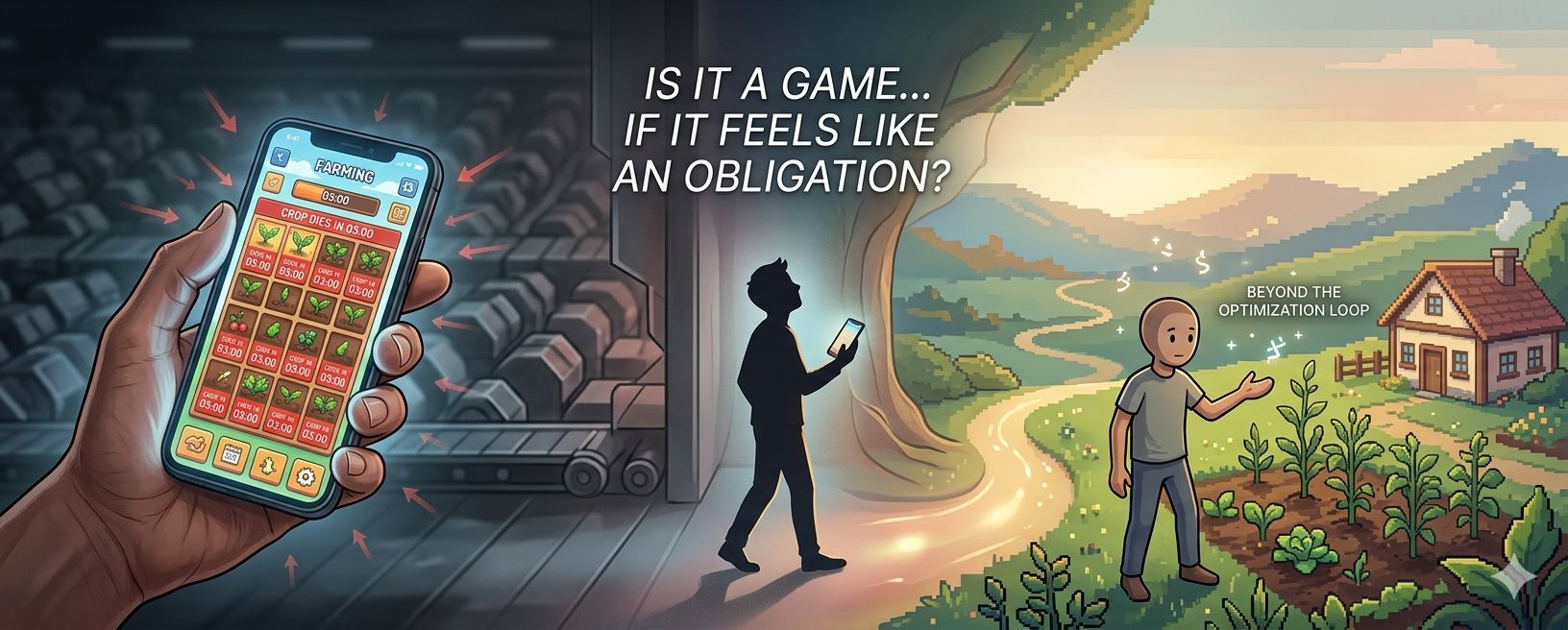
I remember a small habit I picked up during a particularly slow month checking my phone every few hours to complete tiny daily tasks in a game. At first, it felt harmless. Even productive, in a strange way. Water a few crops, collect some rewards, maybe trade a little. It gave structure to otherwise idle moments.
But after a while, something shifted.
I wasn’t playing because I wanted to. I was returning because I felt like I had to.
Missing a cycle meant losing efficiency. Losing efficiency meant falling behind. And falling behind, even in something that was supposed to be casual, carried a quiet kind of pressure. The game hadn’t changed my relationship with it had.
That’s when the question started to form, though I didn’t fully articulate it at the time:
If something feels like a routine obligation, is it still a game?
This is the strange tension that many play-to-earn systems created. On the surface, they promised alignment your time has value, your effort is rewarded. But underneath, they often blurred the boundary between play and labor.
The problem wasn’t just the rewards. It was how those rewards shaped behavior.
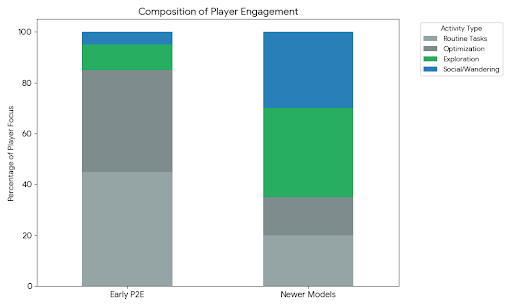
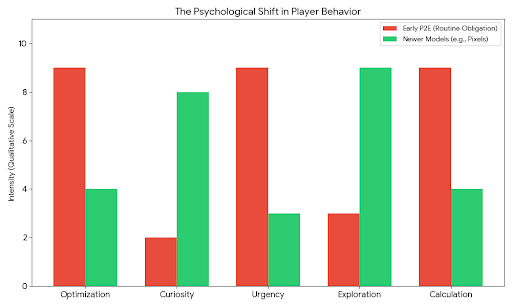
When every action is tied to output, players stop exploring and start optimizing. Curiosity gets replaced by calculation. Instead of asking “what do I feel like doing? the question quietly becomes what’s the most efficient move right now?”
And over time, that shift drains something subtle but essential.
The experience becomes thinner.
In games like Pixels, powered by networks such as Ronin Network, there’s an interesting attempt to move away from that rigid structure not by removing value, but by softening how it’s perceived.
At first glance, it still looks familiar: farming, exploration, resource management. Systems layered on systems. But the feeling is slightly different.
Progress doesn’t always demand urgency. Interaction doesn’t always feel transactional.
You can spend time wandering, experimenting, even being inefficient and somehow it doesn’t feel like you’ve “lost.”
That difference is subtle, but it matters.
What seems to be changing here isn’t just mechanics, but perspective.
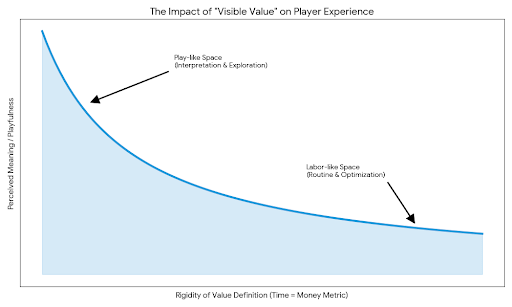
Earlier models assumed that value must be extracted that time spent must always translate into measurable gain. But that assumption might have been the flaw all along.
Because when value is too clearly defined, it becomes rigid.
And when it becomes rigid, people start bending their behavior to fit it.
That’s where things quietly break.
What’s interesting about newer approaches whether in Pixels or similar “trading target gaming” concepts is that they don’t try to aggressively prove their worth. They don’t constantly remind you that your time equals money.
Instead, they leave more room for interpretation.
Time can be valuable, but it doesn’t have to feel priced every second.
Engagement can be meaningful, without being optimized.
And maybe that’s why it feels different — not because it’s more rewarding, but because it’s less demanding.
Looking back, I don’t think play-to-earn failed simply because of unsustainable economies or poor token design.
Those were symptoms.
The deeper issue was how value was defined too narrowly, too visibly, too constantly.
When everything is measurable, nothing feels meaningful for long.
So maybe the real shift isn’t about better rewards or smarter systems.
Maybe it’s about stepping back and asking a quieter question:
What if the problem was never how much value players earned… but how little space they had to experience anything beyond it?
