
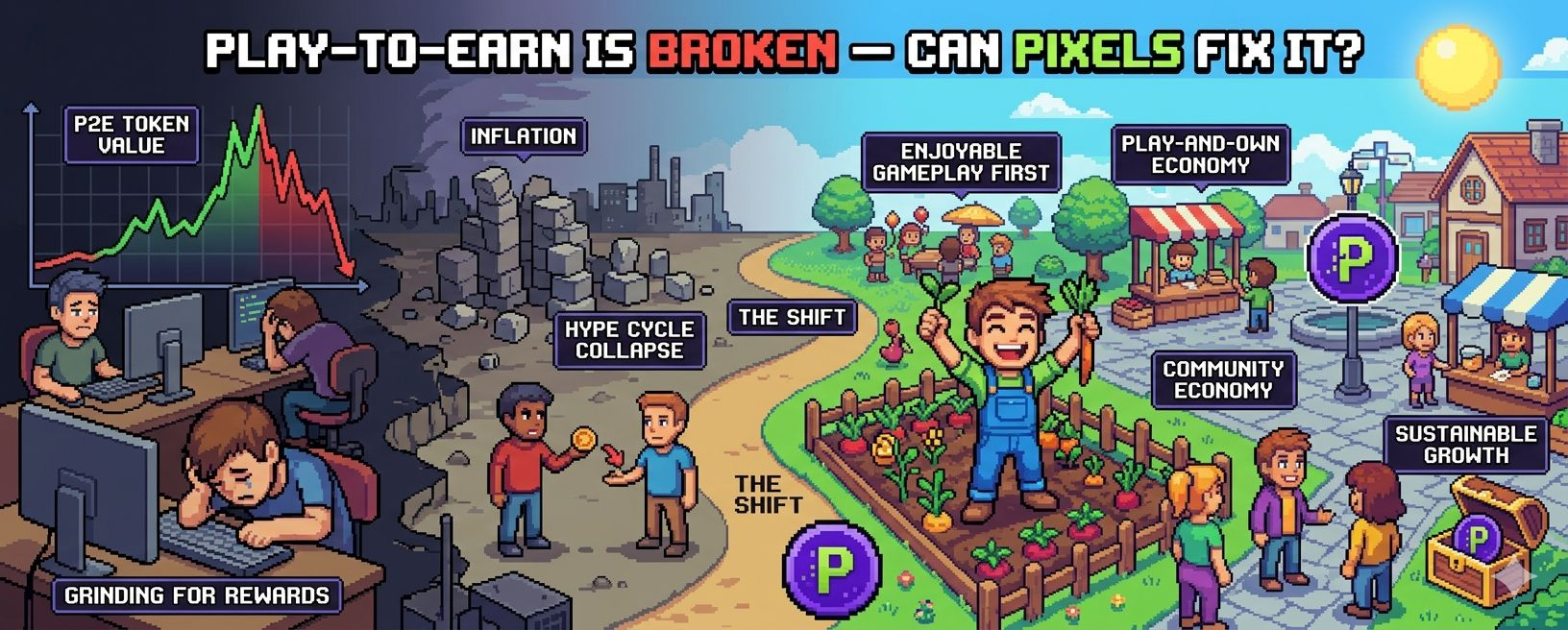
I’ve been in crypto long enough to watch most Play-to-Earn games follow the same cycle: massive hype, rapid growth, and then a slow collapse. On paper, the idea sounded perfect — earn money while playing. But in reality, these games became more like repetitive grinding systems where players were only there for rewards, not enjoyment. Once token rewards started dropping or the hype faded, users left just as quickly as they came.
That’s why Pixels stands out to me. It doesn’t try to push the same “earn first” narrative. Instead, it focuses on making the game actually enjoyable. When I looked into it, the experience felt more like a casual farming MMO than a typical Web3 project. You farm, explore, craft, and interact with other players — and the earning aspect feels secondary rather than the main purpose. That shift alone changes how players engage with the game.
Another major difference is how Pixels approaches its economy. One of the biggest reasons Play-to-Earn failed was uncontrolled token inflation — more players meant more rewards, and more rewards meant constant selling pressure. Pixels tackles this by separating its in-game currency from the PIXEL token, which helps create a more balanced and sustainable system instead of a constant cycle of inflation and dumping.
What also makes a noticeable impact is the social layer. Unlike many earlier Web3 games that felt isolated, Pixels encourages interaction through trading, shared spaces, and community-driven activity. This creates a more natural form of demand, where players stay because they enjoy the environment, not just because they’re earning.
The choice of infrastructure also plays a role. Being built on Ronin allows for faster and cheaper transactions, which removes one of the biggest friction points that older blockchain games struggled with. It makes the experience smoother and more accessible, especially for users who aren’t deeply familiar with crypto.
At its core, Pixels represents a shift from “Play-to-Earn” to what feels more like “Play-and-Own.” Instead of forcing players to extract value from the game, it gives them ownership while letting enjoyment drive engagement. From my perspective, that’s a much more sustainable direction.
Of course, it’s still early, and Pixels isn’t without risks. Like any crypto project, it depends on continued growth and user retention. But compared to the first wave of Play-to-Earn games, it clearly shows a more thoughtful approach.
The bigger question is whether this model can truly last — or if it’s just another evolution in the same cycle. What do you think — is PIXEL a step toward sustainable Web3 gaming, or are we still too early to tell?