I’ve been watching the Web3 gaming sector pretty closely lately, and one project that keeps standing out is PIXEL. As of April 2026, it feels like the project is moving beyond its origins as a single-game token tied to Pixels and evolving into something more ambitious—a broader ecosystem layer for Web3 gaming.
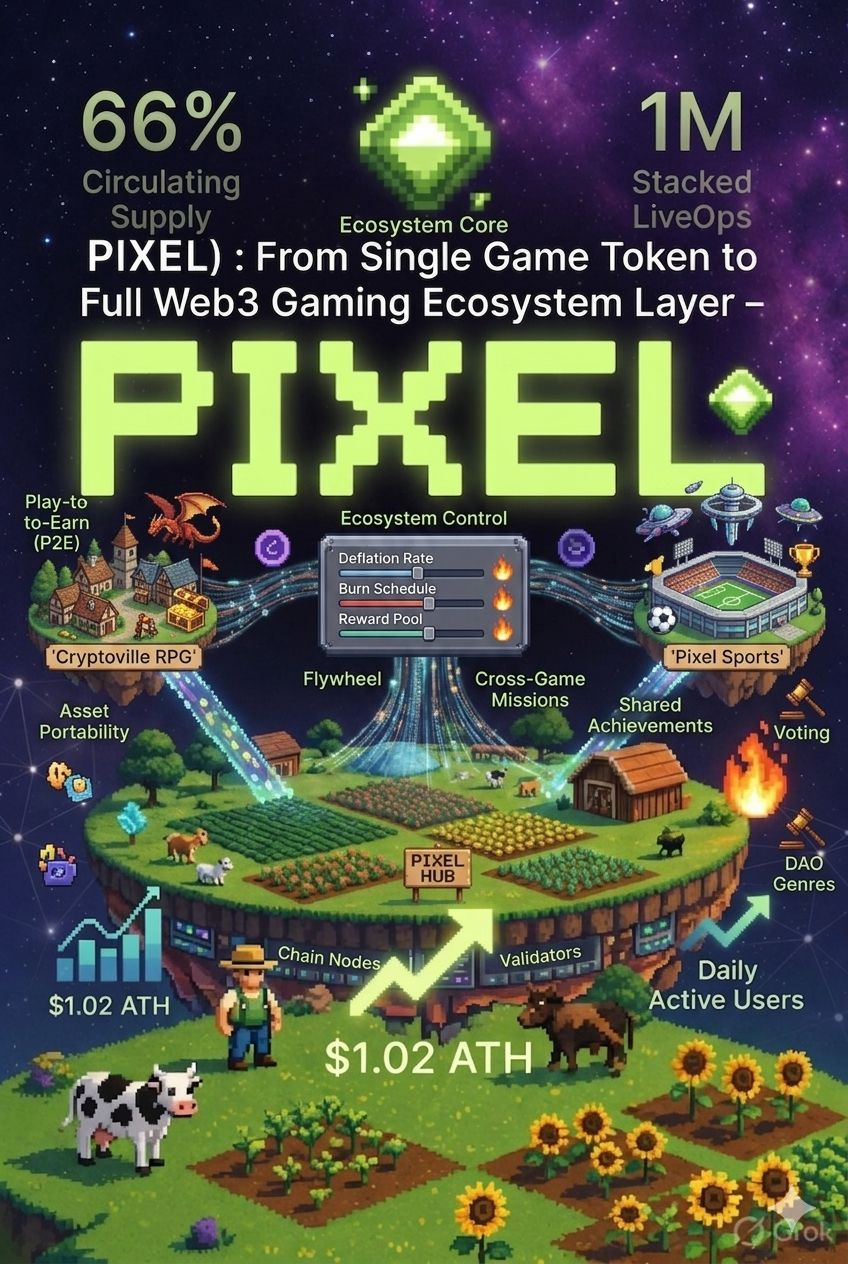
A big part of that shift comes down to tokenomics. With roughly two-thirds of its 5 billion supply already circulating, the focus is now on controlled deflation through in-game burn mechanisms. That’s a meaningful pivot. Instead of relying purely on speculative demand, the token’s value becomes tied to actual player activity. When players spend, upgrade, or interact within the ecosystem, tokens get burned—creating a tighter link between engagement and scarcity. It’s a model that, if executed well, can reward real usage rather than hype cycles.
What makes PIXEL interesting right now is its move toward utility-driven demand. The token isn’t just sitting in wallets waiting for price action—it’s being positioned as something that actively improves gameplay. Whether through efficiency boosts, progression advantages, or staking rewards, the idea is to keep players engaged because the token has real in-game value. That’s a notable departure from the pump-and-dump patterns that have defined many earlier GameFi projects.
There’s also momentum behind the ecosystem. Community activity has reportedly hit impressive highs, with player engagement peaking into the seven-figure range at times. While numbers like that always fluctuate, they suggest that the project isn’t just theory—it has an active user base interacting with it daily. Of course, volatility is still part of the package. Like many gaming tokens, PIXEL has seen sharp corrections from earlier highs, but that’s not unusual in this segment.
The most intriguing development, though, is “Stacked”—a rewards platform designed to extend beyond a single game. Think of it as a LiveOps engine that could connect multiple Web3 titles under one reward system. If it works as intended, players might earn cross-game incentives while simultaneously contributing to token burns. That creates a potential flywheel: more games → more activity → more burns → stronger token dynamics. It’s an ambitious idea, but one that could significantly expand PIXEL’s relevance if integrations are handled well.
Of course, it’s not without competition. Ecosystems like Ronin already have strong footholds in blockchain gaming, and they’re backed by established titles and infrastructure. PIXEL will need to differentiate through execution—especially in maintaining user engagement and delivering consistent utility.
Overall, the outlook feels cautiously optimistic. The combination of deflationary mechanics, ecosystem expansion, and cross-game utility gives @Pixels a more grounded narrative than many of its peers. But like everything in crypto gaming, success will depend on adoption, retention, and how well these ideas translate into real player behavior.
If you’re tracking Web3 gaming trends, this is definitely one to keep on your radar.