
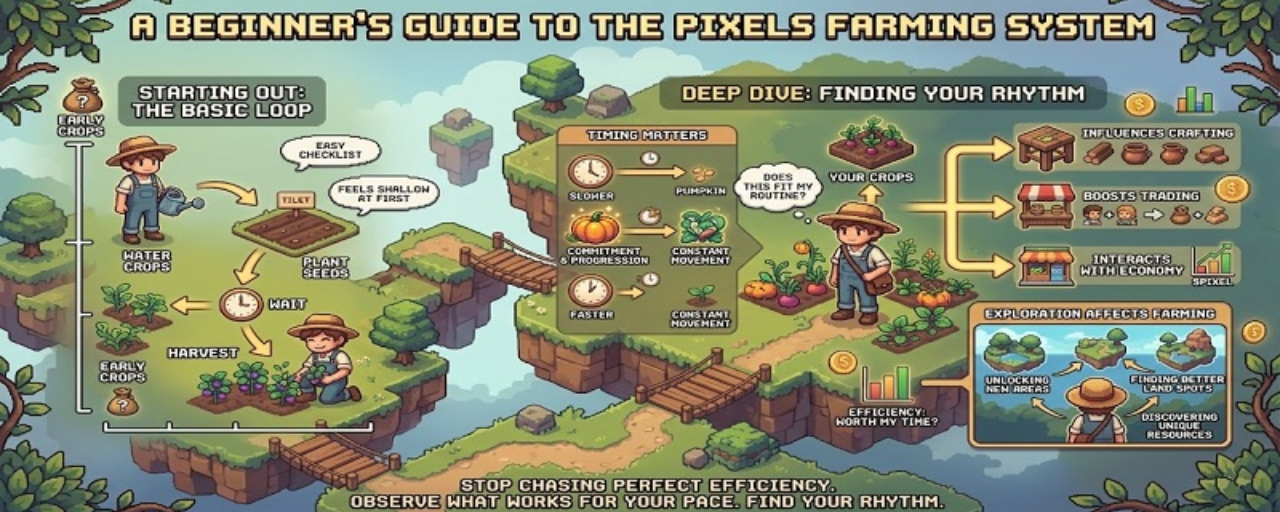

I didn’t really understand the farming system in @Pixels the first time I tried it. It looked simple on the surface… plant, wait, harvest. But after spending a bit more time with it, I started noticing small patterns that made it feel less like a casual loop and more like something you gradually learn to read.
At the beginning, it’s easy to treat farming like a checklist. Log in, water crops, collect, repeat. But that approach feels a bit shallow after a while. The interesting part starts when you realize timing and choice matter more than you expect.
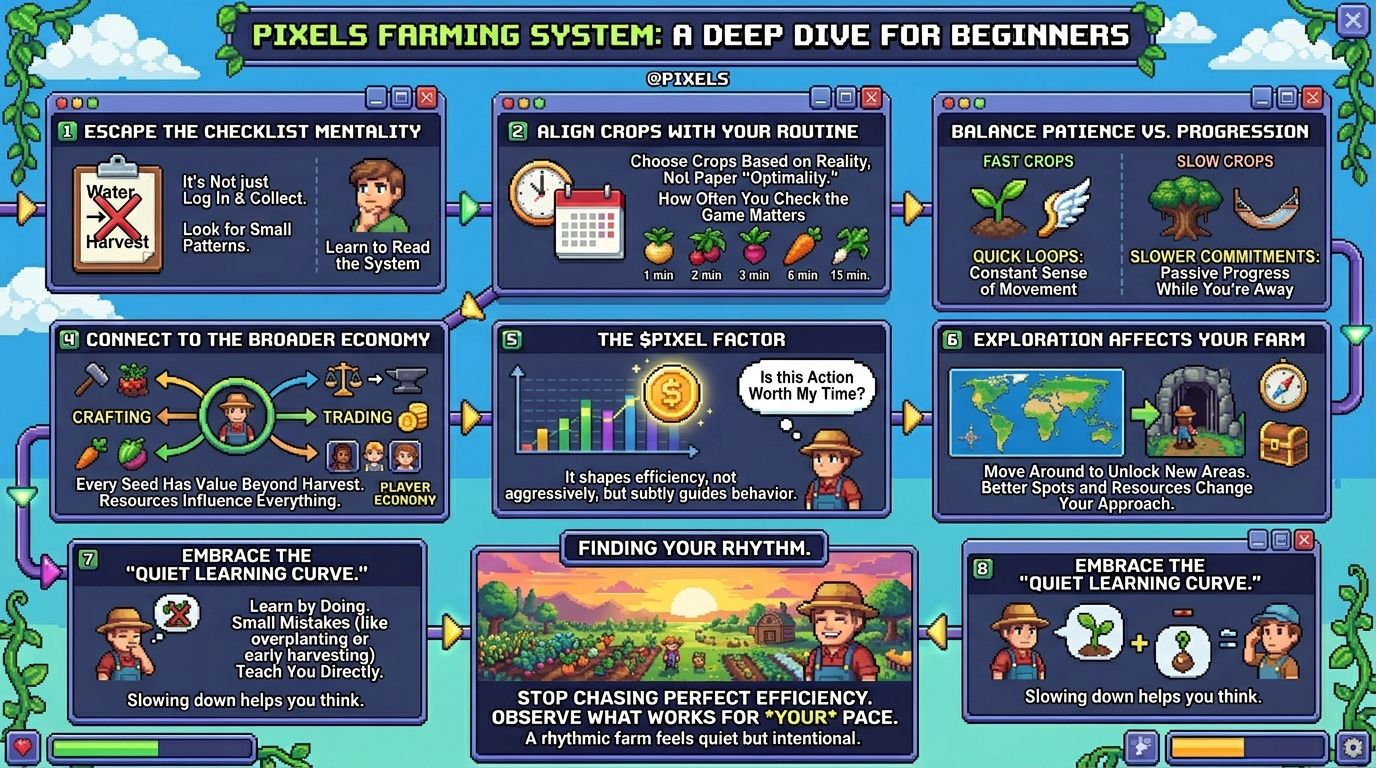
Some crops just don’t feel worth the effort early on. Not because they’re bad, but because they don’t align with how often you check the game. I found myself adjusting what I planted based on my own routine rather than what seemed “optimal” on paper. That’s when it started to feel more personal.
There’s also this quiet balance between patience and progression. Faster crops give you that constant sense of movement, but slower ones feel like small commitments. You plant them and kind of forget… then come back later and feel like something actually progressed without you hovering over it.
It reminds me a bit of how people approach time in Web3 games in general. Some want quick loops and instant feedback. Others don’t mind letting things sit if the return feels meaningful. Farming in #Pixels sits somewhere in between.
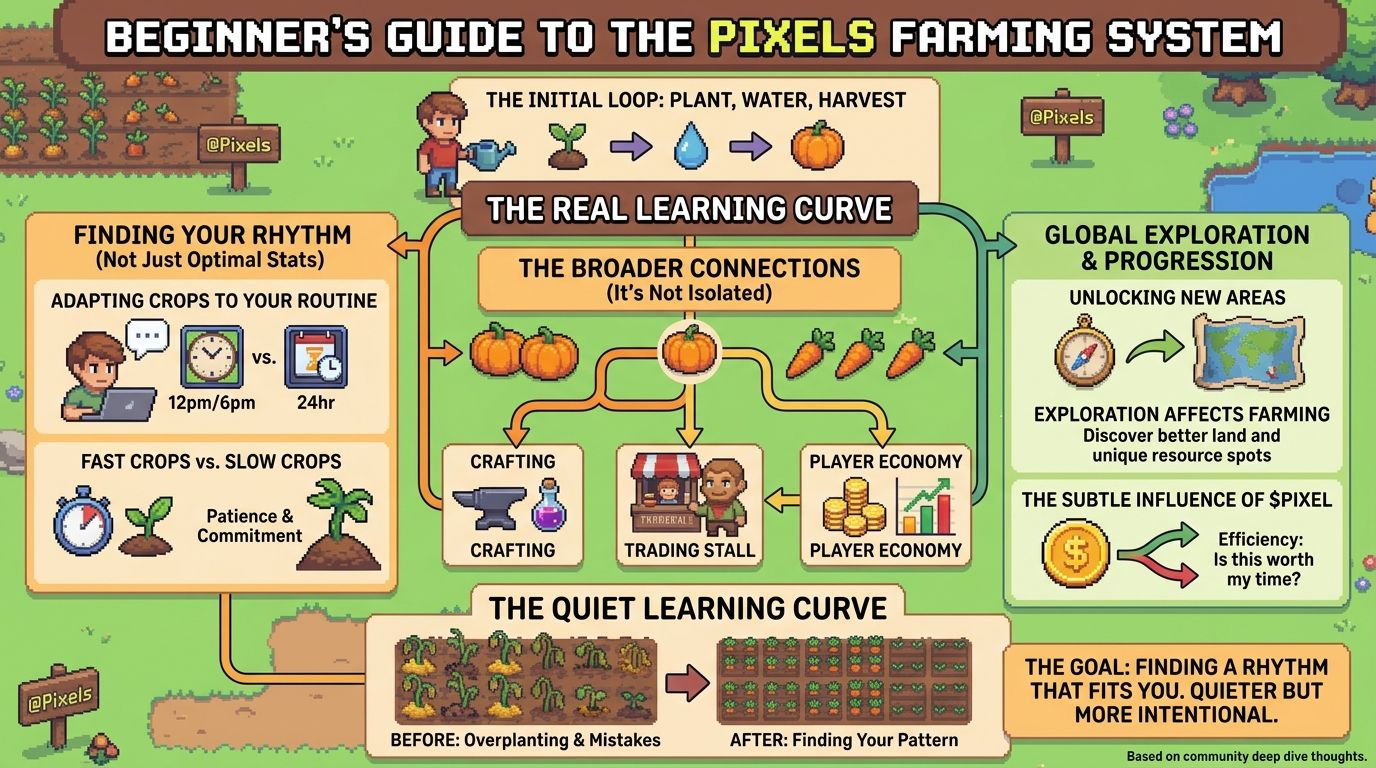
I noticed something else too. The farming system isn’t isolated. It quietly connects to everything else. Resources you grow influence crafting, trading, and even how you interact with the broader player economy. That part isn’t obvious at first, but once you see it, it changes how you think about every seed you plant.
And then there’s $PIXEL .
It doesn’t dominate the experience, but it’s always there in the background. You start to think differently about efficiency, not in an aggressive way, just in a subtle “is this worth my time?” kind of way. It doesn’t feel forced, but it does shape behavior over time.
One thing I didn’t expect was how much exploration affects farming decisions. You’d think farming is just staying in one place, but actually moving around, unlocking new areas, and finding better spots or resources changes how you approach your land.
It’s not just about what you grow, but where you are in the world.
There’s also this quiet learning curve that isn’t explained directly. You start noticing which actions feel smooth and which feel slightly off. Maybe you planted too much and couldn’t keep up. Maybe you harvested too early and missed potential value. These small mistakes kind of teach you without the game needing to say anything.
I might be wrong, but it feels like the system is designed to slow you down just enough to think.
Not in a frustrating way, just enough that you stop treating it like a background task.
Some players will probably try to optimize everything from day one. That’s natural. But I think the farming system in @Pixels makes more sense when you let it unfold a bit. When you stop chasing perfect efficiency and just observe what works for your own pace.
Because in the end, it’s less about maximizing output and more about finding a rhythm that fits you.
And once that rhythm clicks, the whole system starts to feel different… quieter, but more intentional.
