
When people first hear about BNB, they usually think of it as just another cryptocurrency tied to an exchange. But over time, BNB has evolved into something much bigger—a core piece of an entire ecosystem that stretches far beyond simple trading.
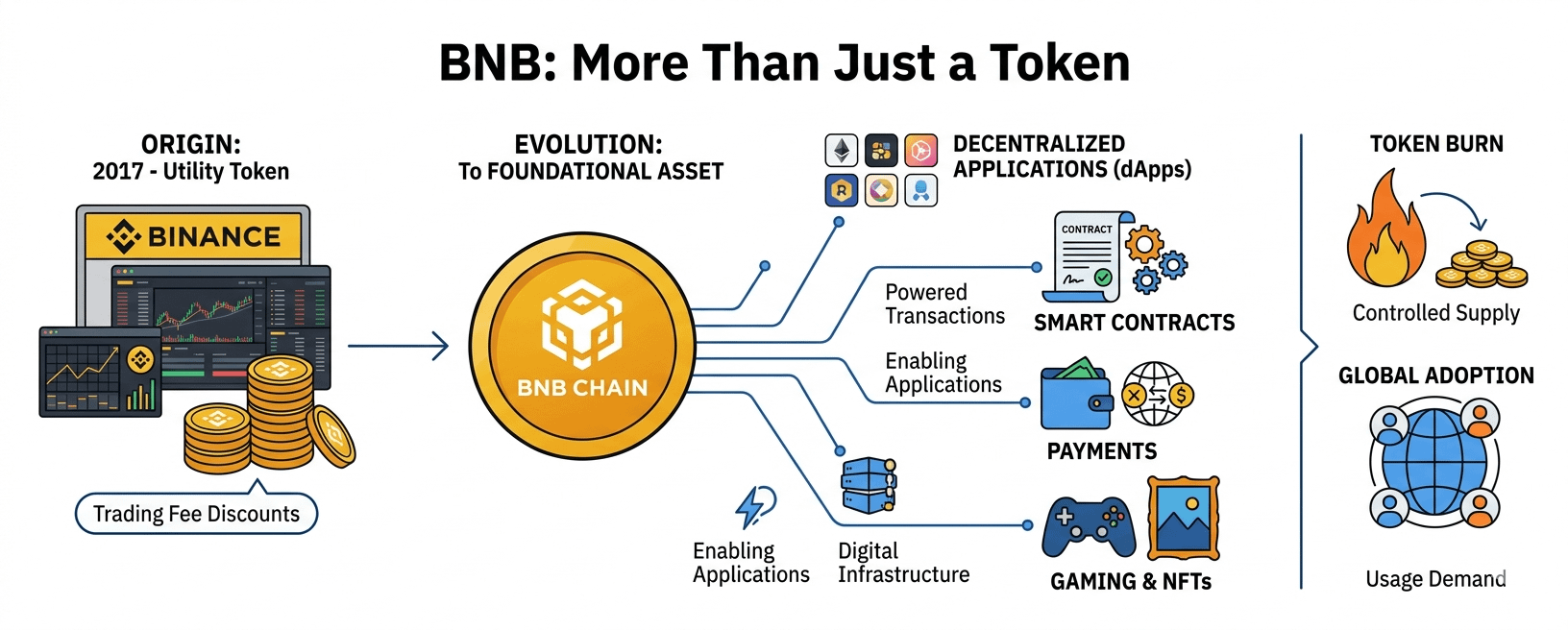
Originally launched by Binance in 2017, BNB started as a utility token designed to give users discounts on trading fees. It was a straightforward idea: hold BNB, pay less. At that stage, its value was directly tied to how actively people were trading on the platform.
But the interesting part is what happened next.
Instead of keeping BNB limited to exchange use, Binance gradually expanded its role. It became the fuel of the Binance Smart Chain (now known as BNB Chain), where it’s used to pay for transaction fees, interact with smart contracts, and support decentralized applications. This shift transformed BNB from a simple utility token into a foundational asset within a growing blockchain ecosystem.
What makes BNB stand out is how closely its value is connected to real activity. It’s not just about speculation or hype—its demand often reflects actual usage. The more people build, trade, and interact within the ecosystem, the more relevant BNB becomes.
Another important aspect is its supply model. Binance introduced a token burn mechanism, where a portion of BNB is permanently removed from circulation over time. The goal is to reduce supply gradually, which can support long-term value if demand remains steady or grows. This creates a dynamic where both usage and scarcity play a role in shaping its price.
However, BNB’s growth hasn’t been without challenges. Like many crypto projects, it faces regulatory pressure, market volatility, and competition from other blockchain platforms. Its close association with Binance is both a strength and a risk—while the exchange drives adoption, it also means that any issues affecting Binance can directly impact BNB.
Still, what’s hard to ignore is how BNB has positioned itself over the years. It’s no longer just a “discount token.” It acts as infrastructure—powering transactions, enabling applications, and supporting a wide range of digital economic activity.
In many ways, BNB reflects a broader trend in crypto: the shift from isolated tokens to interconnected ecosystems. And whether you see it as an investment, a utility, or a piece of digital infrastructure, one thing is clear—BNB’s role is defined less by what it was, and more by what it continues to become.
$BNB $ETH $XRP #bnb #AltcoinRecoverySignals? #blockchain
