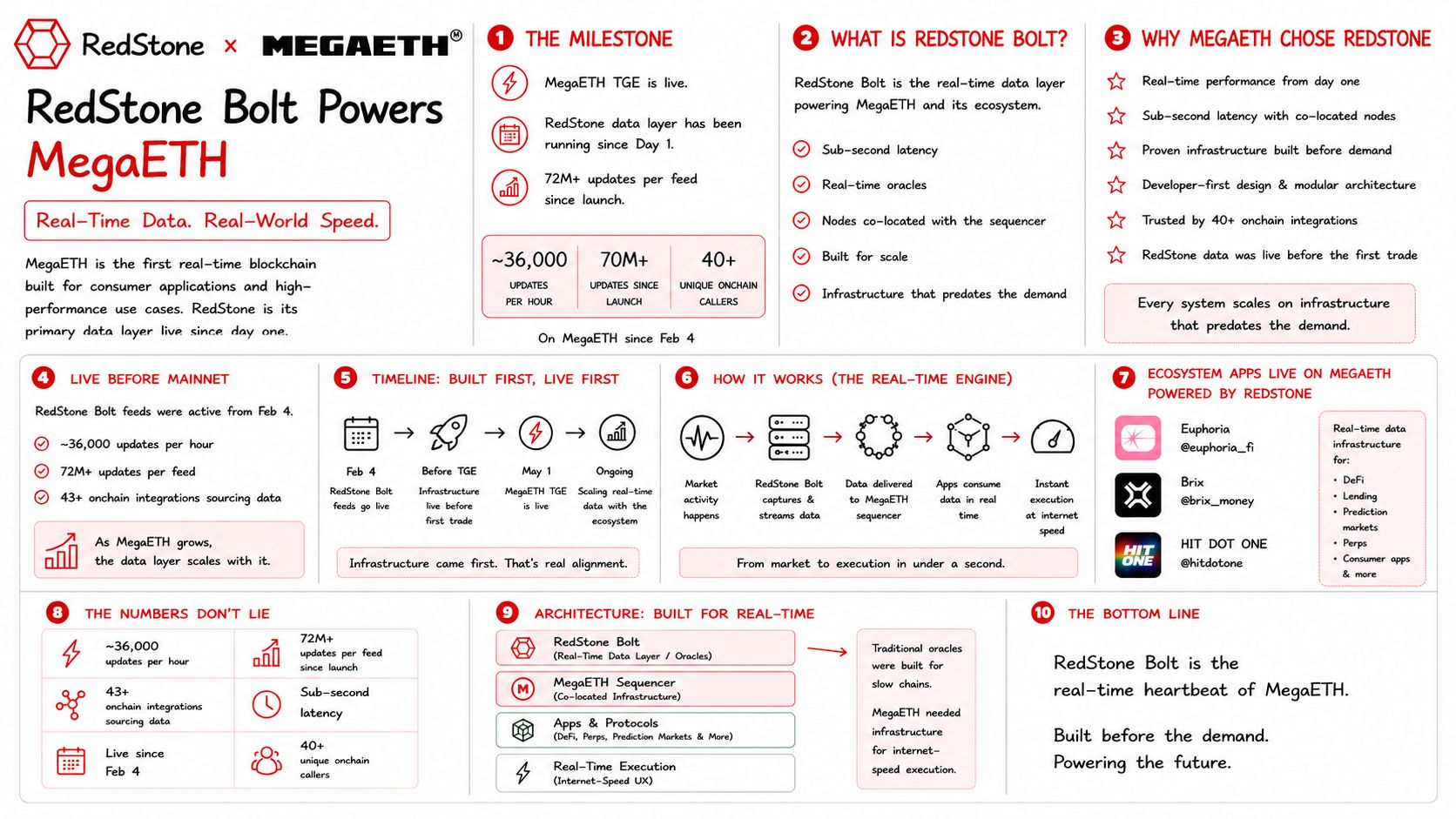
Most people looked at the MegaETH TGE.
I was more interested in the infrastructure already running underneath it.
One of the key pieces powering the ecosystem is RedStone Bolt, the real-time data layer supporting MegaETH applications from day one.
Here’s why this matters:
Traditional oracle systems were designed for slower blockchain environments.
MegaETH is different.
It’s built for high-performance execution, which means applications need:
• low-latency data
• constant market updates
• scalable throughput
• real-time execution support
RedStone Bolt was built specifically for that environment.
Some notable numbers so far:
• ~36,000 updates per hour
• 72M+ updates per feed since launch
• 40+ integrations sourcing data
• live before the first MegaETH trade
The ecosystem already includes projects such as:
• #euphoria_fi
• #brix_money
• #hitdotone
Different applications, same requirement:
reliable real-time infrastructure.
One thing I found particularly interesting is that the infrastructure came before the demand.
The data layer was already operational before the TGE went live.
That approach usually matters a lot for scalability.
The infographic below breaks down:
• what RedStone Bolt is
• why MegaETH selected it
• how the real-time engine works
• ecosystem integrations
• the architecture behind the stack
As onchain applications move toward real-time execution, infrastructure like this becomes increasingly important.