
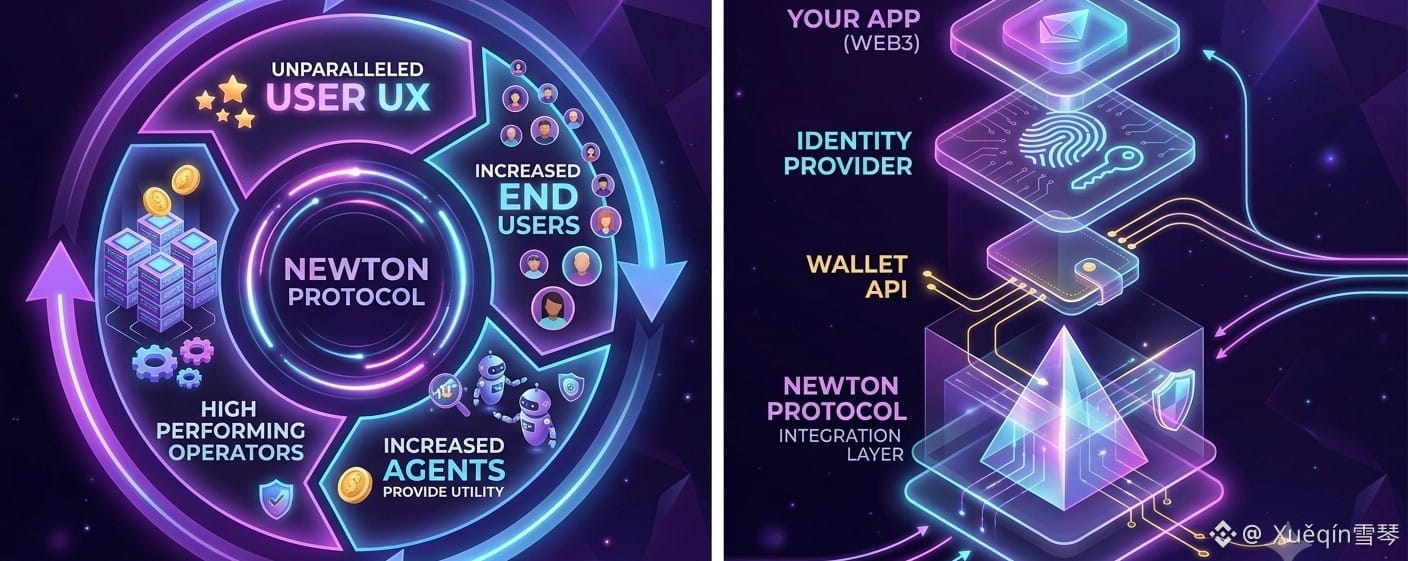
I didn't discover Newton Protocol while actively searching for a new blockchain project to follow. It appeared during one of those late night rabbit holes that crypto people know all too well, where one article leads to another, one whitepaper opens three more tabs, and suddenly you're questioning assumptions you didn't even realize you had.
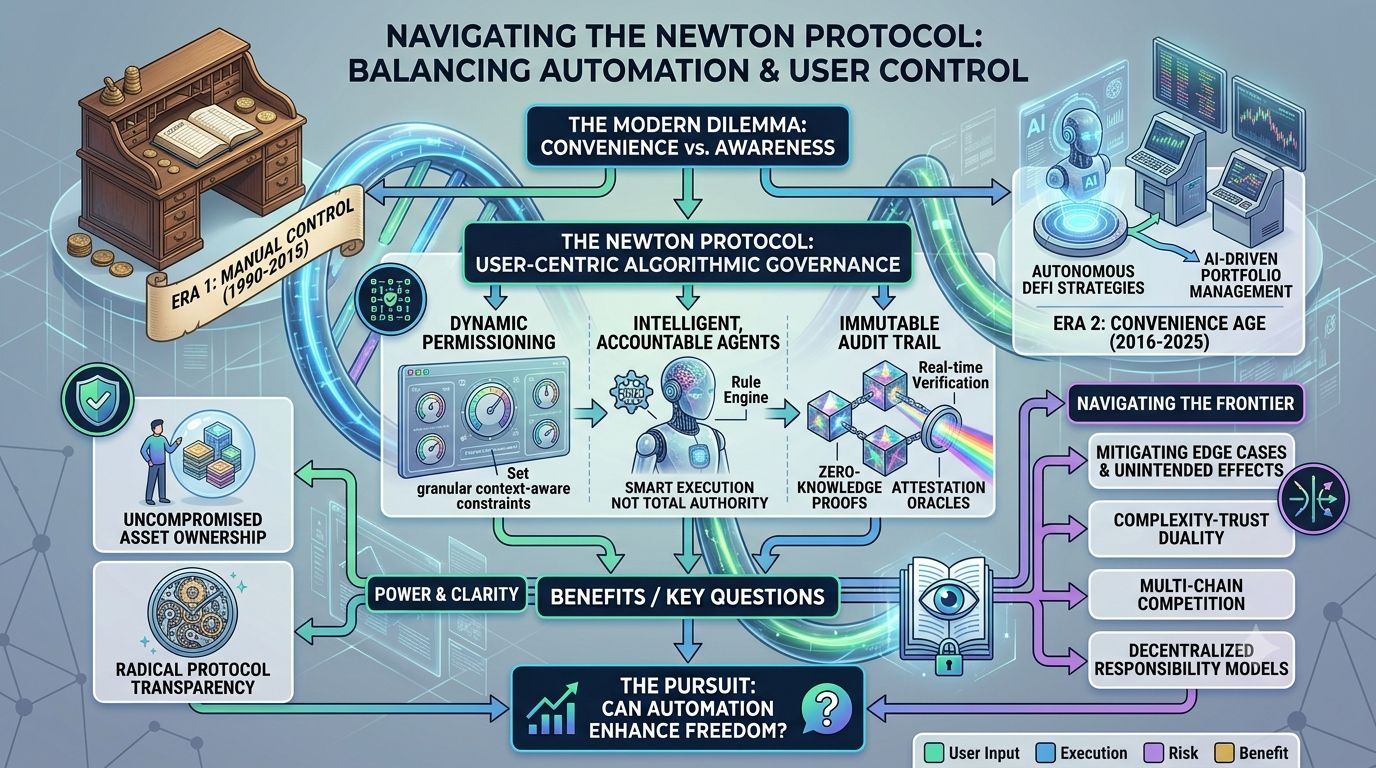
What caught my attention wasn't a promise of massive returns or revolutionary marketing. It was a simple idea hidden beneath the technical language: what happens when digital systems become smart enough to act for us, but we still want to remain in control?
The question felt surprisingly personal.
A few years ago, managing digital assets was relatively straightforward. You held tokens, signed transactions, and moved things around yourself. Every action required your direct involvement. It was sometimes inconvenient, but there was comfort in knowing that nothing happened without your approval.
Today, the landscape looks completely different.
People use automated trading tools, decentralized finance protocols, AI assistants, and applications that can execute dozens of functions in seconds. The convenience is incredible, yet I sometimes wonder whether we've traded awareness for efficiency. We appreciate the outcome while paying less attention to the machinery producing it.
Newton Protocol seems to recognize that tension.
The project is built around the idea that autonomous systems should work with users rather than around them. Instead of removing people from the equation, the goal appears to be giving them better ways to delegate tasks while preserving ownership and transparency.
That distinction matters more than it initially sounds.
I remember helping a friend who runs a small online business and has gradually entered the world of digital assets. He wasn't interested in speculation. His priorities were practical. He wanted faster payments, lower fees, and tools that could automate repetitive tasks.
At one point, he asked me a question I didn't answer very confidently.
"If software can manage everything automatically, how do I know it's still following my rules?"
The truth is that most people eventually ask some version of that question.
Trust works wonderfully until something unexpected happens. Then everyone suddenly wants visibility, accountability, and proof that the systems they depend on are behaving as intended.
That is where Newton Protocol becomes interesting.
Its vision revolves around programmable agents operating within clear boundaries defined by users themselves. Rather than handing complete authority to external platforms, individuals establish conditions, permissions, and expectations that autonomous systems must respect. The blockchain layer provides transparency, making actions visible and verifiable instead of hidden behind closed infrastructure.
I find that philosophy refreshing.
For years, the technology industry has conditioned us to accept convenience as the ultimate goal. If something works smoothly, we rarely stop to examine how it functions underneath. We trust interfaces more than processes. We trust outcomes more than mechanisms.
But blockchain emerged partly as a reaction against that mindset. The original promise was not simply efficiency. It was verification. It was ownership. It was the ability to participate in systems without relying entirely on invisible intermediaries.
Newton Protocol feels connected to that tradition, even while embracing newer concepts like intelligent automation.
Of course, good ideas alone do not guarantee success.
The crypto market has taught us that lesson repeatedly. There are countless examples of technically impressive projects that struggled to find real users. Sometimes the technology arrives before the problem becomes urgent enough. Other times, user experience creates barriers that ordinary people simply refuse to overcome.
Newton Protocol will inevitably face those same challenges.
Building autonomous digital systems sounds exciting, but it introduces complicated questions. What happens if an automated agent executes a strategy that produces unintended consequences? How much responsibility belongs to the user versus the underlying protocol? Can average individuals realistically understand the permissions they grant, or does complexity create new forms of trust dependency?
These concerns are not unique to Newton Protocol, yet they deserve honest discussion.
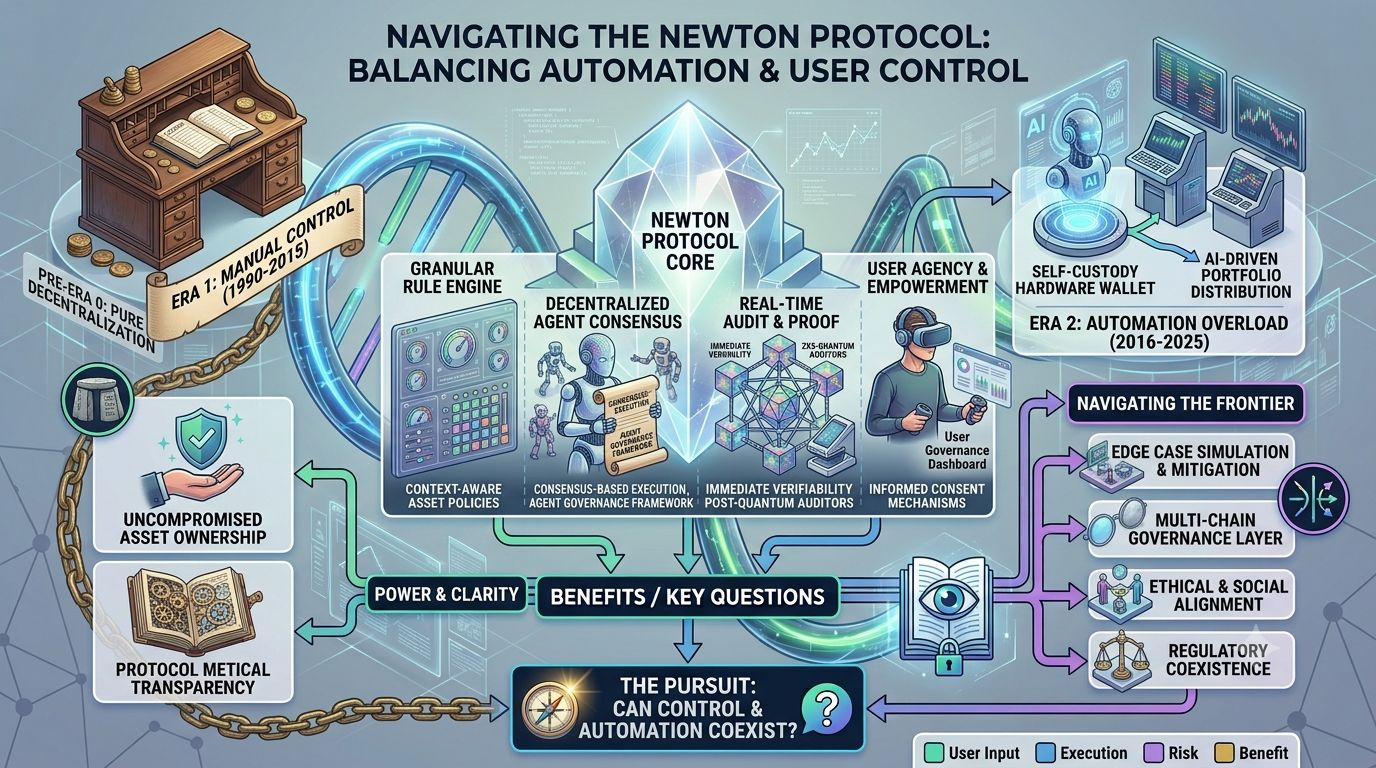
I think one of crypto's biggest weaknesses has been its tendency to treat skepticism as negativity. In reality, critical thinking strengthens good ideas. If a project cannot survive difficult questions, it probably isn't ready for broader adoption.
Another reality is competition.
The intersection between artificial intelligence and blockchain has become increasingly crowded. Every month seems to bring another initiative focused on autonomous agents, decentralized intelligence, or programmable coordination. Standing out requires more than ambitious vision statements. It requires execution, developer participation, security, and genuine use cases that improve people's daily experiences.
Still, I believe Newton Protocol occupies an interesting position within that landscape.
Its emphasis on user-defined control feels aligned with broader cultural shifts. People are becoming more conscious about data ownership, digital identity, and algorithmic influence. They want technology that empowers them without demanding complete surrender of agency.
Imagine a freelancer managing an international business entirely through decentralized systems. Payments arrive automatically, taxes are calculated in real time, recurring expenses are handled by trusted agents, and investment allocations adjust according to predefined preferences. The infrastructure works continuously in the background, yet every action remains visible and accountable.
That kind of future does not sound impossible anymore.
Whether Newton Protocol becomes one of the projects helping build that reality remains uncertain. The market is unpredictable, regulations evolve, and technological expectations change faster than anyone anticipates. Success depends on countless factors beyond elegant architecture or compelling ideas.
But sometimes, the value of a project lies in the questions it forces us to ask.
For me, Newton Protocol raised an important one: can automation enhance freedom instead of reducing it?
I don't think we have a complete answer yet. The entire industry is still experimenting, learning, and occasionally making expensive mistakes. Yet the pursuit itself feels worthwhile. Creating systems where intelligence, transparency, and ownership coexist may ultimately define the next chapter of digital infrastructure.
And if that happens, projects willing to think carefully about control rather than simply chasing convenience might prove more influential than many people currently expect.If you want another variation, I can write one in an even more intimate "personal experience and reflection" style that reads almost like a magazine essay or long form blog post from a real crypto enthusiast.
