
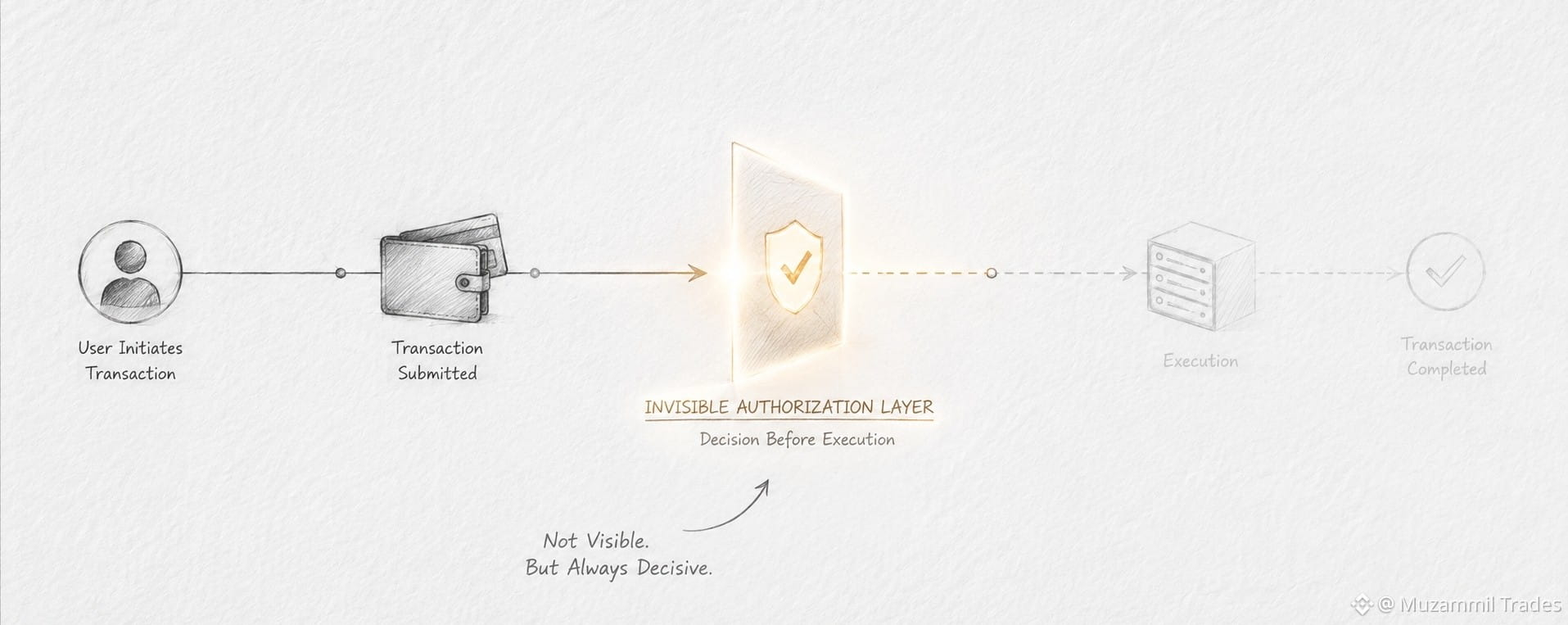
I've been thinking about something lately, and it keeps coming back to me in a way I can't ignore.
For years, the way we evaluate blockchain systems has felt almost obvious.
How fast can it process transactions?
How cheaply can it settle value?
How scalable is the network?
Those questions made sense for a long time.
But the more I think about it, the more I feel we've been focusing on the last step of a process that actually begins much earlier.
Execution is the part we see.
The decision before execution is the part we rarely notice.
And maybe that's exactly why it's easy to overlook.
A transaction appearing on-chain feels like the beginning of an action.
But in reality, it might already be the result of a decision that happened before anything became visible.
For a long time, I assumed execution was the hardest problem in blockchain systems.
Now I'm starting to think that might not be true anymore.
The harder problem may be authorization.
At first, that sounds like a subtle difference.
But the more I sit with it, the more fundamental it becomes.
Execution answers a technical question.
Can this transaction be processed?
Authorization answers something deeper.
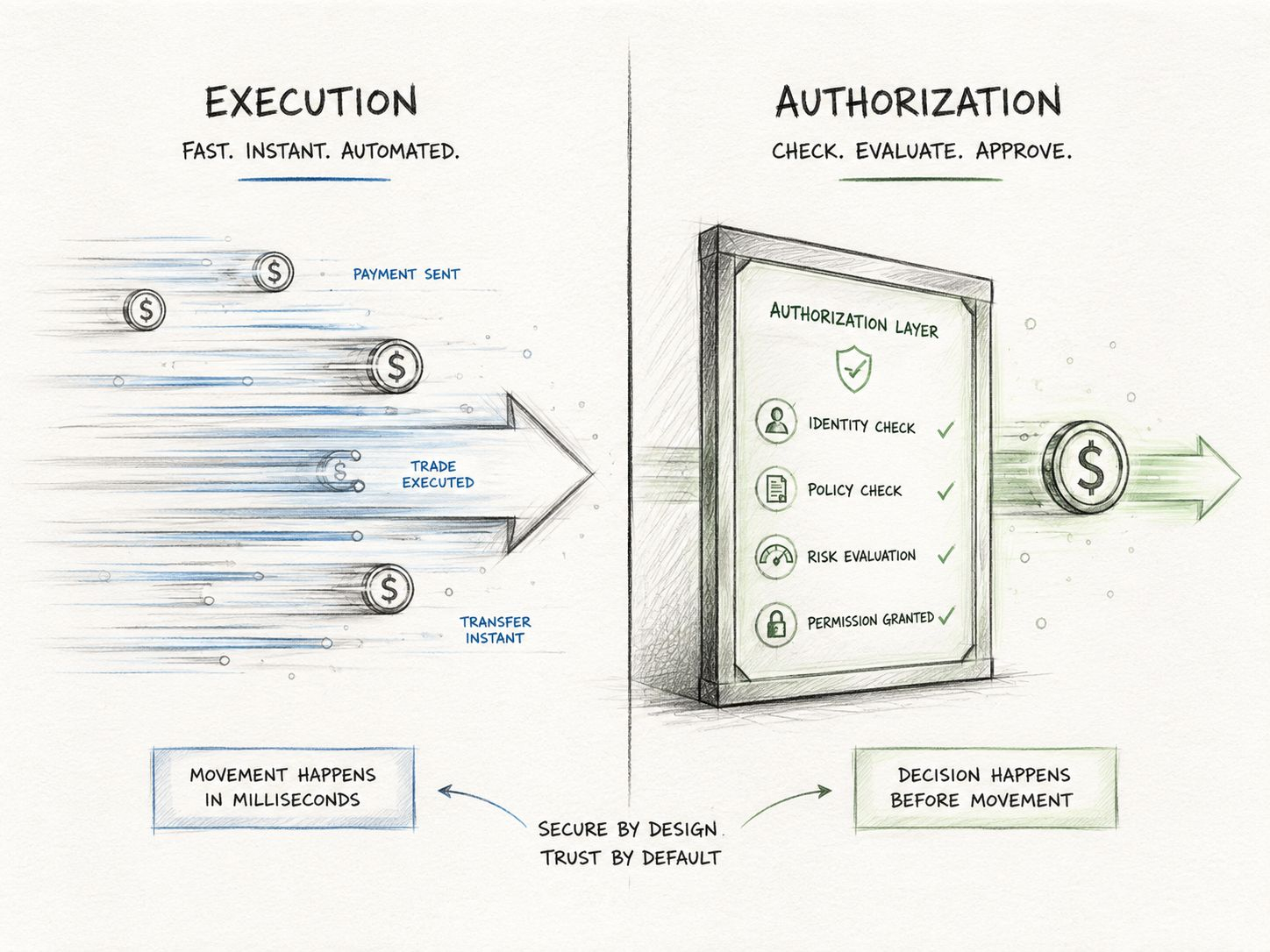
Should this transaction be processed under these conditions?
These two questions are not interchangeable.
And in systems that are becoming increasingly automated, that difference starts to matter more.
We are moving toward a world where software is no longer just responding to users.
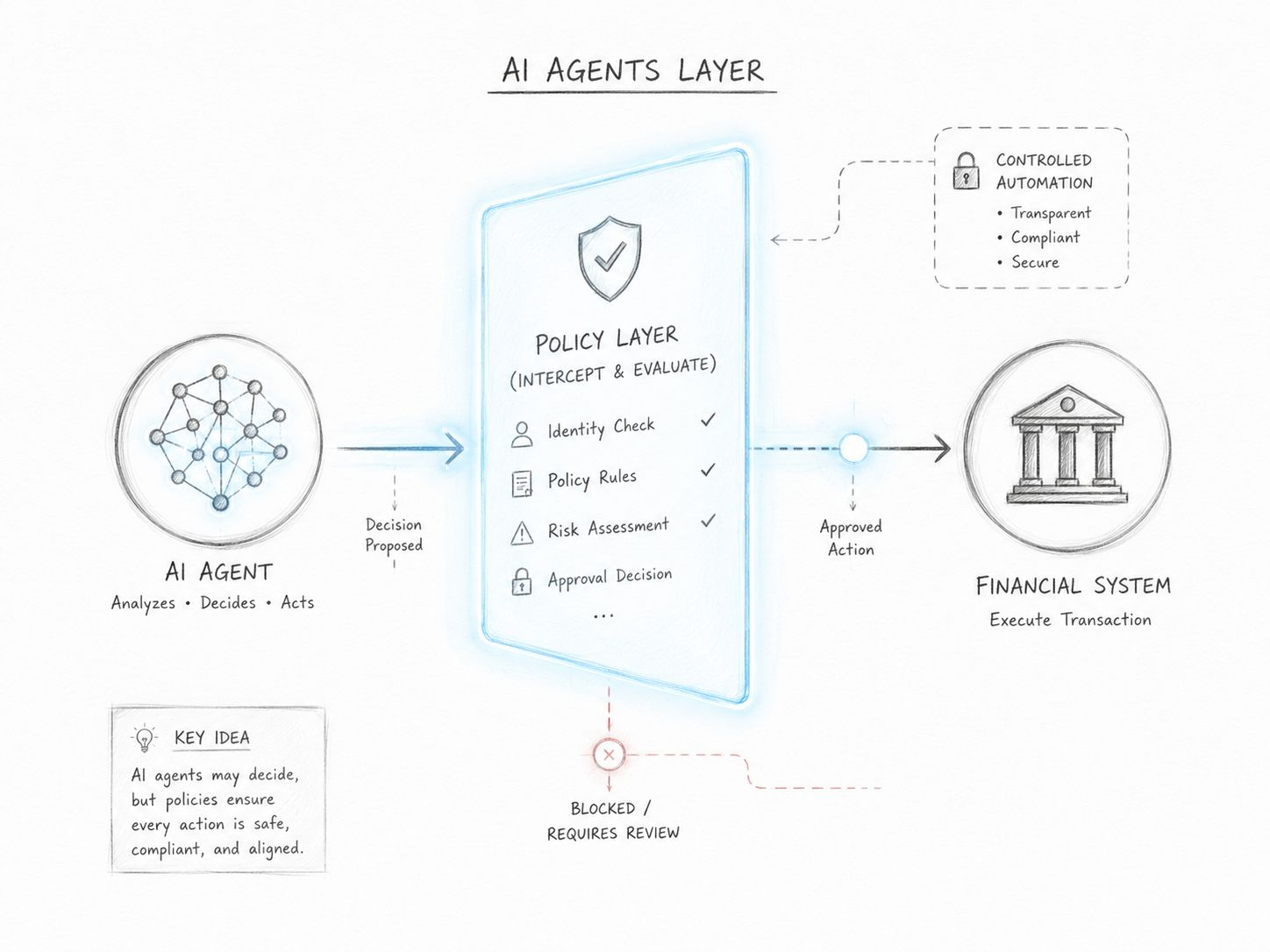
It is beginning to act on their behalf.
AI agents won't pause to reconsider decisions the way humans do.
They will follow instructions, interpret rules, and execute consistently at scale.
That changes the nature of financial infrastructure.
Because when machines start making decisions, execution speed is no longer the only concern.
The quality of the decision before execution becomes just as important.
That's where @NewtonProtocol started to make more sense to me.
Instead of treating authorization as something external to the blockchain, it introduces a layer that evaluates transactions against active policies before settlement, producing a signed pass or fail attestation that is recorded on-chain.
That idea shifts the focus.
Most systems are designed to record what already happened.
This approach introduces a way to evaluate what is allowed to happen before it ever executes.
It feels less like an optimization.
And more like a missing layer of judgment.
As financial systems grow more complex — with institutional participation, larger vaults, and autonomous agents — relying only on post-execution visibility starts to feel insufficient.
Boundaries stop being optional.
They become part of infrastructure itself.
The more I think about it, the more I feel that the next phase of blockchain infrastructure won't be defined only by speed or scalability.
It will be defined by how reliably it can decide what should exist before it becomes reality.
We've spent years asking how to move value more efficiently.
Maybe the more important question was always one step earlier.
Who—or what—should decide before value moves at all?