
I have noticed something interesting over the past year. Every week, a new crypto project seems to appear with the words AI-powered" attached to it. Some promise smarter trading, others promise autonomous agents that can manage portfolios, and a few even suggest that artificial intelligence could eventually replace human decision-making altogether.
The excitement is understandable. AI is advancing at an incredible pace, and crypto has always been attracted to technologies that challenge traditional systems. But while reading about these projects, I kept coming back to a simple question that surprisingly few people seem to ask.
If an AI agent is making decisions with my money, how do I know it is actually doing what it claims to be doing?
That question is what led me to Newton Protocol (NEWT).
What attracted me wasn't the promise of automated trading or another marketplace for developers. Those ideas already exist in various forms. What stood out was the project's focus on something much less glamorous but arguably more important: trust.
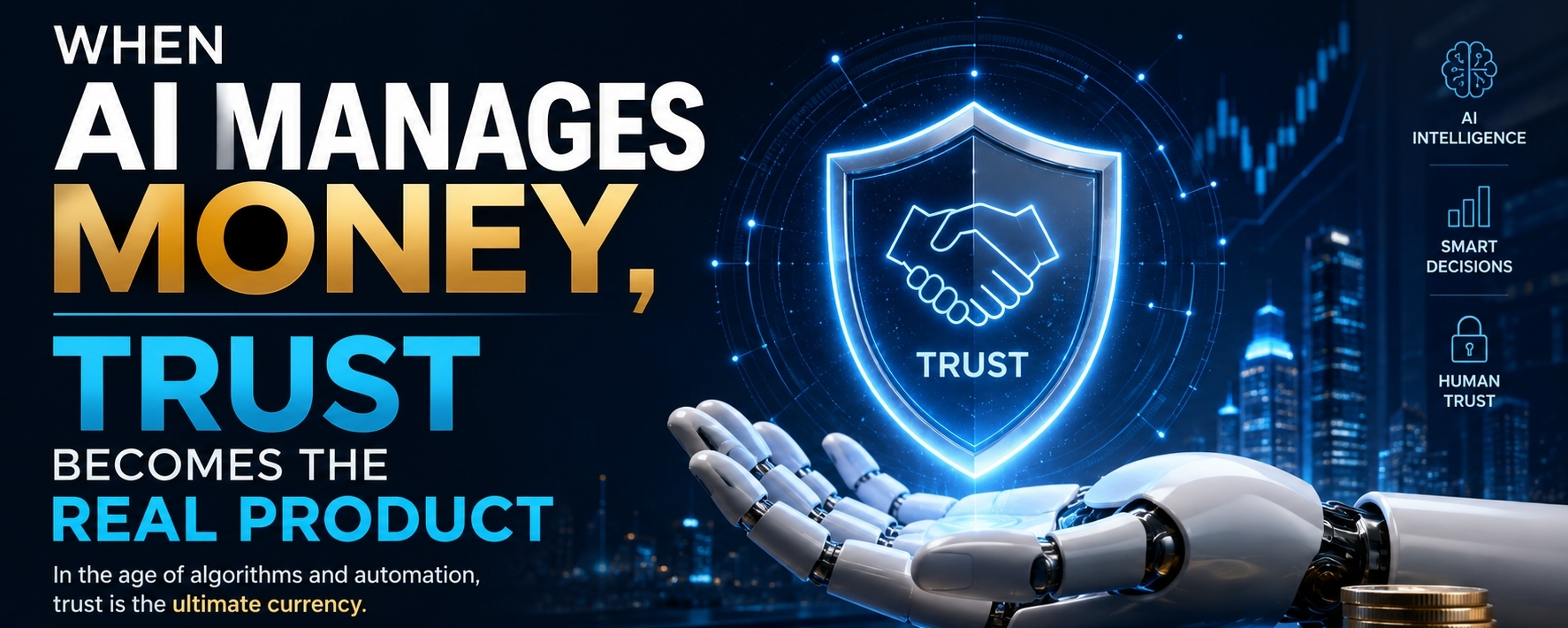
The reality is that most automation today still depends on trust. We trust developers, platforms, algorithms, and companies operating behind the scenes. Even in crypto, which was originally created to reduce reliance on trusted intermediaries, many automated systems require users to place faith in code they do not fully understand and infrastructure they cannot independently verify.
Newton Protocol is trying to approach the problem from a different angle. Instead of asking users to trust an AI agent, the project aims to create a system where important actions can be verified. In simple terms, the goal is not just to make AI smarter but to make AI accountable.
I think that distinction matters more than many people realize.
The conversation around AI often focuses on intelligence. Can an AI predict markets? Can it identify trends? Can it generate better returns?
But intelligence is only part of the equation.
Imagine hiring a financial advisor who claims to be brilliant but refuses to explain what they are doing with your money. Most people would be uncomfortable with that arrangement. Yet many AI systems operate in a similar way. Users see the results but not necessarily the process.
Newton seems to recognize that transparency may become one of the most valuable features in the AI economy.
As AI agents become more powerful, people will not simply want automation. They will want proof that the automation is behaving according to agreed rules.
This is where I think the project's vision becomes particularly interesting.
Rather than focusing only on trading, Newton is building infrastructure that could support many different forms of automated financial activity. Portfolio management, recurring investments, treasury operations, cross-chain transactions, and other financial workflows could potentially be handled by AI agents operating within predefined boundaries.
In theory, users set the rules and permissions. The AI executes tasks within those limits. The network verifies that everything happened as expected.
If that sounds less exciting than a meme coin promising 100x returns, that's because it is. But infrastructure projects rarely look exciting at first. Their value often becomes obvious only after adoption begins.
When I look at the history of technology, I see a pattern repeating itself.
The biggest winners are not always the companies building flashy applications. Sometimes they are the ones building the roads, bridges, and rails that allow entire ecosystems to function.
Cloud computing was not glamorous in its early days. Internet protocols were not exciting dinner-table topics. Yet both became foundational pieces of modern technology.
Newton appears to be positioning itself as infrastructure for a future where AI agents interact with blockchain networks on a massive scale.
Of course, there is a significant challenge.
Building technology is one thing. Building an ecosystem is something else entirely.
A marketplace for AI developers sounds promising, but marketplaces succeed only when enough participants create real value. Developers need incentives to build useful agents. Users need reasons to trust and adopt them. Operators need economic motivation to secure the network.
Without those ingredients, even impressive technology can struggle to gain traction.
This is where I think investors and observers should remain realistic.
The AI narrative is powerful right now, and many projects are benefiting from that momentum. But narratives eventually fade. What remains is utility.
The question that matters is not whether AI will become important. I believe it already is. The real question is whether a project can solve a meaningful problem that continues to exist after the hype disappears.
For Newton, that problem is trust.
And honestly, trust may become one of the most valuable commodities in the digital economy.
As AI systems become increasingly autonomous, society will face difficult questions. Who is responsible when an AI makes a mistake? How can users verify decisions made by algorithms? What happens when billions of dollars are managed by software rather than people?
These questions extend far beyond crypto.
They touch finance, healthcare, governance, and nearly every industry where AI is expected to play a larger role.
That is why I find Newton Protocol interesting.
Not because it promises perfect trading strategies.
Not because it claims AI will magically outperform every market.
And not because it is attached to one of the hottest narratives in crypto.
I find it interesting because it is focused on a problem that many people are overlooking.
The future of AI may not be determined by which model is smartest. It may be determined by which systems people trust enough to use every day.
In that sense, Newton Protocol is not really a bet on artificial intelligence alone.
It is a bet on verifiable trust in a world where machines are making more decisions than ever before.
Whether the project ultimately succeeds remains to be seen. Like every ambitious blockchain initiative, it faces technical, economic, and adoption challenges.
But I believe it is asking an important question.
As we move toward a future filled with autonomous agents, perhaps the most valuable innovation will not be teaching machines how to think.
