
let's try to understand what is the real story iS
I have been thinking lately about a strange thing we rarely admit: people do not always reject rules. More often, they reject the moment they become aware of the rules.
That difference matters more than it first appears. A person may accept a process, a check, a delay, or even a restriction, as long as the process feels understandable. What they resist is the sudden interruption that makes them feel watched, corrected, or excluded without explanation. In that sense, frustration is often less about the rule itself and more about the way the rule arrives.
This is why certain systems feel effortless while others feel exhausting, even when they are doing almost the same work. One system makes the user stop, read, interpret, and guess. Another system quietly arranges the same logic behind the scenes and lets the user move forward without much mental noise. The experience is not just about speed. It is about whether the user feels forced to negotiate with the system at every step.
That idea becomes especially interesting in blockchain and digital identity. These environments often advertise openness, but the real-world user experience can feel scattered and repetitive. A person may verify themselves in one place, approve something in another, repeat a similar check later, and still not really know why each layer exists. The system may be technically correct, but the journey can still feel fragmented. And when that happens, users stop thinking about the larger promise and start thinking only about the inconvenience.
So the deeper question is not whether systems should have rules. Of course they should. The real question is whether those rules are being designed as part of the journey or simply attached after the fact.
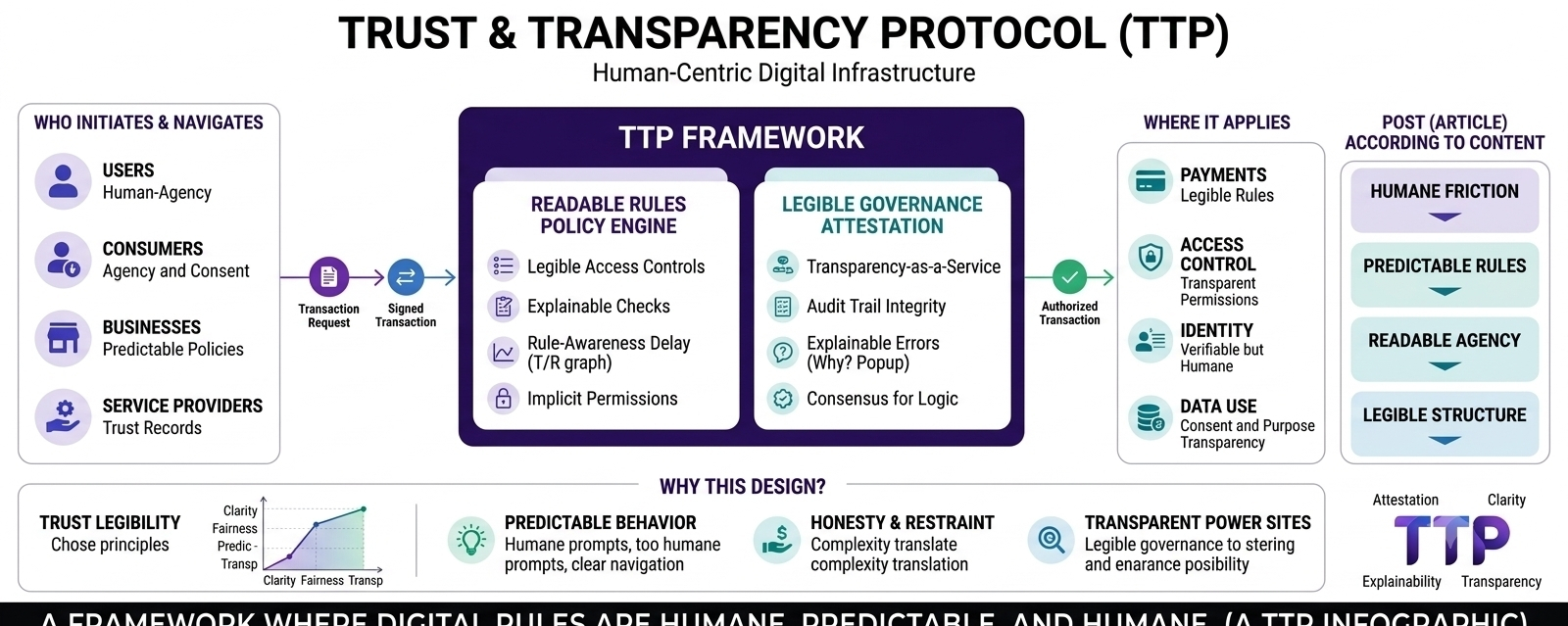
I think that is where many future-facing platforms will be judged. Not by whether they claim to support trust, but by whether they make trust legible. A user should not have to become an expert in policy just to understand why a button is greyed out or why a transaction did not move forward. If the system is making an important decision, the user deserves a readable reason, not a silent error state. Otherwise, the product may feel polished on the surface while hiding a surprisingly rigid structure underneath.
There is also a more uncomfortable side to this. The smoother a system becomes, the easier it is to forget where the power sits. When everything works well, people naturally stop asking who shaped the rules in the first place. That is not necessarily a flaw, but it is a risk. Convenience can create trust, yet it can also create passivity. If users never see the moment when a decision is made, they may never ask whether the decision was fair, consistent, or reversible.
This is why I am drawn to the idea of visible systems rather than invisible control. Visible does not mean clunky. It does not mean flooding people with technical details or forcing them into policy jargon. It means offering enough clarity that the user can follow the logic of the experience. A useful system should be able to say, in plain language, what changed, why it changed, and what the user can do next. That kind of clarity does not weaken trust. It often strengthens it.
If anything, the future of digital products may belong to the teams that understand this balance best. Not the teams that remove every trace of structure, and not the teams that overload people with every internal rule, but the teams that translate complexity into something people can live with. That is a harder design problem than it sounds. It requires restraint, honesty, and a strong sense of what users actually need to know.
I also suspect this has implications far beyond crypto. Any system that mediates access, verification, permissions, or payments is eventually a system of governance, whether it admits that or not. The interface may look like a product, but the behavior may resemble public policy. The more these layers merge, the more important it becomes to ask a simple question: are we making the system easier to use, or merely harder to notice?
That distinction could shape how people decide which platforms they trust. Users may forgive complexity if they can understand it. They may even tolerate delays if they feel the process is fair. But once a system becomes too opaque, convenience stops feeling like a benefit and starts feeling like a mask.
So maybe the real challenge is not to make rules disappear. Maybe the better goal is to make rules readable, predictable, and explainable enough that users do not feel pushed around by a black box. In the end, the most trustworthy systems may not be the ones that hide their structure best. They may be the ones that make structure feel humane.
And perhaps that is the real design question for the next wave of digital infrastructure: not how to eliminate friction entirely, but how to make sure the friction, when it exists, still feels accountable to the person using the system.
