

I used to think the hardest part of blockchain was getting transactions to execute quickly. Most discussions I came across revolved around lower fees, faster confirmation times, or better throughput. It felt natural to assume that once execution became efficient enough, the rest of the ecosystem would simply fall into place.
The more I paid attention, though, the more that assumption started to feel incomplete. Speed only answers one question: can something happen? It doesn't answer whether that action should happen in the first place. That distinction seemed small at first, but I kept noticing situations where the real challenge wasn't execution. It was deciding which actions deserved permission before they became irreversible.
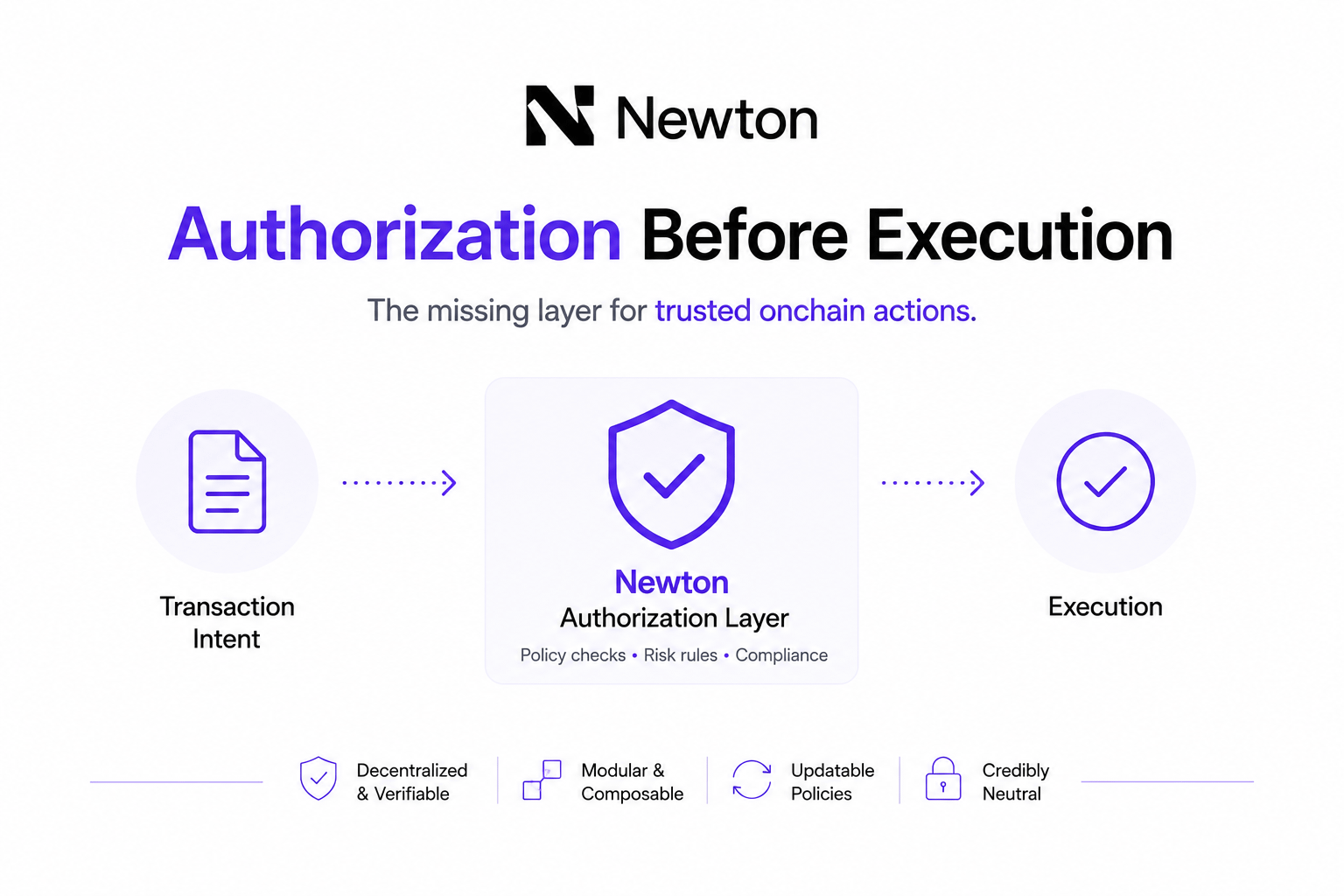
That shift changed how I looked at infrastructure. I started seeing blockchains less as machines that move assets and more as systems that coordinate trust between people, applications, and increasingly, autonomous software. As those systems become more complex, relying only on signatures or smart contracts feels like asking every problem to fit the same solution. Some decisions need context that changes over time, and embedding every evolving rule directly into contracts doesn't always seem practical.
That's one reason @NewtonProtocol caught my attention. What stood out wasn't another promise of making transactions faster. It was the idea of introducing an authorization layer between intent and execution. Instead of assuming every valid signature deserves immediate settlement, the system evaluates policies before the transaction proceeds. That feels less like adding friction and more like acknowledging that trust often depends on conditions, not just consent.
The hidden insight, at least from my perspective, is that authorization changes incentives. If policies can be updated, verified, and enforced without redesigning an entire application, builders gain flexibility while users gain clearer expectations. It separates business logic from permission logic in a way that feels surprisingly modular. Maybe the most valuable infrastructure isn't the part that executes commands, but the part that decides when execution aligns with agreed rules.
I keep thinking about what happens as stablecoins, tokenized assets, and automated agents become more common. An AI agent managing treasury funds doesn't simply need the ability to send transactions. It needs guardrails that remain transparent and verifiable. Institutions entering onchain finance probably care about the same thing. Execution without governance scales risk just as easily as it scales opportunity.
Of course, none of that guarantees success. Infrastructure ideas often sound compelling long before developers decide they're worth integrating. Authorization layers only become meaningful if applications actually rely on them instead of continuing with custom permission systems. There's also the challenge of balancing flexibility with decentralization. Policies need to evolve, but if they become too complicated or too centralized, they risk undermining the trust they're supposed to reinforce.
That uncertainty is probably why projects like $NEWT still feel early. Markets often reward visible features before appreciating invisible coordination. Faster transactions are easy to measure. Better permissioning is harder to notice because, ideally, it prevents problems that never happen. Success can look remarkably quiet.
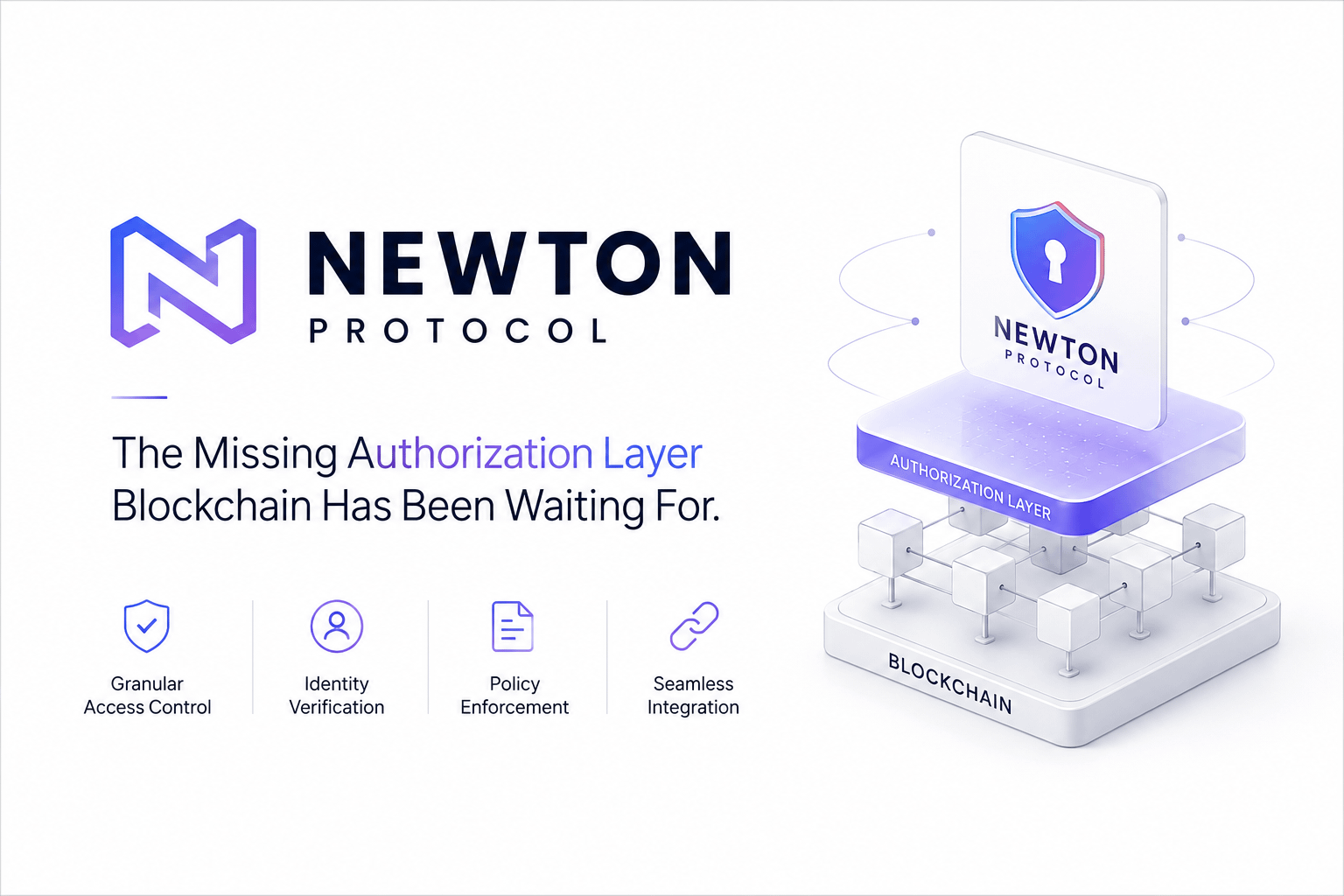
Maybe that's why this category feels different to me. For years, blockchain conversations centered on execution as the defining primitive. Lately, I've started wondering whether authorization could become just as fundamental. Not because it replaces execution, but because mature systems eventually need both.
Whether #Newt becomes the standard or simply pushes the industry toward better permission models, I'm not completely sure. Maybe we're only beginning to understand that moving value safely may depend less on how fast transactions happen, and more on how thoughtfully they're allowed to happen at all.