I opened my wallet this morning expecting to check numbers.
Instead, I ended up staring at a transaction history that barely reflected the amount of thinking that had happened beforehand.
The transfers themselves were simple. I moved funds, adjusted a staking position, and claimed a few rewards that had accumulated over time. Everything executed exactly as it should. Looking back through the wallet later, it almost looked effortless.
But that's what caught my attention.
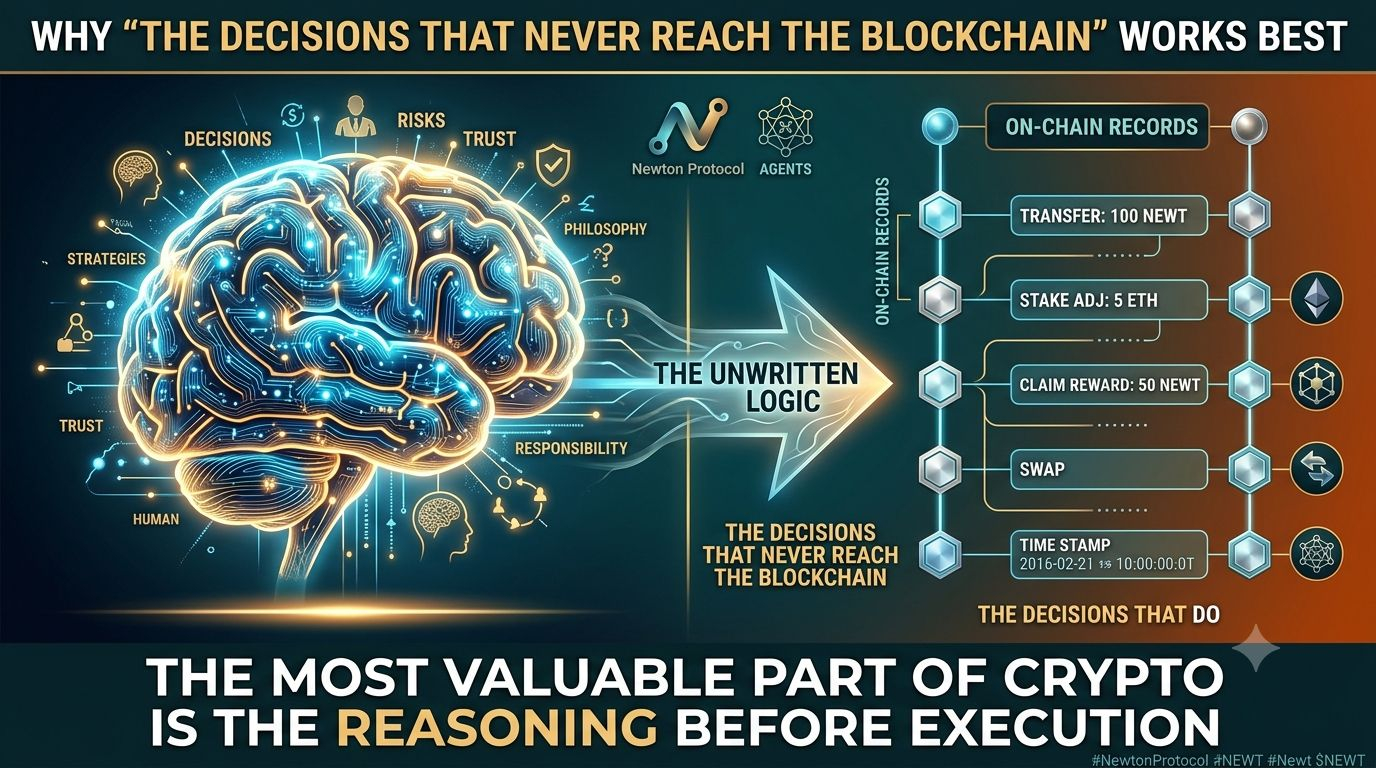
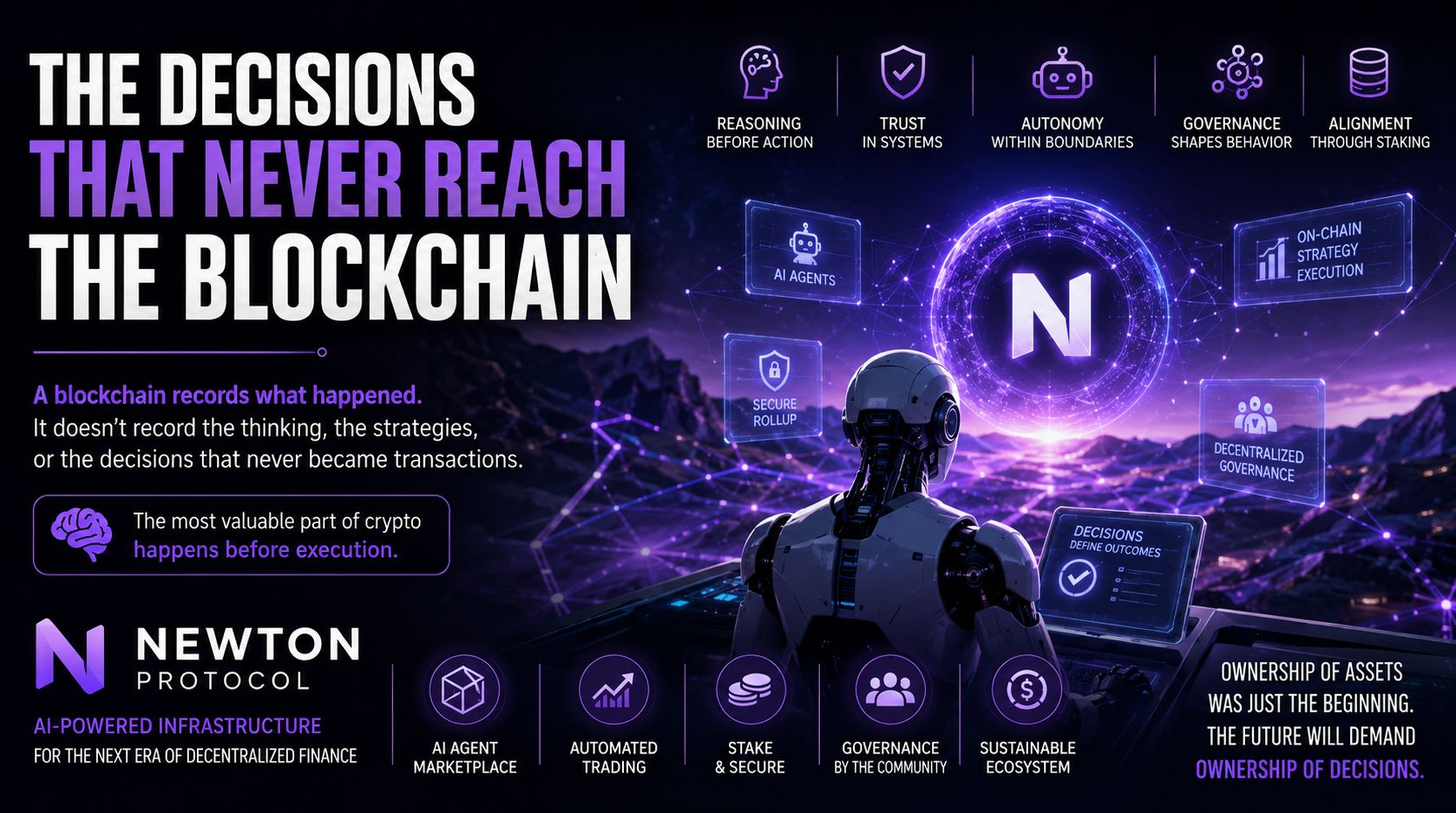
A blockchain records what happened.
It doesn't record all the decisions that never became transactions.
The strategies I rejected.
The protocols I chose not to trust.
The risks I quietly accepted without ever signing a separate message.
I've started to think that the most valuable part of crypto isn't visible on-chain at all.
It's the reasoning that exists before execution.
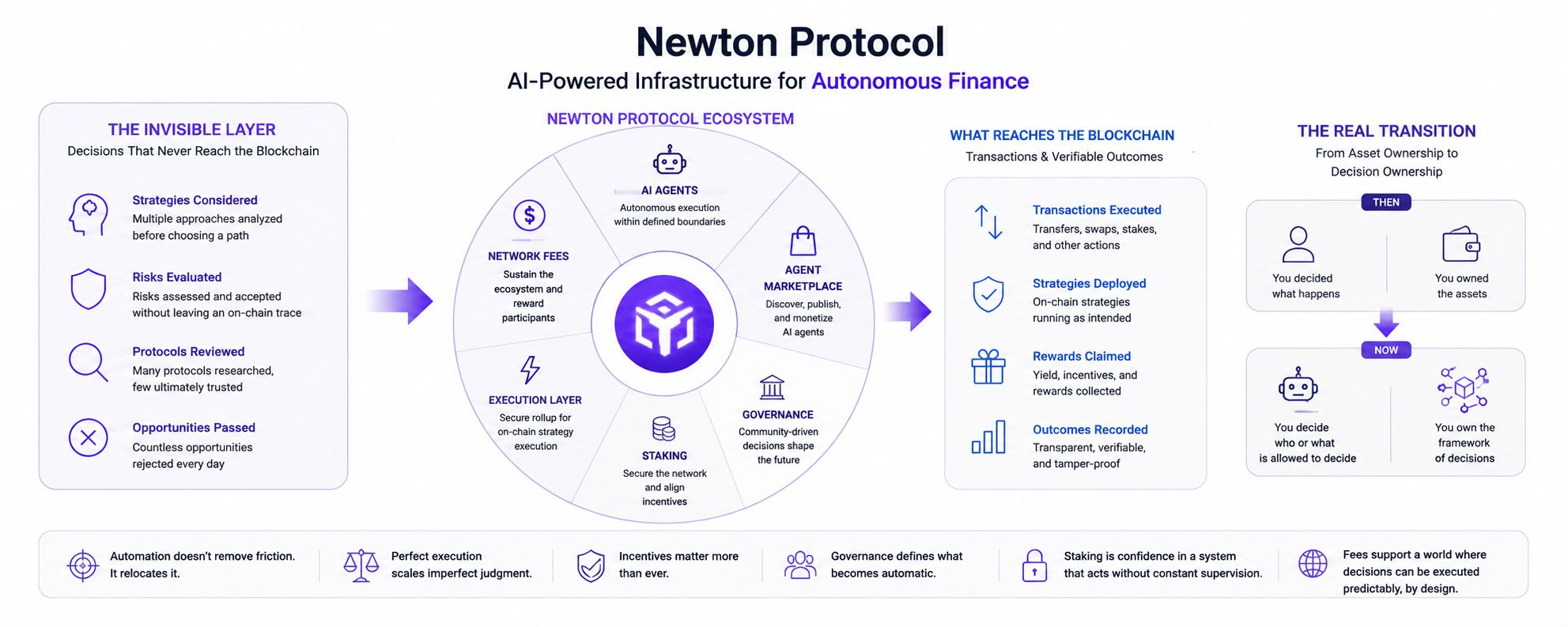
NoThat thought stayed with me while reading about Newton Protocol. Most people naturally focus on the technical pieces: AI agents running on a secure rollup, automated trading, on-chain strategy execution, a marketplace where developers publish AI agents, staking securing the network, governance shaping future rules, fees sustaining the ecosystem.
Those are important.
But I kept wondering whether they're actually solving a different problem than we usually describe.
We often say automation removes friction.
Maybe it doesn't.
Maybe it simply relocates it.
Instead of deciding whether to click "Confirm" every few hours, we're deciding which system deserves the right to click on our behalf.
That's a much heavier decision.
An AI agent isn't just another application. It's a participant capable of acting repeatedly within boundaries that someone else designed. If those boundaries are poorly defined, perfect execution only scales imperfect judgment.
That makes infrastructure feel less like plumbing and more like philosophy.
The conversation shifts away from speed and toward responsibility.
I sometimes wonder if decentralization is entering a quieter phase. For years we focused on removing centralized intermediaries. Now we may have to think just as carefully about the autonomous intermediaries we're creating ourselves.
They're not human.
They don't negotiate.
They simply follow instructions with remarkable consistency.
Which means every incentive built into the protocol matters more than before.
Governance is no longer only about changing parameters.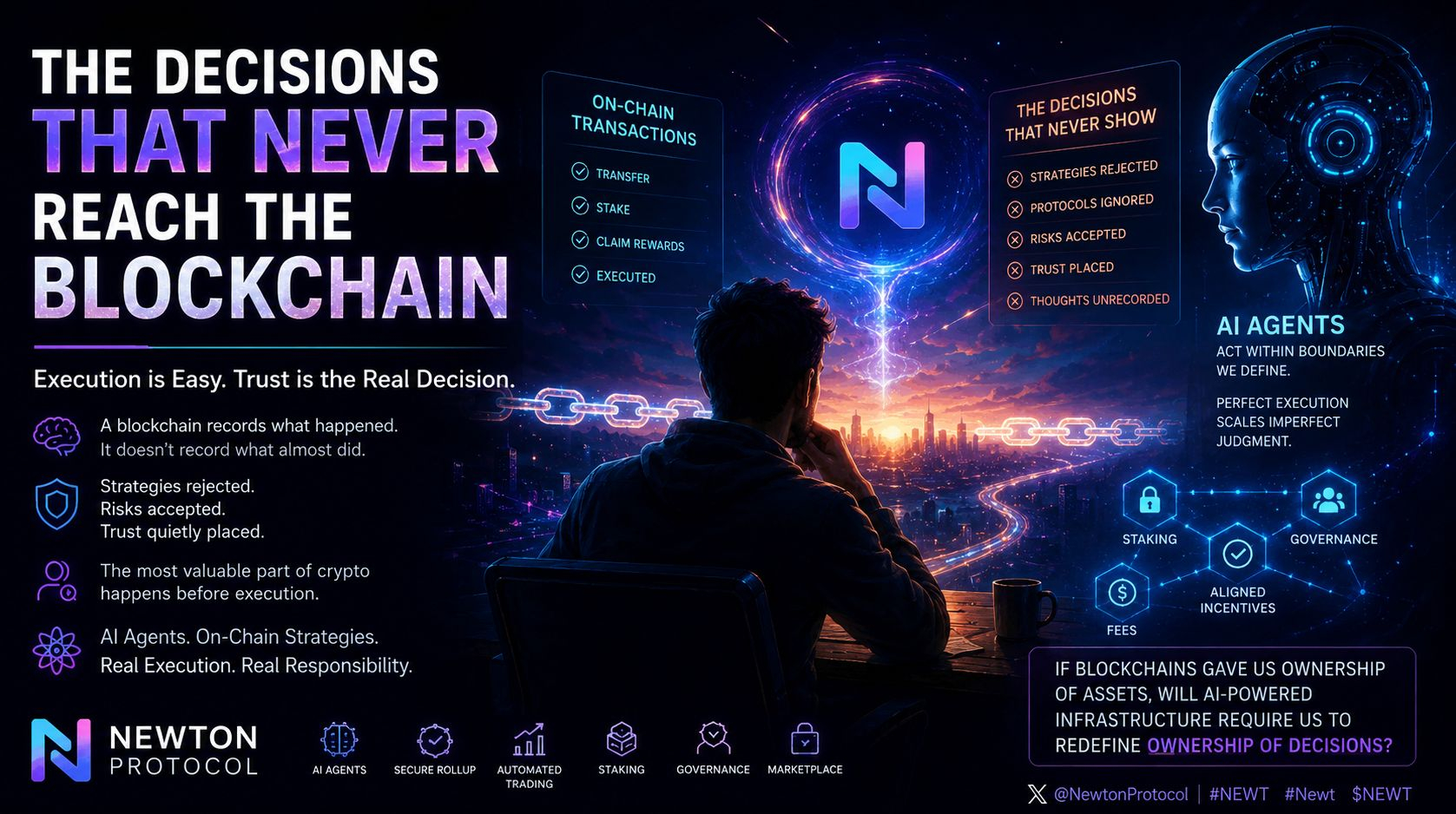
It's about deciding what kinds of behavior should become automatic.
Staking isn't only economic alignment.
It's confidence in a framework that increasingly acts without constant human supervision.
Even network fees begin to look different. They're not just paying for computation. They're supporting an environment where decisions can be carried out predictably, regardless of who initiated them.
Maybe I'm overthinking something that's still early.
Or maybe that's exactly when these questions should be asked.
It's easy to admire automation when everything works. It's much harder to ask whether we've become thoughtful enough about the assumptions we're embedding into it.
When I reviewed my portfolio today, the balances looked familiar.
What didn't feel familiar was realizing that, little by little, my role is changing.
I'm spending less time deciding what should happen and more time deciding who—or what—should be allowed to decide in the future.
Perhaps that's the real transition happening beneath all this infrastructure.
If blockchains gave us ownership of assets, will AI-powered infrastructure eventually require us to redefine ownership of decisions as well?
@NewtonProtocol #NEWT #Newt $NEWT