
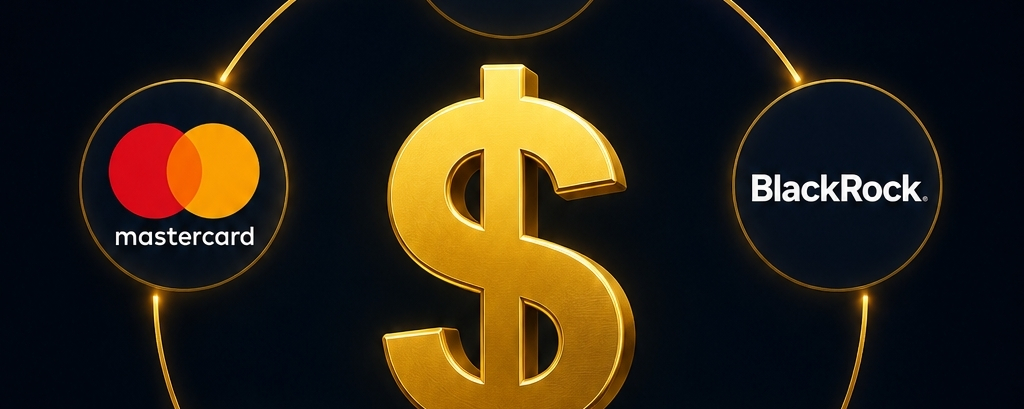
One-sentence summary: On June 30, 2026, a consortium of more than 140 major companies announced Open USD (OUSD), a new stablecoin governed collectively and built on a revenue-sharing model that directly challenges the existing stablecoin market.
Introduction
Every few years, something happens in crypto that changes the conversation permanently. On June 30, 2026, that something arrived.
A new company called Open Standard announced the creation of a stablecoin called Open USD, ticker symbol OUSD. The list of companies backing it reads like a roll call of the global financial system: Visa, Mastercard, Stripe, BlackRock, BNY Mellon, Standard Chartered, Coinbase, Ripple, Google, Shopify, American Express, Samsung, IBM, DoorDash, Aave, OKX, and more than 140 others.
Within hours of the announcement, the stock of Circle — the company behind USDC, currently the second-largest stablecoin in the world — dropped between 13% and 17%.
That reaction tells you everything about how seriously the market is taking this news.
But what exactly is a stablecoin? What makes OUSD different from the stablecoins that already exist? And why should an everyday crypto investor pay attention? Let us break it all down, simply and clearly.
First: What Is a Stablecoin?
A stablecoin is a type of cryptocurrency designed to maintain a stable value — usually pegged to the US dollar at a 1:1 ratio. This means one stablecoin is always worth approximately one dollar.
Unlike Bitcoin or Ethereum, whose prices move constantly, stablecoins are designed not to move much at all. They are the digital equivalent of holding dollars inside the crypto ecosystem.
People use stablecoins to:
Move money quickly across borders without using a bank
Hold value during volatile market periods without converting back to regular currency
Pay for goods and services using crypto without worrying about price swings
Participate in decentralised finance (DeFi) — earning interest, lending, and borrowing
The two most widely used stablecoins right now are USDT (Tether), which holds roughly 62% of the stablecoin market, and USDC (Circle), which holds approximately 25%. These two have dominated the market for years. Open USD is a direct challenge to both.
(Source: market share data cited from CoinDesk, as of April 2026)
Who Is Behind Open USD?
Open Standard, an independent company, is the organisation operating OUSD. Its founding CEO is Zach Abrams, co-founder of Bridge — a stablecoin infrastructure company owned by Stripe.
Critically, Open Standard's board is made up of its partner companies themselves, not a single corporation. This collective governance model is one of the core things that makes OUSD structurally different from every major stablecoin that came before it.
What Makes Open USD Different? Three Core Principles
Open Standard built OUSD around three stated design principles. Understanding these three things is the key to understanding why this launch matters.
Principle 1: Zero Fees, No Limits
Businesses can mint (create) and redeem (convert back) Open USD at no cost, with no volume restrictions. In contrast, existing stablecoin models often involve fees or operational friction at scale. Removing this barrier is designed to encourage large-scale adoption by corporations and payment platforms.
Principle 2: Revenue Sharing
This is the most disruptive part of the model. When a stablecoin issuer holds billions of dollars in reserve, those reserves are invested in interest-bearing assets such as US Treasury bills. That interest income — sometimes called the "float" — has historically been kept entirely by the issuing company. Tether and Circle together earn billions of dollars per year this way.
Open USD inverts this model. Nearly all of the reserve earnings flow back to partner companies after a small management fee is retained by Open Standard. The more OUSD circulates, the more reserve earnings the partner ecosystem receives. This creates a direct financial incentive for every one of the 140+ partner companies to actively promote and integrate OUSD into their own products.
Principle 3: Collective Governance
No single company controls OUSD. Decisions are made by a partner-led board. This is explicitly designed to address a long-standing concern in the stablecoin market: the centralisation risk that comes from any one entity having full control over a coin that thousands of businesses and millions of people rely on.
Where Will OUSD Launch?
Open USD is planned to launch on four blockchain networks — Solana, Polygon, Aptos, and Stellar — when it goes live later in 2026. Op (CoinLaw) en Standard has set no firm launch date beyond 2026.
S (CoinLaw) tripe has confirmed it will make OUSD its default stablecoin for businesses using the Stripe payments platform — a commitment that immediately routes enormous merchant transaction volume through the new token.
What Does This Mean for the Existing Stablecoin Market?
The market reacted immediately. Circle's shares fell sharply on the day of the announcement, with several outlets reporting a drop of between 15% and 17%. Pa (TNW | Launch) rt of the reason the reaction was so sharp is that some of OUSD's backers, including BlackRock and BNY, are also core partners in Circle's own ecosystem.
F (TNW | Launch) or ordinary investors, the key takeaway is not necessarily that USDC or USDT will disappear — they have enormous existing network effects and liquidity. Tether's USDT accounted for roughly 62% of the stablecoin market in April, with Circle's USDC holding around 25%, per data cited from CoinDesk. Ov (TNW | Launch) ertaking that level of dominance takes time and real-world adoption, not just an announcement.
What has definitively changed is the competitive landscape. The stablecoin market is no longer a two-player game.
What Should You Do With This Information?
As an investor and a crypto citizen, understanding stablecoins matters more than most people realise. Stablecoins are the pipes through which much of the crypto economy flows. When the pipes change, everything built on top of them is affected.
For now, the practical steps are simple:
Watch adoption, not just the announcement. Stripe making OUSD its default is a concrete integration. Watch for others to follow or to defend their positions.
Understand what you hold. If you hold USDT or USDC, knowing what stablecoins are and how they differ helps you make better decisions.
Never keep more in a stablecoin than you understand. No stablecoin is completely without risk. Always read the official documentation.
⚠️ Disclaimer: This article is for educational purposes only. It is not financial advice. Cryptocurrency investments, including stablecoins, carry risk. Always do your own research (DYOR). Past events do not guarantee future outcomes.
I want to hear from you: Do you think Open USD can challenge USDT and USDC — or do you think the existing stablecoins are too dominant to be threatened? Drop your thoughts below. 👇
#Stablecoin #OUSD #OpenUSD #Bitcoin #CryptoEducation #Visa #BlackRock #BinanceSquare #DYOR #Web3