
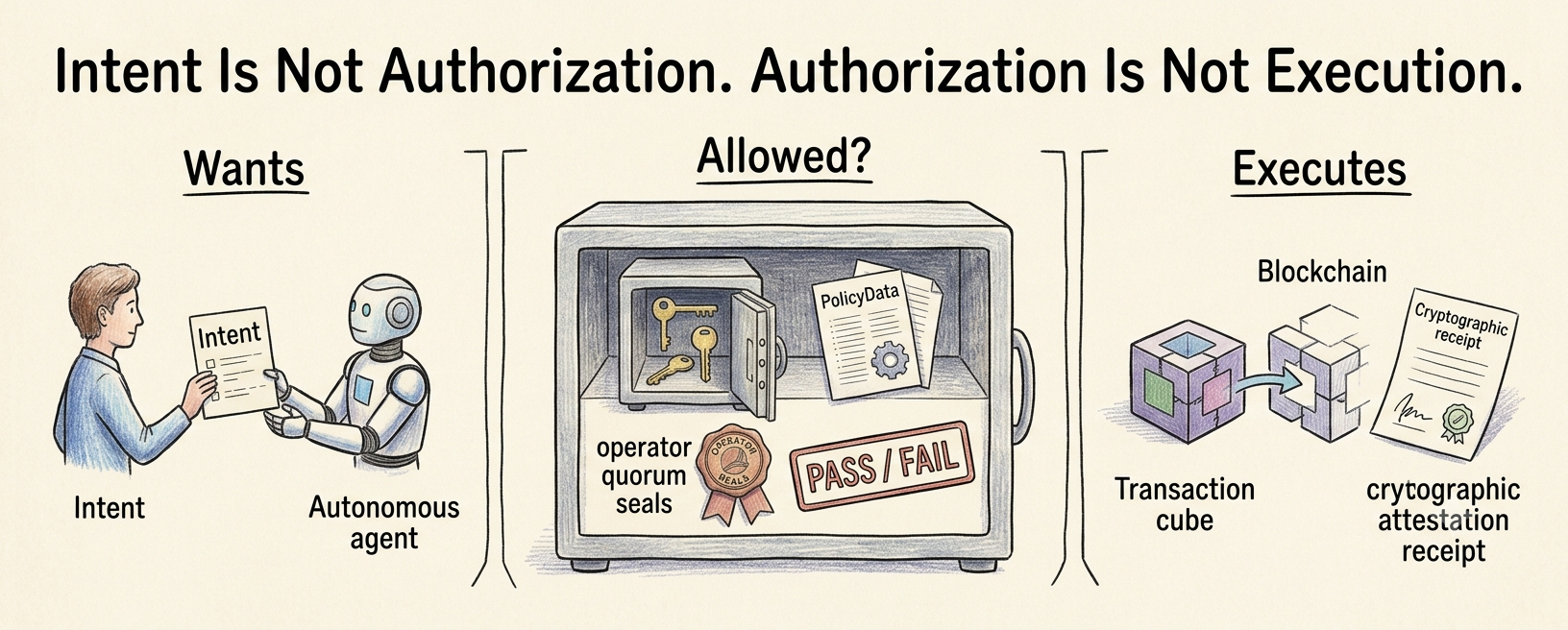
i think Newton only really starts making sense once i stop looking at one intent like one wallet gesture.
because that old crypto habit is still sitting in my head. user sets an intent. wallet signs. chain settles. done. one line. one moment. one authority. and for a while that still feels normal, even when people start dressing it up with agent language, smart wallets, chain abstraction, whatever. same old structure underneath. just better clothes.
but is that actually normal or just familiar.
maybe thats the problem. maybe crypto got too used to compressing intent, authorization, and execution into one motion and calling that elegance.
but then i look at Newton longer and it stops reading like “make automation easier” to me.
it starts reading like something that refuses to let one wallet act carry the whole burden anymore. intent doesnt just move. it has to become legible first. it has to survive policy first. it has to come back with something stricter than execution.
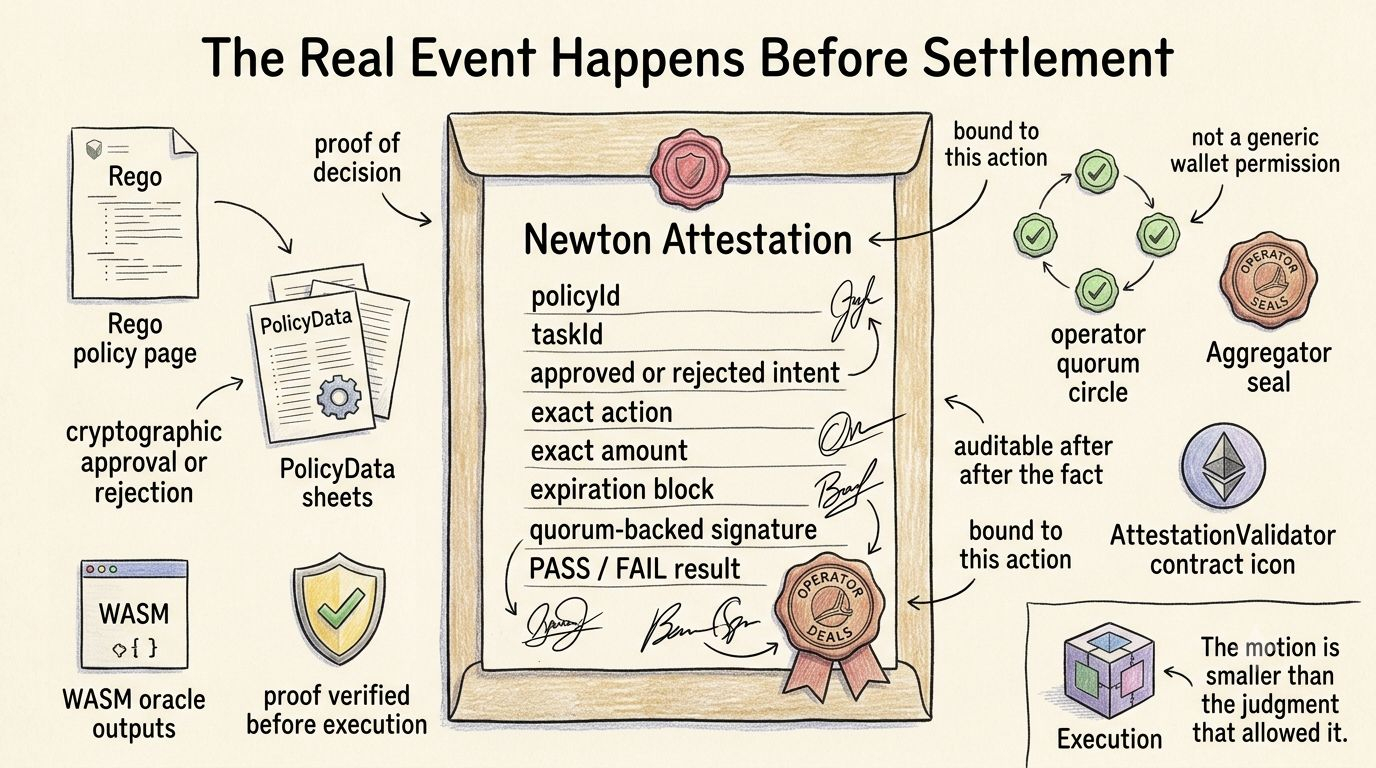
On Newton, intent was doing too much. authorization was doing too much. execution was doing too much. all of it collapsing into the same hand, the same private key, the same signing gesture. and honestly that is probably why onchain automation kept feeling either fake or dangerous. either you babysit every task forever, or you hand too much authority to the agent wallet acting for you. neither one really deserved to be called solved.
what exactly were we calling automation before this anyway.
a script with access.
a wallet with less supervision.
a prettier version of trust.
that is the part i keep coming back to.
Newton does not feel important because it lets an agent execute. a lot of systems can make that claim. it feels important because it keeps asking a more annoying question before that: who said this intent was authorized to exist in the first place. who turned it from a model promise into something the policy engine would actually let through.
and that question changes the whole weight of it for me.
because once that shows up, the architecture stops looking decorative.
Model Registry is not just some directory. Newton is where automation intent gets packaged into something legible enough to register. almost like desire had to become a model first. but even that isnt the real decision yet. then the Keystore sits there holding the uglier part of the problem, which is authorization. not execution. authorization. what can be done, by who, under what spend ceiling, with what session keys, with what session permissions still intact. then execution gets pushed even further away, into something that has to come back with proof, with attestation, with a pass / fail receipt instead of just vibes and logs.
“desire had to become a model first.”
maybe thats why that line stayed with me. because Newton doesnt just package automation. it makes intent legible enough to deny.
and that separation is the whole thing to me.
for years crypto kept pretending the wallet was enough. as if possession of a key was the same thing as durable permissioning. as if signing power was subtle. it isnt subtle. it is blunt. maybe too blunt for the world people keep saying they want, where one Keystore can coordinate assets across chains, where automation intents help, where Newton agent wallets move without turning into little private key disasters.
and how many times was the wallet supposed to carry more than it should have.
identity, permission, authority, execution, blame.
all in one place?
the list itself already sounds wrong.
and yeah i know some people will still flatten Newton into chain unification, or wallet UX, or AI agent rails, or cross-chain convenience. all of that is visible. fine. but it misses the more interesting part. not the surface motion. the part right before motion.
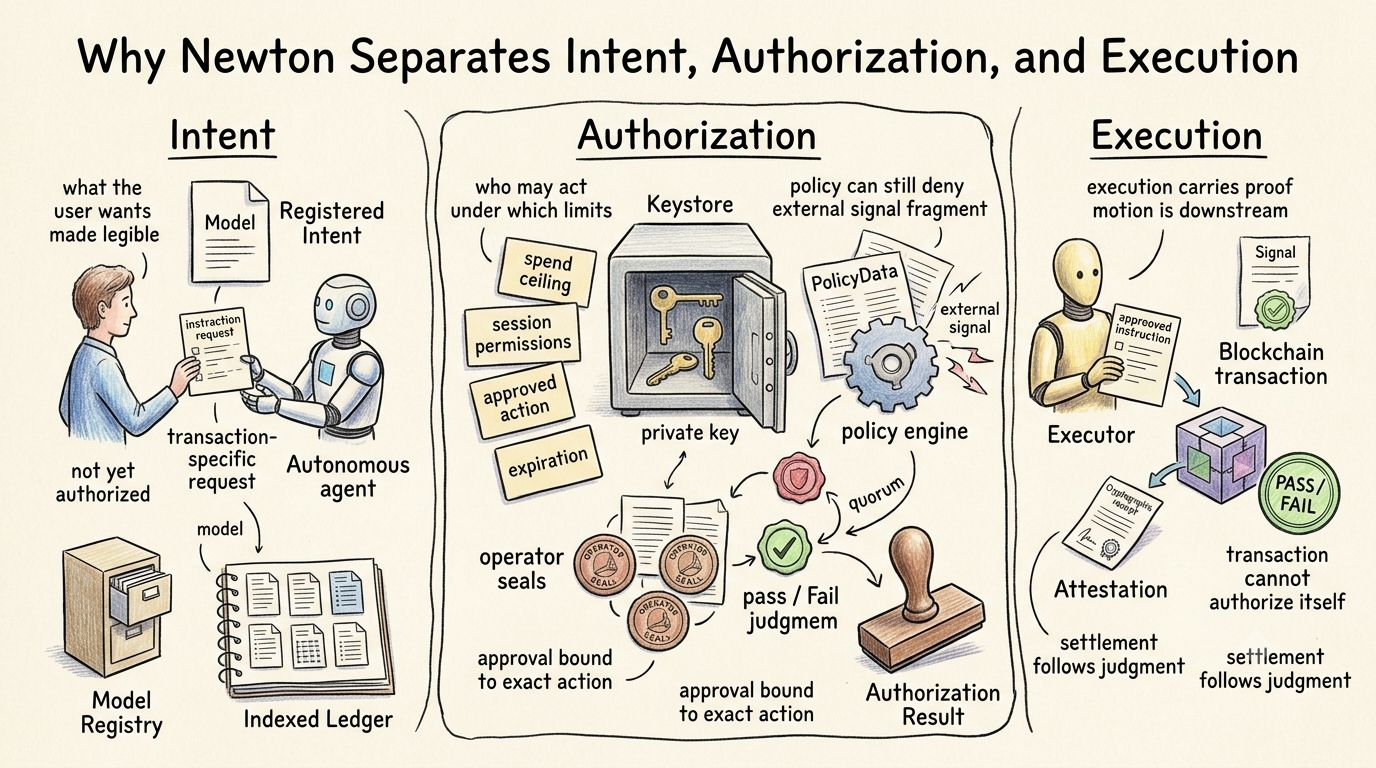
Newton keeps pulling the center of gravity backward.
away from the final settlement.
away from execution.
away from the little dopamine hit of “it cleared”
and toward the policy layer where something can still be denied.
that part matters more than people think.
because the attestation starts feeling weirdly bigger than the transaction itself. the transaction is almost the boring part now. the real event happened slightly earlier, in that stricter place where Newton PolicyData feeds the policy, operator quorum reaches a judgment, and execution only comes back carrying a pass / fail result that someone can actually verify.
and what is the real product there.
faster automation?
or a place where automation can still be told no.
“the decision starts mattering more than the motion.”
and i dont think older chain logic was really built to hold that.
not more transactions. not faster wallets. not cleaner UX.
just this uglier thing underneath. that in an Newton automated onchain world, intent, authorization, and execution probably were never supposed to live in the same place. and once i see that, i cant really go back to the old wallet story without it feeling a little too blunt, a little too confident, a little too unfinished for the kind of automation crypto kept pretending was already here.