

Market's been chopping sideways all week, nothing worth clicking buy on, so I did what I always do when I'm bored and slightly annoyed at price action, I went down a research rabbit hole instead.
Ended up on @NewtonProtocol docs, mostly because I kept seeing AI agent authorization thrown around without anyone explaining what that actually means in practice. I assumed it'd be the usual story give your AI agent a wallet, set some spending limits, sign a permission once, walk away.
That's basically what I thought agent security meant. Session keys, scoped permissions, the stuff we've seen since account abstraction became a thing. Set the rules upfront, trust the rules to hold.
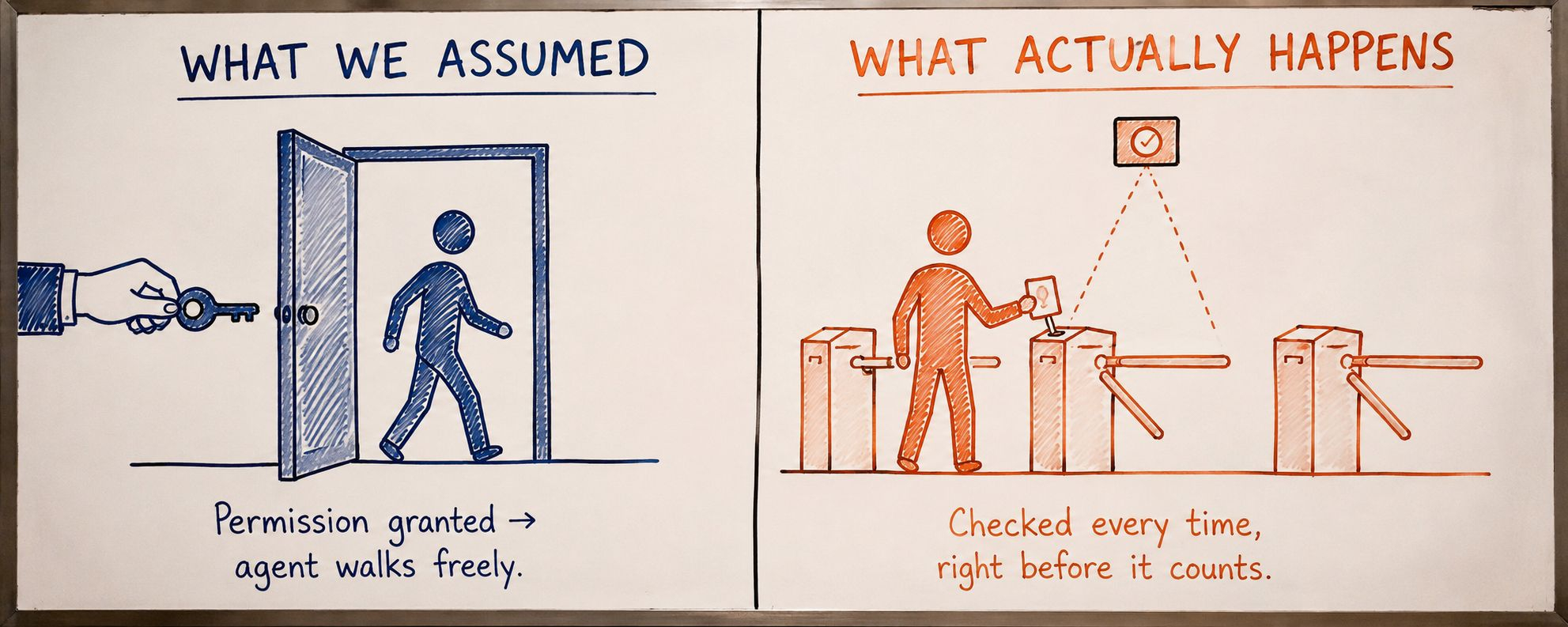
But digging into how Newton actually frames itself, something shifted for me. They don't really describe it as a wallet permission system anymore. They describe it as the authorization layer for onchain transactions and they compare it to a card network, not a wallet. Like, the check doesn't happen when you grant the agent access. It happens right before the transaction settles, every single time, using a policy engine , they're using Rego/OPA, the same stuff people use for cloud infrastructure policy that pulls in live signals identity, sanctions data, risk limits at the moment of execution.
That's a different mental model than permission granted once, agent free to roam within bounds. It's closer to how your credit card doesn't just check your limit when you got the card, it checks fraud rules on every single swipe. The agent isn't trusted because it was scoped correctly at setup. It's checked every time it tries to move money.
Okay, that's actually kind of clever, I thought. Prevention first instead of hope the scope was tight enough.
But and this is the part that's been nagging at me since that whole model still hinges on who writes the policy and who's running the checks. It's enforced through a decentralized operator network secured via EigenLayer restaking, which sounds robust, but restaking security is still an economic assumption, not a mathematical guarantee. If the policy itself is misconfigured, or too permissive, the "verifiable" part just verifies that a bad rule was followed correctly. Verifiability protects against the agent going rogue. It doesn't protect against the person who wrote the policy getting it wrong.
I'm not fully convinced this holds up once you're talking about actual institutional volume and adversarial pressure on the policy layer itself, not just the agent layer. Everyone's excited about "agents can't overstep," but almost nobody's asking who's liable when the boundary itself was drawn wrong.
Still, if this pre settlement checking model is where agent driven DeFi is actually headed, it matters more for the boring stuff payments, treasury automation, stablecoin transfers than for degen trading bots. That's where the real money moves, and where a bad policy costs a lot more than a rug.
Anyway. Charts are still doing nothing. I'll probably keep poking at this instead of watching candles for another hour.
