

There was a time when I thought reputation in crypto was finally becoming measurable. Every wallet carried a public history. Every transaction left a permanent record. It felt logical that trust would naturally settle around addresses because that was the only thing every blockchain could consistently observe.
Lately I am not so sure.
The more I watch onchain finance evolve, the less convinced I become that wallets are the right place to anchor reputation. Wallets are surprisingly disposable. Funds move. Organizations rotate addresses for security. Smart accounts appear, disappear, then reconnect through completely different infrastructures. The address changes, but something else usually stays remarkably stable. The way decisions are made.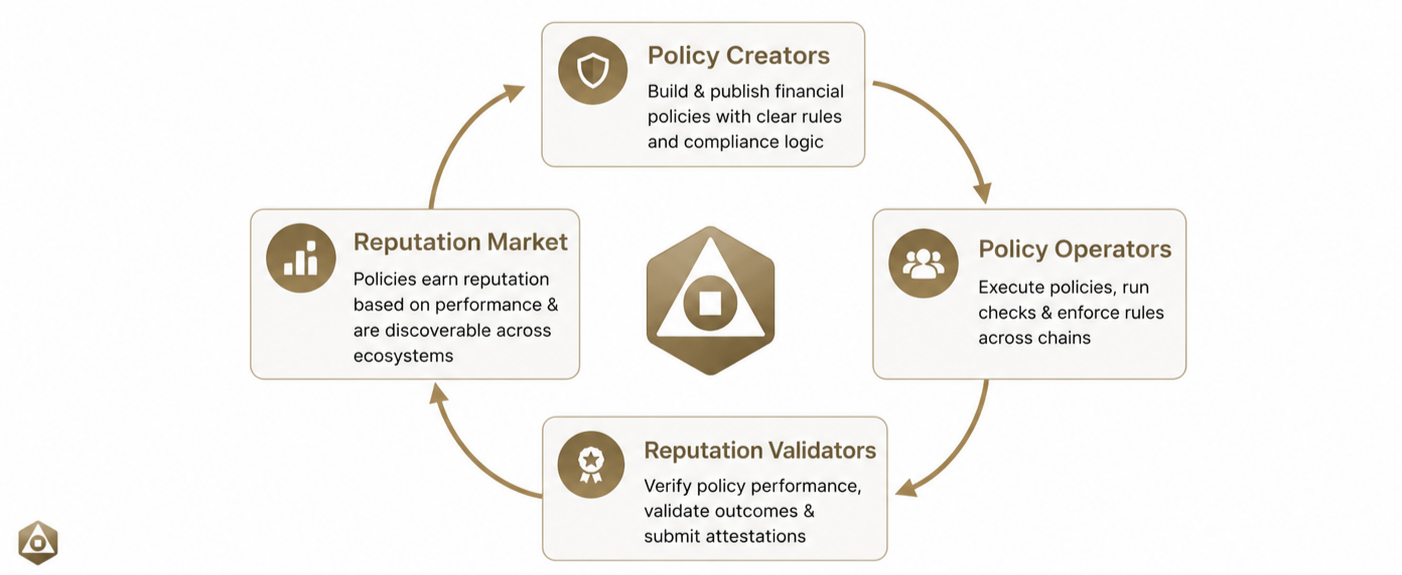
I think that difference gets overlooked because it is much harder to see. We notice signatures because they are public. We rarely notice the authorization rules sitting quietly underneath them. Yet those rules decide almost everything important. Who is allowed to move treasury funds. Which transfers require multiple approvals. When risk controls interrupt execution. Whether a transaction moves forward at all. Those invisible policies shape financial behavior long before the blockchain records the outcome.
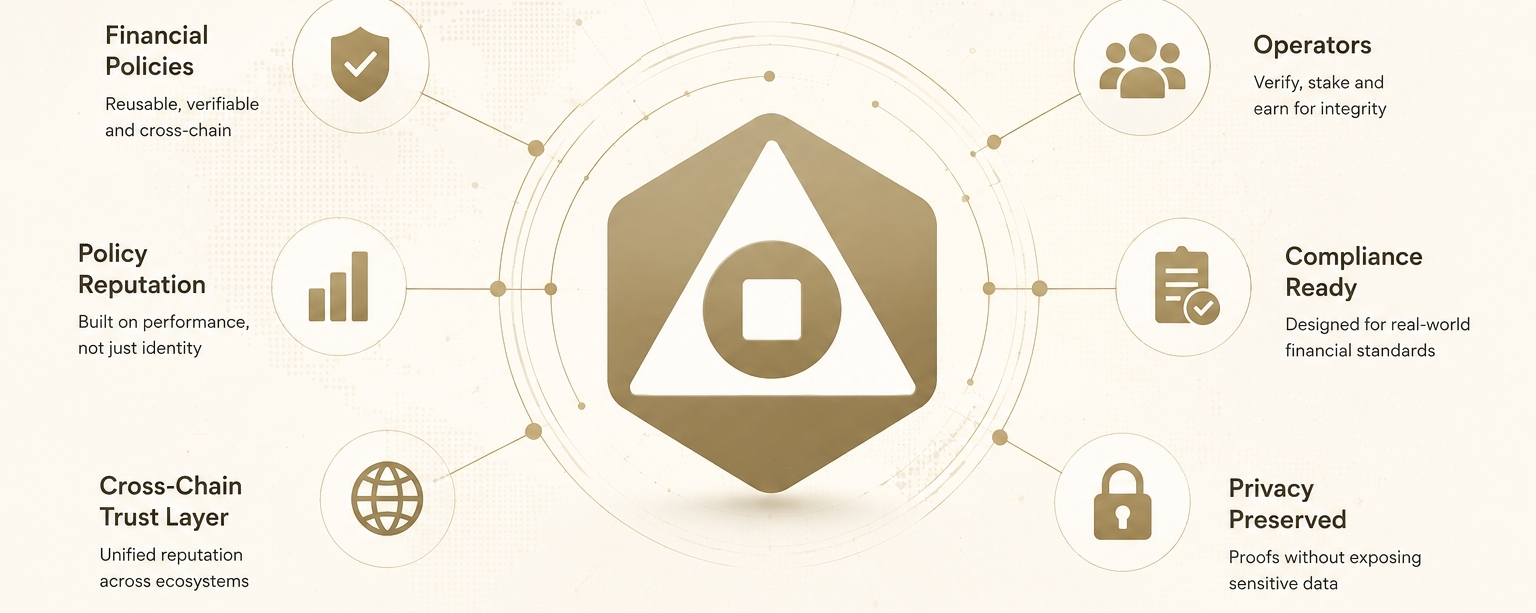
That is probably why Newton Protocol caught my attention. Not because it promises another identity layer, but because it quietly shifts attention toward the decision process itself.
Most infrastructure still assumes every application should build its own authorization system. Developers write smart contracts, then separately design approval logic, permission structures, emergency controls, compliance checks, recovery procedures. It works, although "works" might be too generous. The same patterns get rebuilt over and over again, often with small differences that introduce entirely new risks.
I keep wondering whether the industry has mistaken customization for progress.
In traditional finance, nobody gains confidence because every bank invents a completely different approval process each year. Quite the opposite. Institutions spend decades refining operational policies because proven decision frameworks become valuable assets on their own. Customers rarely notice them. Investors almost never talk about them. Yet billions of dollars move safely every day because those invisible systems have survived thousands of real situations.
Crypto has mostly optimized the visible part.
We celebrate throughput. Settlement speed. Transaction costs. Those metrics matter. They absolutely do. But I sometimes think they distract us from the quieter question sitting underneath everything else.
Can we trust the logic deciding who gets authorized?
Newton seems to approach that question from an unusual angle. Instead of treating authorization as something buried inside every protocol, it separates policy from execution. Put simply, the application requests permission. Independent infrastructure verifies whether the predefined rules allow that action. The application continues without having to rebuild the entire decision system itself.
That architectural choice feels small until I imagine it operating across multiple chains.
Suppose a financial institution uses nearly identical treasury controls on Ethereum, Solana, and another network. Today those authorization systems live separate lives. Their history does not really accumulate into anything reusable. Every deployment earns trust independently, despite solving almost the same operational problem.
That strikes me as inefficient.
What if the reputation belonged to the policy instead?
Suddenly the conversation changes.
Developers are no longer competing only over cleaner Solidity code or faster virtual machines. Policy libraries with years of successful authorization history begin carrying their own economic value. A treasury approval model that has consistently protected billions in assets becomes more than software. It becomes infrastructure people deliberately choose because uncertainty has a measurable cost.
I find that idea much more interesting than another wallet reputation score.
Wallets describe participants.
Policies describe behavior.
Those are completely different things.
Cross-chain finance makes the distinction even harder to ignore. Capital already moves between ecosystems far more often than most narratives admit. Users chase liquidity. Institutions diversify settlement layers. AI agents will probably route transactions wherever execution becomes most efficient.
The financial policy, though, cannot afford to change every time capital crosses a bridge.
Someone still has to verify permissions. Risk limits remain. Regulatory obligations remain. Treasury controls certainly remain. If those decision systems become portable while keeping their operational history intact, the market gains something surprisingly rare. Continuity.
Of course, none of this guarantees success.
Actually, there are reasons to remain skeptical.
Reputation itself can be manipulated if incentives become distorted. Low-quality authorization frameworks might manufacture activity simply to appear established. Reputation also ages. A policy that performed perfectly during one regulatory environment may become outdated surprisingly fast. Measuring authorization quality is far less objective than counting successful transactions.
Then there is privacy, which complicates everything.
Institutions want verification without exposing sensitive internal governance. Regulators increasingly want visibility. Neither side is entirely wrong. Building infrastructure that satisfies both expectations is much harder than describing it inside a whitepaper.
And adoption... adoption always refuses to follow elegant architecture.
Developers rarely migrate because something is technically cleaner. They migrate when operational pain becomes impossible to ignore. Newton will ultimately have to prove that reusable authorization creates enough practical value to justify changing existing workflows. That is a much higher bar than launching another protocol with impressive diagrams.
Still, I cannot shake one thought.
For years crypto has been attaching reputation to people, wallets, validators, even social profiles. Maybe we have been looking in the wrong place all along.
The decision framework itself may become the scarce asset.
Not the address that signs the transaction.
Not even the chain where it settles.
The policy.
If financial systems eventually begin competing over whose authorization logic has earned the deepest trust across different networks, then reputation stops following wallets and starts following judgment. To me, that feels like a far bigger shift than simply making blockchains talk to one another.
#NEWT #Newt #newt $NEWT @NewtonProtocol $HMSTR

