
Founded in 2018, Dusk is a Layer 1 blockchain built for regulated, privacy-focused financial infrastructure. From the beginning, Dusk has focused on enabling institutional-grade finance on-chain, where privacy, compliance, and auditability are not trade-offs but core design features.
Through its modular architecture, Dusk provides a strong foundation for compliant DeFi, tokenized real-world assets, and financial applications that must operate within regulatory frameworks. Rather than targeting hype-driven consumer use cases, Dusk is designed to support serious financial systems that require trust, transparency, and discretion.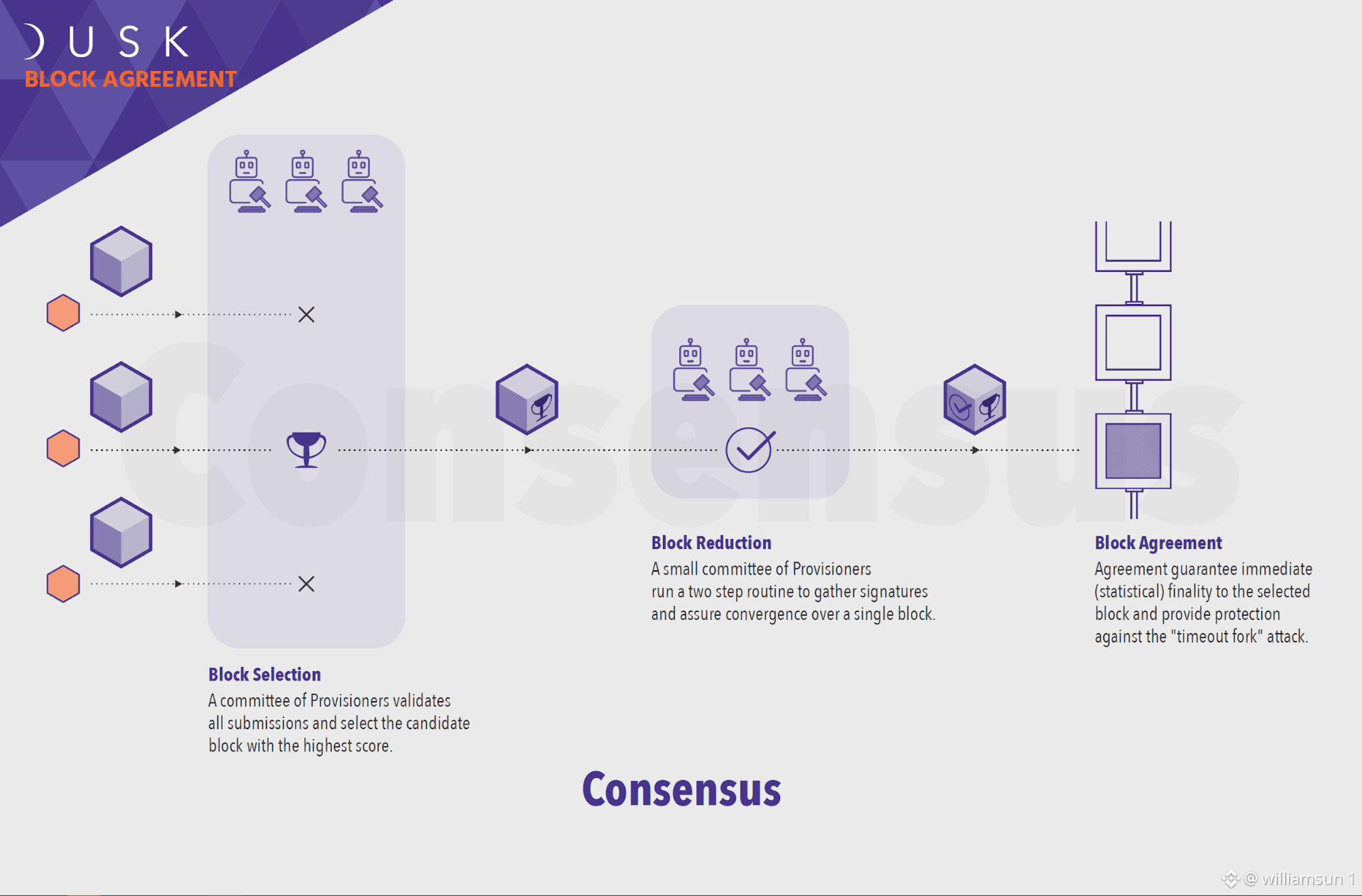
Machine-Centric Infrastructure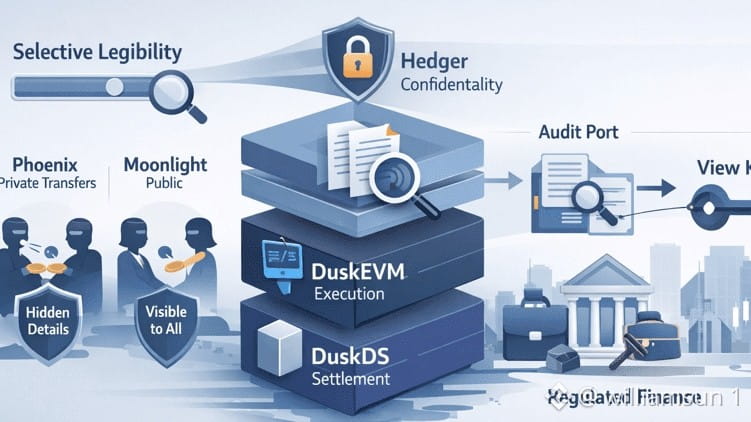
Dusk is built as machine-centric infrastructure, designed to support automated systems rather than only human-driven interaction. Financial operations on Dusk can be handled by smart contracts, compliance engines, and automated processes that run continuously in the background.
This approach transforms blockchain from a manual tool into a deterministic financial layer that machines, institutions, and regulated entities can rely on for secure and automated execution.
Predictability for Automation
Predictability is critical for automated and institutional finance. Dusk prioritizes consistent execution and predictable transaction behavior, making it suitable for AI agents, compliance systems, and automated financial workflows.
When costs and execution rules are predictable, financial software can operate safely at scale without unexpected disruptions.
Fixed-Fee and Cost Stability
Dusk focuses on stable and predictable fee mechanics, ensuring that transaction costs remain understandable and manageable over time. This stability is essential for institutions running repeated transactions, compliance checks, and multi-step financial processes.
Predictable fees reduce operational risk and make long-term financial planning on-chain possible.
Staged Gas System
To protect the network while keeping it accessible, Dusk uses a staged gas approach. Normal transactions remain affordable for everyday usage, while more complex or resource-intensive operations incur higher costs.
This design discourages spam and abuse without penalizing legitimate users or institutional participants.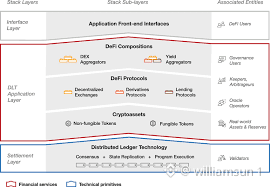
Deterministic Transaction Ordering
Dusk avoids chaotic fee bidding by supporting deterministic transaction ordering. Transactions are processed fairly and predictably, rather than being prioritized solely by who pays the highest fee.
This is especially important for automated systems and regulated financial processes, where timing, fairness, and execution certainty are essential.
AI-Ready Infrastructure
While Dusk does not add AI as a surface feature, it is designed to be AI-compatible at the infrastructure level. AI agents can interact with Dusk-based systems, evaluate on-chain data, and participate in automated decision-making within compliant and auditable frameworks.
This makes Dusk suitable for future financial systems where automation and intelligence are deeply embedded.
Security and Governance
Dusk balances performance and decentralization through a phased governance model. The network begins with Proof-of-Authority (PoA) to ensure speed, reliability, and accountability.
Over time, it transitions toward Proof-of-Reputation (PoR), where validator influence is based on behavior, performance, and trust. This model supports both institutional requirements and long-term decentralization.
Long-Term Vision
Dusk is not designed for short-term speculation. Its long-term vision is to become reliable financial infrastructure for regulated markets, tokenized assets, and compliant DeFi.
By combining privacy, auditability, automation, and predictable execution, Dusk aims to quietly power the financial systems of the future—systems that must work every day, at scale, without compromise.