
DeFi proved one thing exceptionally well: automation.
What it didn’t prove? Institutional trust.
Smart contracts can execute logic flawlessly 🤖
But institutions operate under regulatory, legal, and fiduciary obligations.
They cannot deploy capital into systems that lack:
❌ compliance controls
❌ audit paths
❌ legal clarity
That’s where @Dusk Foundation steps in — a privacy-preserving blockchain built specifically for regulated financial markets.
⚖️ The False Choice: Privacy vs Compliance
Crypto culture often treats privacy and regulation as opposites.
In reality, modern cryptography enables something far more powerful:
🧠 Selective Transparency
Dusk makes this possible through:
🔐 Confidential transactions
🪪 Compliant identity frameworks
📊 Audit-ready disclosures
🧮 Zero-knowledge verification
Regulators can verify legitimacy without exposing sensitive financial data to the public.
Privacy isn’t removed — it’s controlled.
🏦 Why Institutions Need Protocol-Level Compliance
Institutions can’t rely on app-level promises.
Compliance must be enforceable at the infrastructure layer.
They require:
✔️ KYC compatibility
✔️ Transaction traceability (when required)
✔️ Rule enforcement
✔️ Permissioned access controls
✔️ Disclosure tooling
Dusk embeds these capabilities directly into the protocol stack, not as afterthoughts.
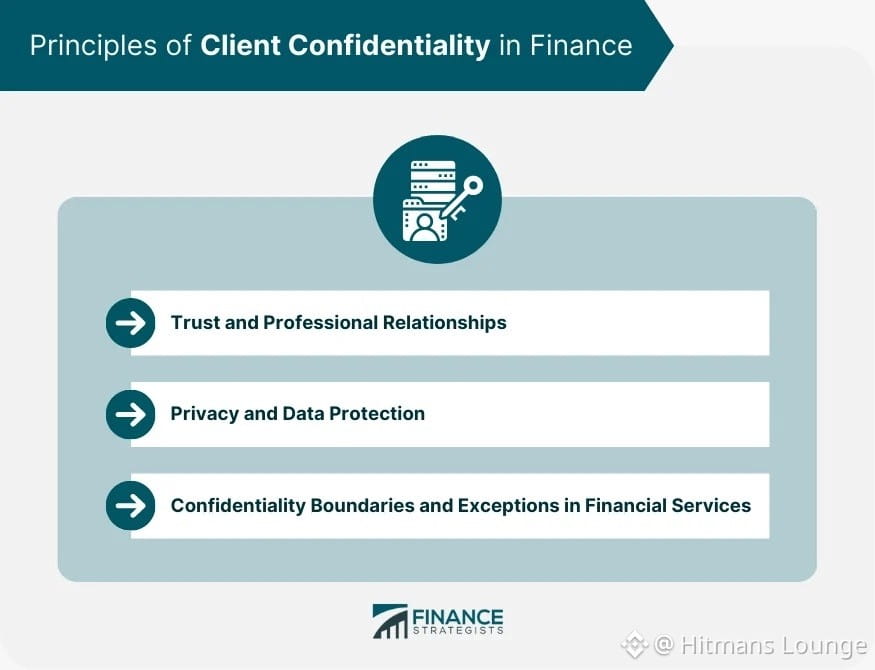
📜 Tokenized Securities Need Better Rails
Tokenized bonds, equities, and funds are coming — fast ⚡️
But they cannot live on anonymous, non-compliant rails.
$DUSK is optimized for:
📌 Security token issuance
📌 Regulated asset trading
📌 Compliant settlement
📌 Confidential order flow
This is infrastructure designed for real markets, not experiments.
🌙 CLOSING NOTES
The next evolution of DeFi won’t be louder.
It will be trusted.
Privacy + compliance isn’t a contradiction —
it’s the future of institutional Web3.
#Dusk #CompliantDeFi #Tokenization #PrivacyTech #Web3Finance