

The real hurdle with bringing real-world assets on-chain isn’t about liquidity, scalability, or even how tricky the smart contracts get. It’s about privacy and regulation makes it even tougher. In the world of traditional finance, everything happens inside tight legal boundaries. Sensitive data stays locked down, but at the same time, every move needs to be traceable. Most blockchains just don’t handle this well. They make you pick between transparency and following the rules, and that’s exactly why big institutions are still watching from the sidelines.
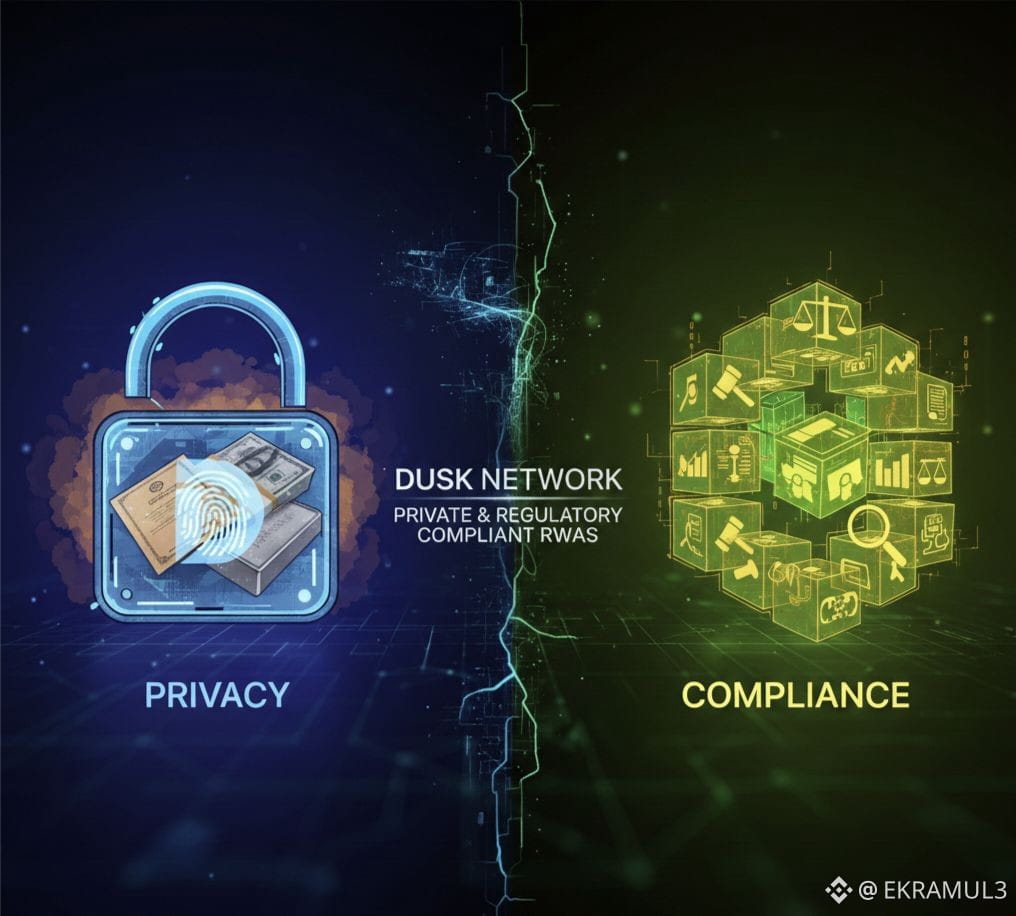 This is the gap Dusk Foundation was designed to address.
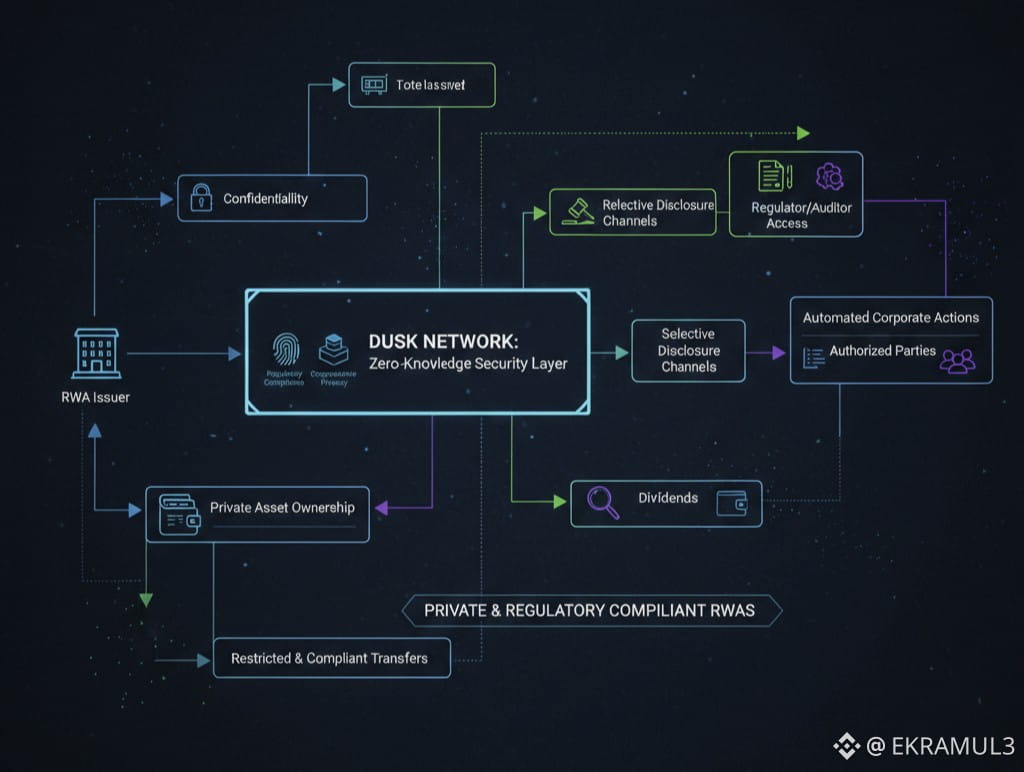
Dusk takes a different approach to blockchain. Instead of putting everyone’s transaction details out in the open, it builds privacy right into the core. Smart contracts on Dusk keep sensitive info encrypted, but still give outsiders the tools to check that everything’s above board. The system creates cryptographic proofs so people can verify rules are being followed, without ever seeing the private details themselves. You get privacy, but you don’t lose accountability.
This really matters when you’re dealing with real-world assets. Think tokenized stocks, bonds, invoices, funds all packed with confidential ownership data and pricing, not to mention who’s involved in each deal. Making that public isn’t just a bad idea; in a lot of places, it’s actually illegal. Dusk’s setup lets these assets live on-chain while keeping the details private and meeting regulatory rules.
Dusk does privacy differently. It’s not an afterthought it’s baked in from the start. The smart contracts take care of compliance on their own. They only share the info that’s actually needed for checks, and nothing extra. Regulators get transparency instead of some mysterious black box, and institutions keep control over their data. That’s the kind of balance that makes this work in the real world.
 The $DUSK token is really the engine behind everything. People stake it to keep the network secure, and it also gives them a real voice in shaping how the protocol grows. Validators pick up rewards for making sure contracts do what they’re supposed to, while token holders help guide the whole project, making sure it sticks to long-term regulatory goals instead of just chasing quick trends.
This architecture positions Dusk differently from most DeFi platforms. It is not competing for yield attention. It is building infrastructure that regulated markets can actually use. As real-world asset tokenization matures, platforms that ignore privacy or compliance will hit hard limits. Dusk is designed to operate beyond those limits.
In regulated finance, trust is not built on visibility alone. It is built on verifiability without exposure. By enabling private execution with provable outcomes, Dusk offers a realistic path for real-world assets to move on-chain at scale. That is why it is increasingly viewed not as a niche privacy chain, but as a foundational layer for regulated DeFi.