

When I sit with Vanar for a while, the way I understand it stops being about blockchains as a category and starts being about systems design under real-world constraints. I don’t think of it as a project trying to prove a thesis or push an ideology. I think of it as infrastructure built by people who have already learned, often the hard way, how unforgiving consumer-facing environments can be. That framing matters, because it shifts the question from “what is this trying to achieve?” to “what problem is this quietly trying to avoid?”
Most of the users Vanar seems designed for will never describe themselves as crypto users. They arrive through games, entertainment platforms, branded experiences, or digital environments where blockchain is not the point, but a hidden layer enabling ownership, persistence, or coordination. These users behave very differently from early adopters. They don’t tolerate friction. They don’t read documentation. They don’t adjust settings because a system asks them to. If something feels slow, confusing, or unreliable, they simply leave. When I look at Vanar through that lens, many of its choices feel less like ambition and more like discipline.
What the data implied by its ecosystem suggests is a focus on repetition rather than experimentation. Consumer systems live or die on routine usage. The same actions performed thousands or millions of times, often without conscious thought. Vanar’s emphasis on predictable performance, stable costs, and low-latency interactions aligns with that reality. These are not features that impress engineers in isolation, but they matter deeply when real people interact with applications daily. Reliability compounds in ways innovation often doesn’t.
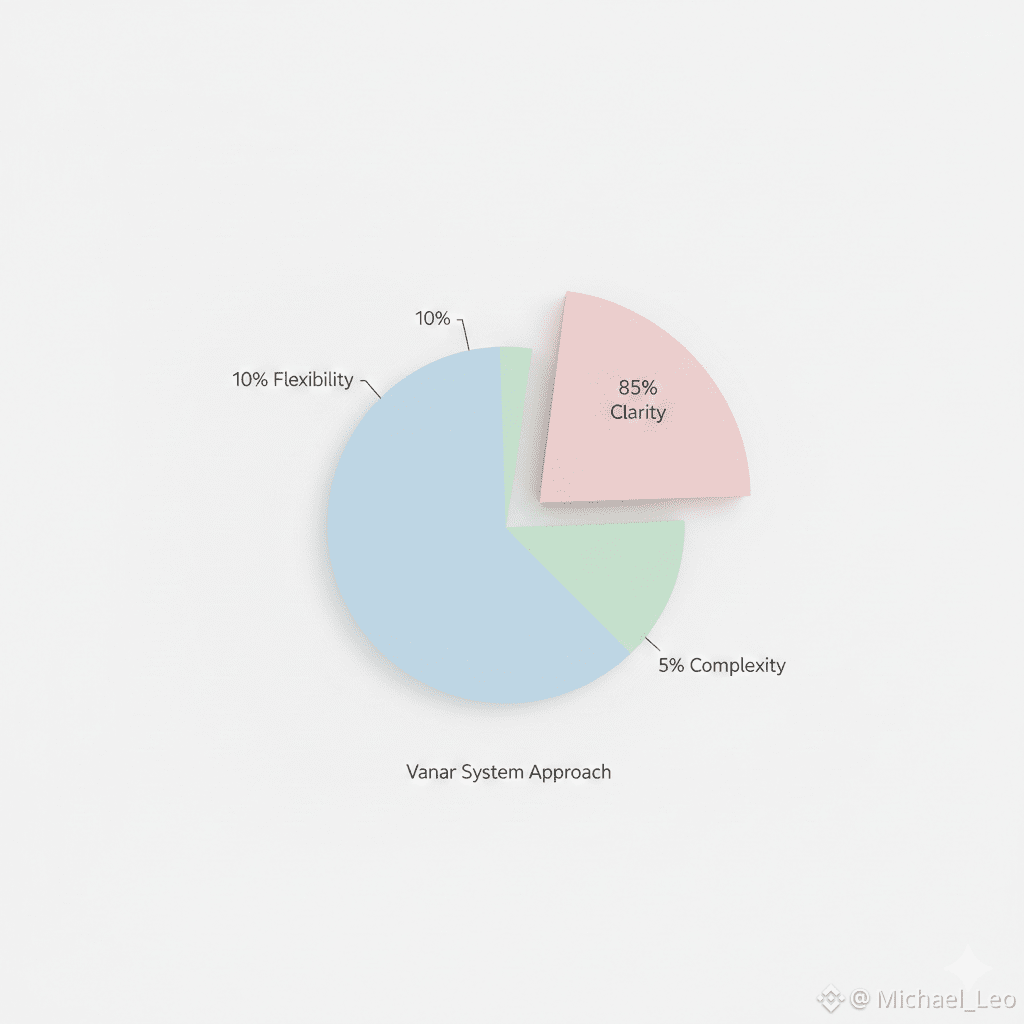
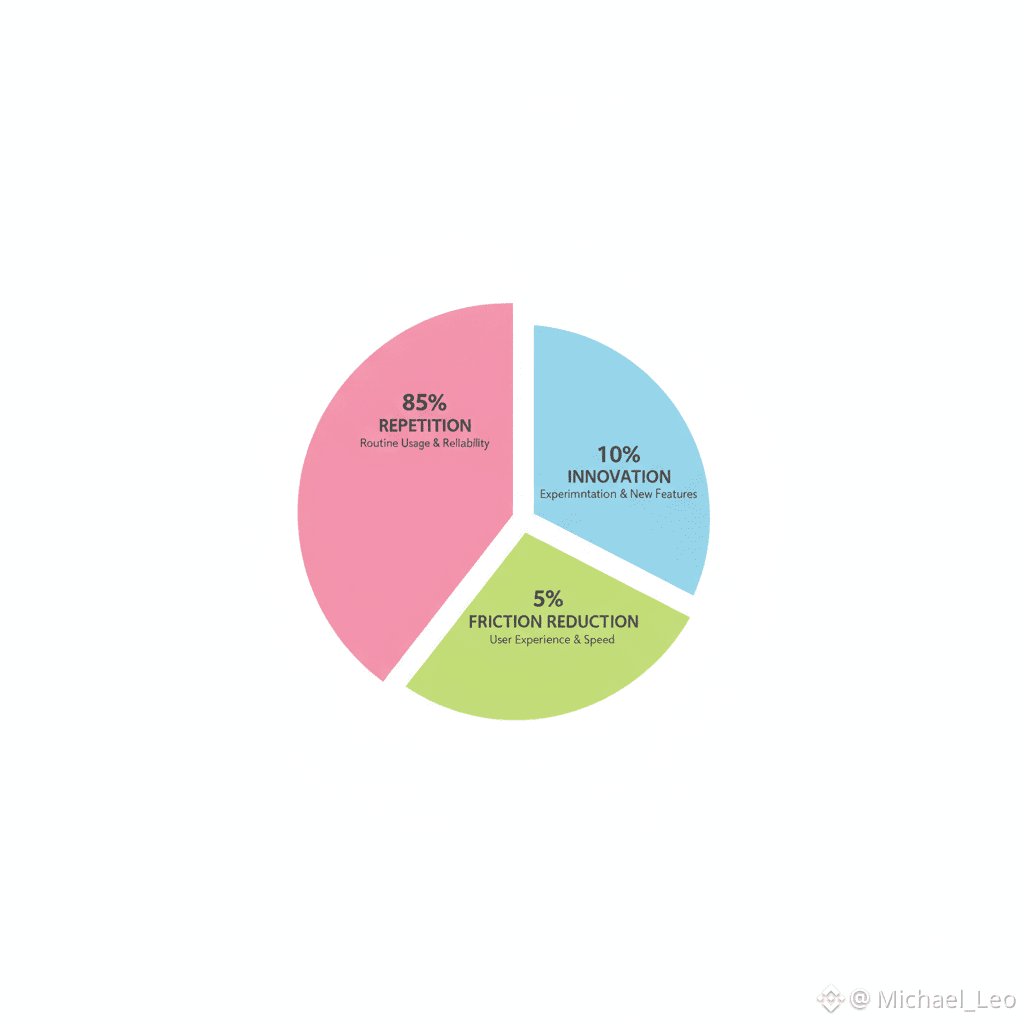 The product decisions feel like responses to onboarding pain rather than expressions of technical creativity. Instead of assuming users will learn new mental models, Vanar appears to reduce the number of decisions users need to make at all. Wallet interactions, transaction handling, and application flows are designed to feel closer to familiar digital services than to experimental systems. That approach carries trade-offs. You give up some flexibility and expressive complexity, but you gain clarity. In consumer environments, clarity is rarely optional.
One thing I respect is how the system handles complexity by burying it where users never have to see it. Vanar doesn’t ask people to care how consensus works, how fees are calculated, or how infrastructure scales. Those problems still exist, but they are treated as internal responsibilities rather than shared burdens. This reflects a mindset I associate more with mature software industries than with emerging ones. Good infrastructure absorbs complexity. It does not showcase it.
There are ambitious elements here, but they are expressed quietly. Supporting multiple verticals like gaming, metaverse experiences, and brand integrations creates real operational stress. Products such as Virtua Metaverse and the VGN games network function less like promotional examples and more like ongoing pressure tests. They reveal how the system behaves under continuous use, during peak demand, and across diverse user behaviors. These environments are not forgiving. They expose weaknesses quickly and without ceremony. Any infrastructure that survives them earns credibility through behavior, not claims.
 I also think about the role of the VANRY token in purely functional terms. It appears designed to support usage, coordination, and alignment within the network rather than to sit at the center of user attention. That choice is consistent with everything else I see. In systems built for everyday users, the healthiest outcome is often invisibility. If the token becomes something users must think about constantly, it usually means the system has leaked complexity upward.
Zooming out, what Vanar represents to me is a particular direction in how blockchain infrastructure can mature. It treats mainstream adoption not as a milestone to be announced, but as a set of constraints to be respected from day one. It assumes users will not meet the system halfway, and designs accordingly. That approach doesn’t produce dramatic stories or bold statements, but it produces something more valuable: software that behaves the way people expect it to. If blockchain infrastructure is going to matter beyond enthusiasts, it will likely look more like this—quiet, restrained, and built around the simple idea that systems should work even when nobody is paying attention.
