
When I first heard about Vanar I felt something rare in the crypto world. It wasn’t another list of promises or fancy jargon. It felt like a group of people who had spent years in games, entertainment, and brands had looked at blockchain and asked themselves a simple question: how do we make this actually make sense for real people, not just traders or speculators? That idea of building for everyday experiences instead of charts and hype grabbed me immediately. Vanar started as a project called Virtua and then grew into something much bigger, a Layer 1 blockchain designed to bring real utility into the world.
What I like about Vanar is that it’s simple to use but powerful under the hood. They call it an AI‑native blockchain, which sounds technical but really just means the chain can store smart data, reason about it, and help applications make decisions without complicated workarounds. They built special layers for things like compressed storage, semantic understanding, real-time logic, and normal blockchain transactions. All of this makes it easier for developers to build things that feel alive and intelligent, not just static records.
Vanar was built to solve problems that turn most people away from blockchain. High fees, slow confirmations, confusing wallets, and complicated apps make blockchain feel like work instead of play. The Vanar team focused on fixing that. They made fees predictable, transactions fast, and everything compatible with Ethereum tools so developers can build without relearning everything. They wanted builders and brands to feel at home, not frustrated.
The heart of Vanar is the VANRY token, and this is where the project starts to feel really human. VANRY is not a number on a chart. It’s the fuel that powers the network. You use it to pay for transactions, access services, and participate in network governance. What really touched me was how they transitioned from the old TVK token to VANRY. Early supporters didn’t lose anything. They got a fair, 1‑to‑1 migration, and the team made sure the instructions were clear so no one felt left behind. That kind of care says a lot about their priorities.
I also like how the tokenomics are structured. Most tokens are for validators securing the network, some are for ongoing development, and a portion goes to community initiatives. The founders didn’t reserve a big chunk for themselves, which tells me they are thinking about people and builders first. That choice builds trust in a way that charts or marketing campaigns never could.
Vanar’s architecture is also fascinating because it uses something called Proof of Reputation. Instead of giving power to the richest or the fastest, it evaluates the credibility of validators so the network stays secure and fair. It’s a blend of Proof of Stake, authority, and community trust, and it keeps the network decentralized while running efficiently.
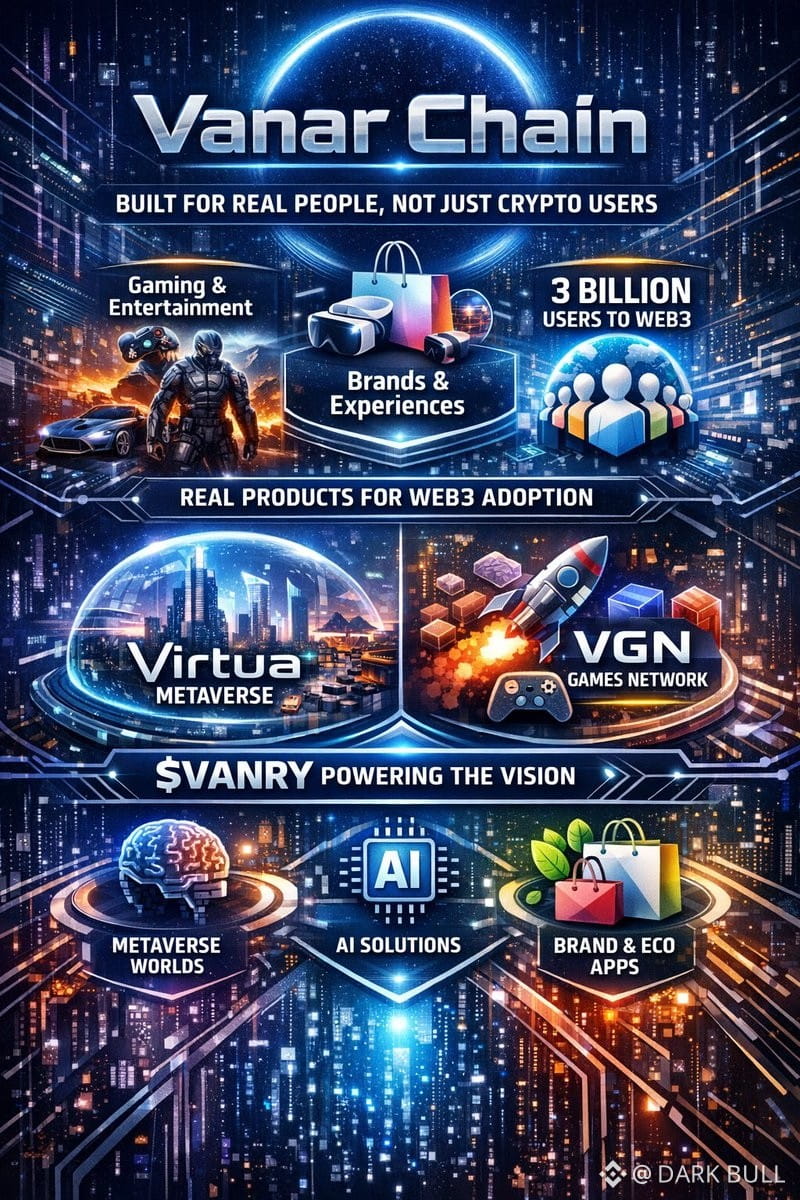
What excites me most is that Vanar is more than just technology. They are building real products for real people. Virtua Metaverse and the VGN games network let people play, spend, and own digital things without complicated steps or huge fees. These platforms are exactly the kind of entry points ordinary users need. They bring blockchain to familiar experiences instead of forcing everyone to become a crypto expert.
Vanar also integrates AI directly into the chain. It’s not something they added later. The system itself compresses, stores, and understands data to make applications smarter. AI can help games feel more immersive, brands feel more personal, and rules or logic can happen automatically instead of relying on outside servers. It makes using Web3 feel faster, smarter, and more intuitive.
Looking back, it’s amazing to see how Vanar evolved. It started in Virtua, working on digital collectibles with real creative teams. Then it grew into a full Layer 1 blockchain for AI, gaming, metaverse, and brands. They brought partners into the ecosystem to support graphics, developer tools, and community engagement. The story that emerges is one of thoughtful problem solving. They are asking how to bring thousands or millions of users into blockchain worlds without making it painful for developers or consumers.
I want to be honest though. Building a blockchain is hard work. Adoption isn’t measured in roadmaps or promises but in daily active users, developer activity, transactions, and real value being exchanged. Vanar understands this. Every milestone counts, whether it’s releasing tools like Neutron and Kayon, helping developers, or seeing people pay for services inside their products.
When I think about Vanar today, I see a project weaving technology, real use cases, and a vision for Web3 that actually touches people. They are building infrastructure that is useful and grounded, and pairing it with tools that make sense for the next generation of interactive products. It’s not flashy work; it’s work that matters.
What makes me feel hopeful is this simple truth: technology that serves people emotionally succeeds in ways charts can’t measure. Vanar is trying to make blockchain something you use, something you enjoy, not something you have to study. If they continue this way, building tools that developers love and users enjoy, they could genuinely become part of the future of mass adoption. And that is a future worth imagining and working toward.