
When I think about the global infrastructure for credential verification and token distribution, I realize just how much of this space is still figuring out what “trust” really means. Everyone talks about blockchain, decentralization, and trustless systems, but the moment you need actual verifiable credentials and tokens that can be relied on across systems, things get complicated fast. That’s where infrastructure matters — and where most projects stumble.
Credential verification isn’t just about checking an identity once. It’s about proving who signed what, when, and under what authority, while ensuring that the record can travel across platforms without breaking trust. Combine that with token distribution — whether for governance, utility, or incentives — and you suddenly see how much coordination, standardization, and framework alignment is required. This is not flashy. This is not sexy. But it’s exactly the part of the system that determines whether a project is actually useful or just another idea on paper.
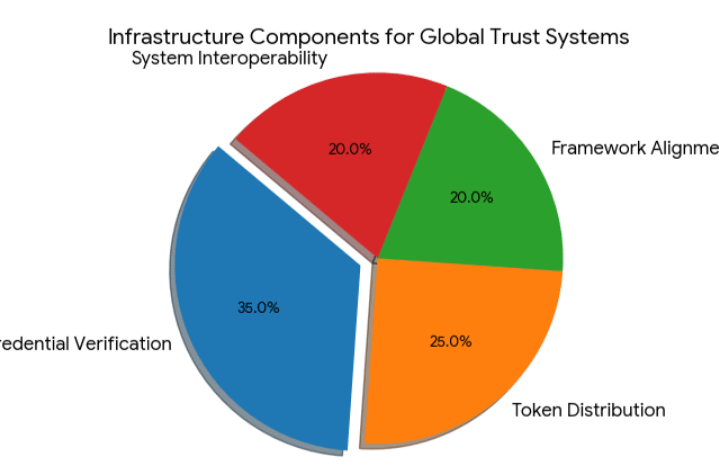
I look at global standards and industry frameworks, and I see progress, but also gaps. Organizations and committees are trying to codify how credentials should be structured, how verifiable data should flow, and how token allocation can be fair, transparent, and durable. But the enforcement isn’t universal. Many projects claim compliance, but when you examine the mechanics — vesting schedules, audit trails, interoperability — the picture is often messy. That’s why I stay cautious.
Still, there is a silver lining. Frameworks like these provide a reference point for evaluation. They allow me to ask the right questions: Does this credential system actually prevent forgery? Can these tokens circulate reliably without undermining incentives? Are the distributions aligned with long-term adoption rather than early hype? These are the questions that marketing slides won’t answer, but the underlying infrastructure will.
What keeps me interested is relevance. Projects building around verifiable credentials and solid token distribution are tackling real friction points — the friction that stops most systems from scaling trustlessly. And that’s where true innovation sits. It’s not about the loudest launch or the most aggressive hype. It’s about creating infrastructure that people, companies, and even governments can rely on. That’s the kind of pull that makes a project hard to ignore.
I remain cautiously optimistic. Standards, frameworks, and global infrastructure aren’t perfect, but they give us a way to distinguish projects that could genuinely matter from those that will disappear when the noise fades. And in a space full of promises, that distinction is everything.
At the end of the day, I keep returning to the same thought: building real, globally trusted infrastructure isn’t glamorous, but it’s the foundation on which anything meaningful can stand. That’s why I pay attention to credential verification and token distribution — not because it sounds impressive, but because it determines whether a system can actually be relied on.
@SignOfficial #SignDigitalSovereignInfra $SIGN
