
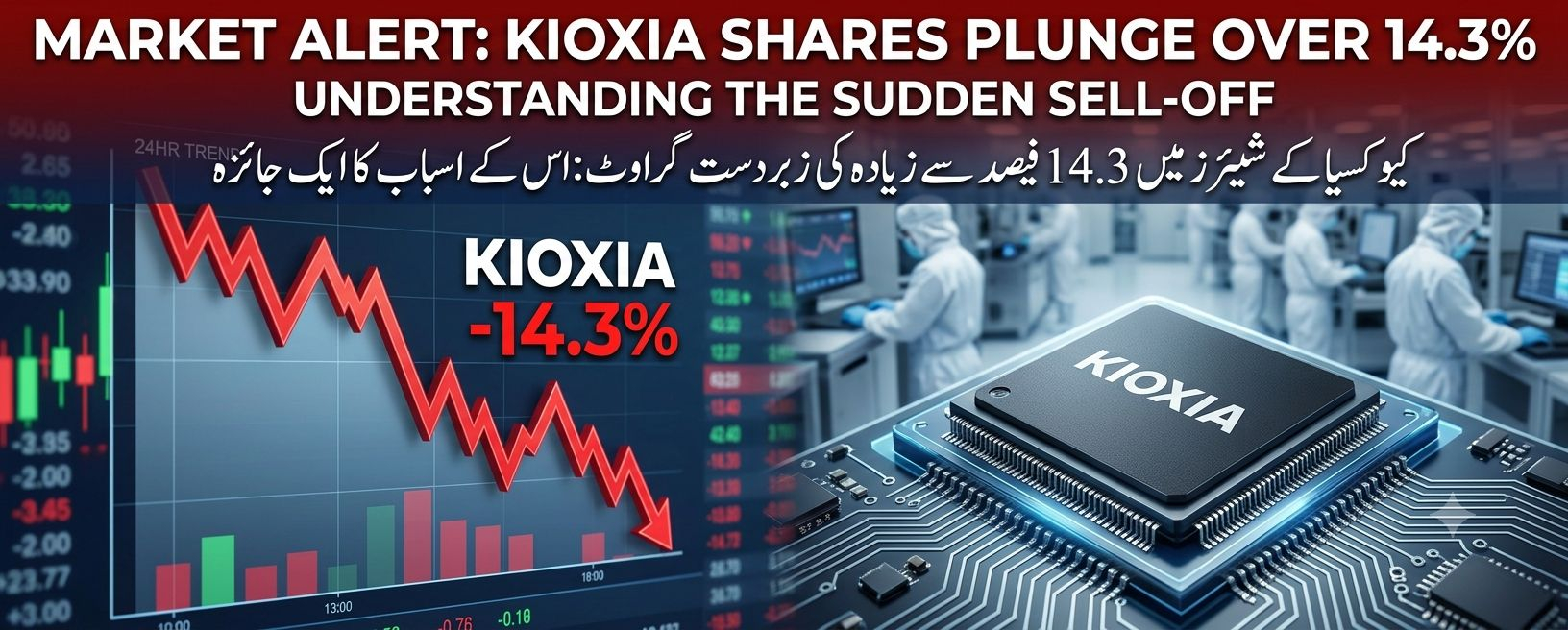
The global semiconductor and memory chip market has experienced another major wave of volatility. Shares of #Kioxia , the prominent Japanese memory chipmaker, recently witnessed a sharp and sudden drop of over 14%. This steep decline has not only triggered anxiety among investors but has also raised critical questions among tech industry analysts and financial experts alike.
Let’s dive deep into the situation to understand the core factors behind this massive sell-off and what it could mean for the market moving forward.
What Triggered the Sudden Decline?
In the financial markets, movements of this magnitude rarely happen in a vacuum. In Kioxia's case, several key factors seem to be driving the negative sentiment:
IPO Valuation and Uncertainty:
According to recent market reports, there is growing uncertainty surrounding Kioxia’s highly anticipated Initial Public Offering (#IPO ) and its overall valuation. When there is a mismatch between a company’s expected valuation and what the broader market is willing to absorb, institutional investors tend to pull back, causing an immediate hit to confidence.
Supply and Demand Dynamics in the Chip Market:
The global NAND Flash memory market is undergoing a complex transition. While the explosion of Artificial Intelligence (AI) continues to fuel demand for high-end enterprise storage, the sluggish recovery in traditional sectors like personal computers (PCs) and smartphones is keeping the broader memory market under pressure.
Investor Risk Aversion:
As rumors or cautious notes regarding corporate restructuring or financial terms hit the wire, traders and large funds often prefer to de-risk. This sudden outflow of liquidity naturally accelerates a downward spiral in share prices.
Market Impact and Ripple Effects
A 14% single-day drop for a tech giant of Kioxia's stature is significant, and its ripple effects will likely be felt across the broader ecosystem:
Pressure on Tech and Partners: Kioxia's market movement is closely tied to its joint-venture partner, Western Digital, as well as competing memory manufacturers. This volatility could temporarily weigh down sentiment across the entire storage sector.
A Lesson in Market Sensitivity: This event highlights just how sensitive the current semiconductor market is. Even minor friction in corporate listings or subtle shifts in demand forecasts can result in billions of dollars in market value evaporating overnight.
My Take (Conclusion)#Trading
In my view, this 14% plunge does not signify a fundamental failure of Kioxia as a tech powerhouse. Instead, it looks like a sharp market correction driven by temporary uncertainty. Kioxia still holds a massive market share and possesses cutting-edge flash memory technology that remains essential for the future of data centers and AI infrastructure.
If management can successfully navigate these IPO hurdles and rebuild investor trust with realistic pricing, this dip might eventually turn out to be a solid buying opportunity for long-term investors. For now, however, the smartest play is to maintain a "wait and watch" approach until the dust settles.