
Yes. Instead of the common "AI + blockchain" angle, I would build the article around a more original question:
"The future problem isn't whether AI can make decisions. It's whether humans will still be able to challenge those decisions."
That shifts the discussion away from technology and toward accountability. It feels more thoughtful, less promotional, and is uncommon on Binance Square.
Here's an opening you can build the article around:
For centuries, people have argued with the people making decisions over their lives. We question judges, challenge governments, ask doctors for second opinions, and debate financial advisors. The ability to disagree is part of trust.
Artificial intelligence quietly changes that relationship.
When software begins making choices on our behalf, there may not be anyone left to question. The answer appears instantly, the transaction executes automatically, and the process disappears behind algorithms that only a handful of engineers truly understand. Efficiency improves, but something else slowly fades: our ability to ask, "Why did this happen?"
That may become one of the defining challenges of the next generation of blockchain infrastructure.
Much of crypto was originally built around removing the need to trust individuals. Yet as AI becomes more involved in decentralized systems, a different kind of trust problem appears. We are no longer asking whether a transaction happened. We are asking whether the reasoning behind that transaction can ever be inspected after the fact.
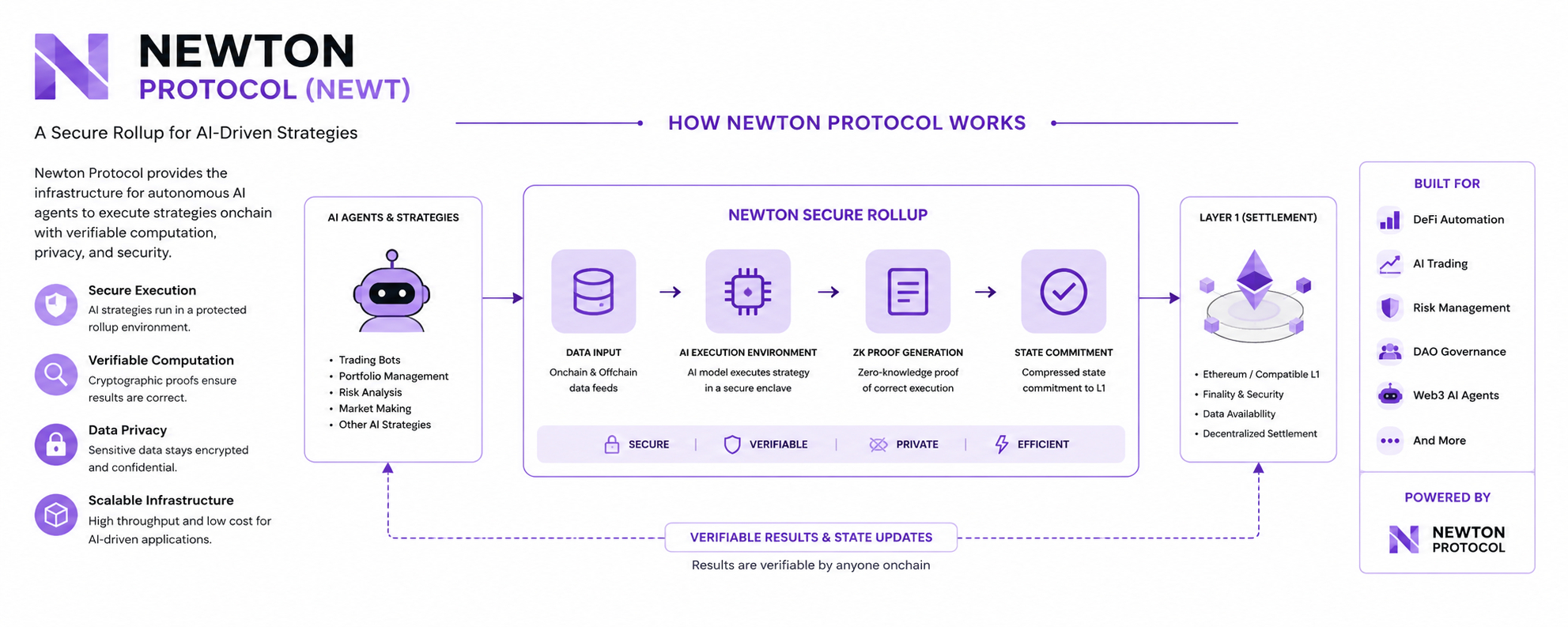
This is where Newton Protocol offers an interesting perspective. Rather than treating AI simply as another application running on blockchain, it explores whether autonomous strategies should leave behind evidence that others can independently verify. The project is less about making AI smarter and more about making automated decisions easier to examine.
That distinction matters because history shows that powerful systems rarely fail only because of bad intentions. They often fail because their decisions become too complicated for ordinary people to understand. If blockchain hopes to support an economy where autonomous software negotiates, trades, and coordinates without constant human input, transparency may need to extend beyond transactions and into the logic that produced them.
Even then, Newton Protocol should not be viewed as a complete answer. Recording evidence of an AI process is different from proving that the process reached the best decision. Verification cannot eliminate flawed data, biased models, or unexpected behavior. It simply provides a better opportunity to inspect what happened afterward.
Perhaps that is the more interesting contribution of projects like Newton Protocol. Instead of asking how much autonomy AI should have, they encourage a different conversation: how much explainability should society demand before we are comfortable allowing machines to act independently?If autonomous software eventually becomes aarticipant in decentralized networks rather than just a tool used by people, should the highest standard be faster execution—or preserving humanity's ability to question every important decision after it has already been made?