

I almost added more $NEWT this morning after seeing a quiet pullback, but I stopped myself and spent another hour reading Newton's documentation instead. My position is still pretty small, and I've learned the hard way that buying before understanding the architecture usually costs me more than waiting.
One detail kept me thinking long after I closed the docs.
I originally assumed Newton's PolicyData oracles were interesting because of the information they could retrieve. The more I read, the more I realized the bigger story is actually about what they can't do.
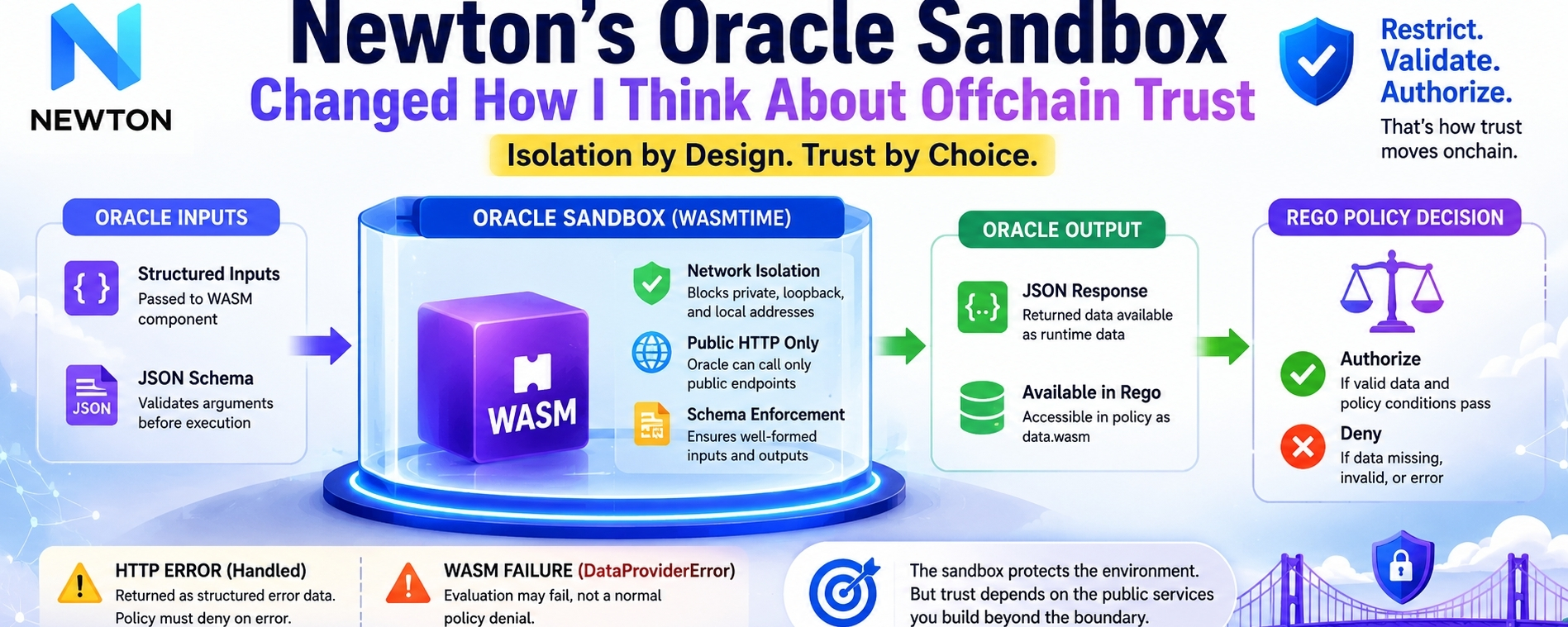
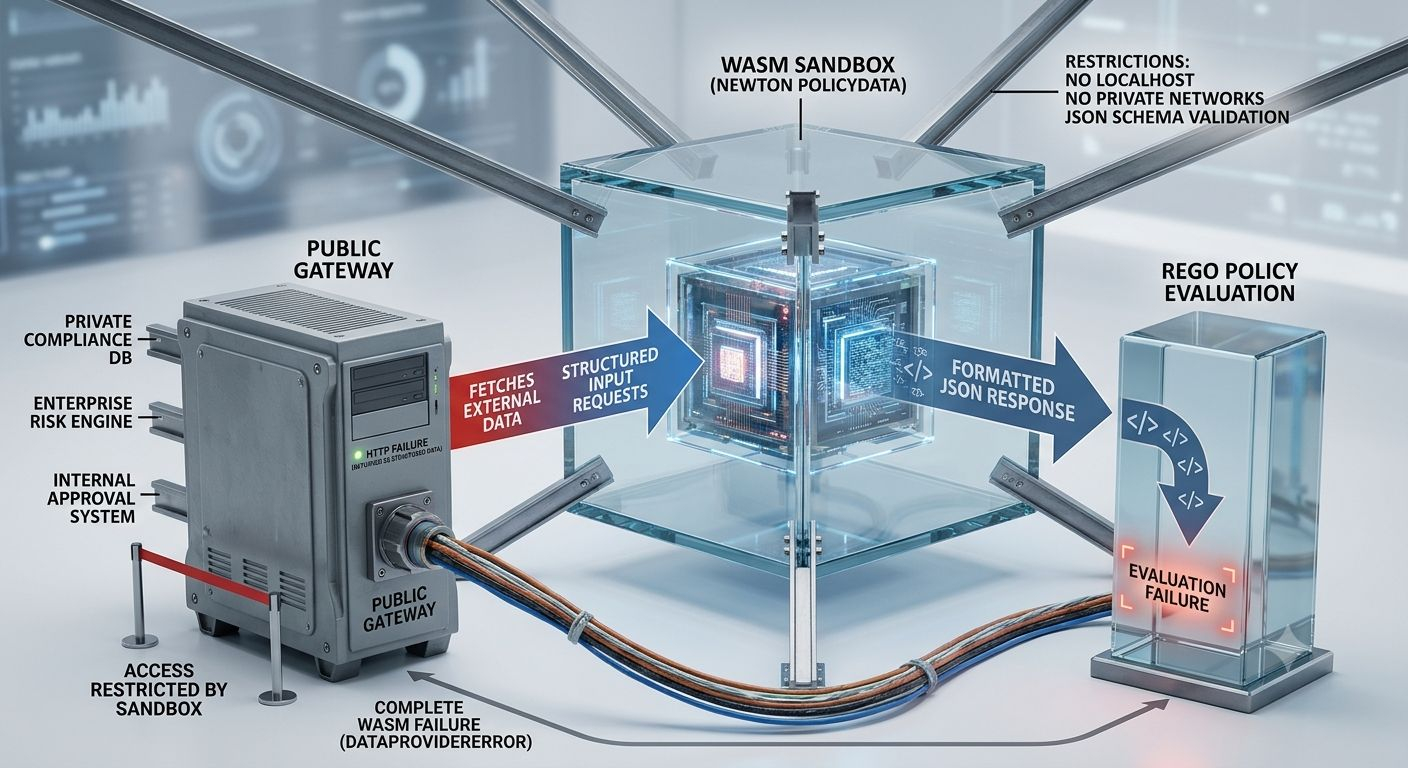
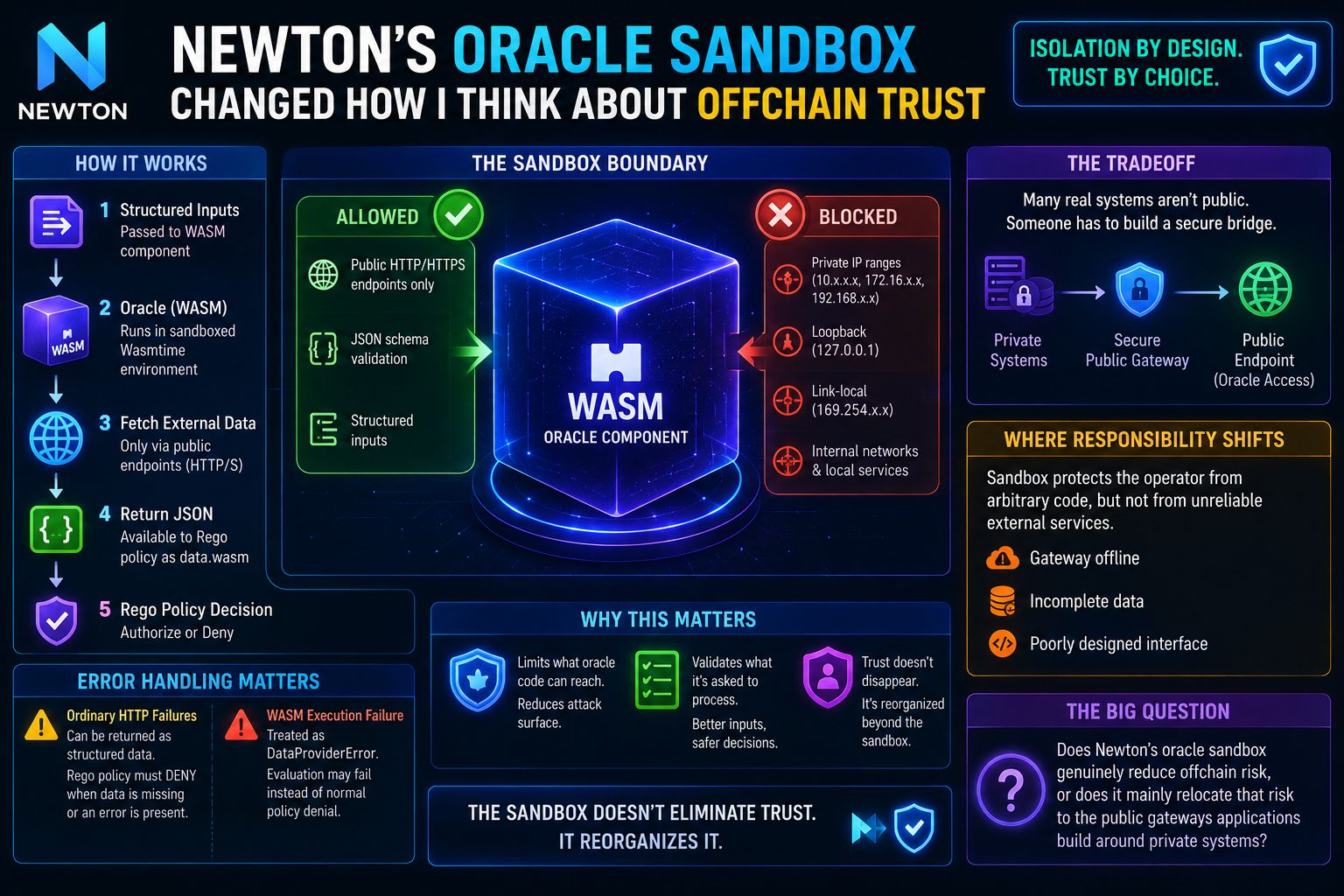
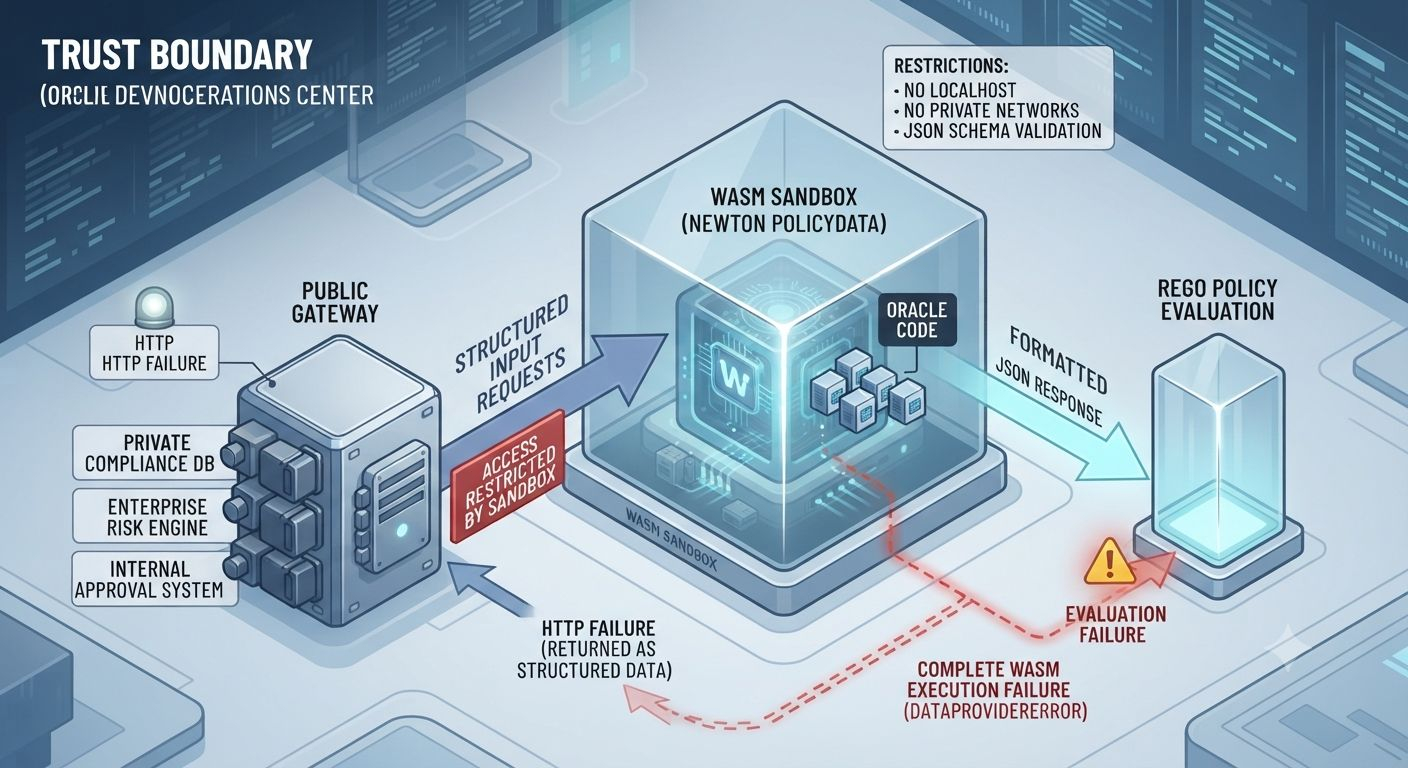
Oracle components run as WASM inside a sandboxed Wasmtime environment. They receive structured inputs, fetch external data, then return JSON that becomes available to the Rego policy. That part sounded straightforward until I noticed the restrictions. The oracle can't freely reach private networks, loopback addresses, or link-local services. If it needs external information, that source has to be exposed through a public endpoint. It can also define a JSON schema so malformed requests are rejected before execution even begins.
That design choice feels more important than the data retrieval itself.
People often describe offchain data as a trust problem, but Newton seems to reduce the amount of trust placed in the oracle code by limiting where it can reach and validating what it's asked to process. Instead of assuming every oracle behaves correctly, the environment itself removes a large part of the attack surface.
What caught my attention, though, is the tradeoff.
Many real compliance systems, internal approval databases, or enterprise risk engines aren't supposed to be publicly accessible. If an application wants those systems involved in authorization, someone still has to build a secure bridge between the private infrastructure and the public endpoint the oracle is allowed to query.
That's where I think responsibility quietly shifts.
The sandbox protects the operator from arbitrary code, but it doesn't automatically protect the application from unreliable external services. If that public gateway goes offline, returns incomplete information, or isn't designed well, the policy still has to respond safely. Newton's documentation explains that ordinary HTTP failures can be returned as structured data, so the Rego policy should explicitly deny authorization whenever required information is missing or an error is present. A complete WASM execution failure is treated differently as a DataProviderError, meaning evaluation itself may fail instead of producing a normal policy denial.
That distinction seems easy to overlook, but I don't think it's a small implementation detail. It changes where developers need to be careful.
I'm still holding my small $NEWT position because I find these architecture decisions more interesting than short-term price action. The sandbox doesn't eliminate trust. It reorganizes it. Instead of trusting unrestricted executable code, you're trusting carefully designed public interfaces that sit beyond the sandbox's boundary.
I'm still deciding whether that's ultimately the cleaner long-term model, or whether it simply creates another critical dependency that applications have to secure just as carefully.
Do you think Newton's oracle sandbox genuinely reduces offchain risk, or does it mainly relocate that risk to the public gateways applications build around private systems?