
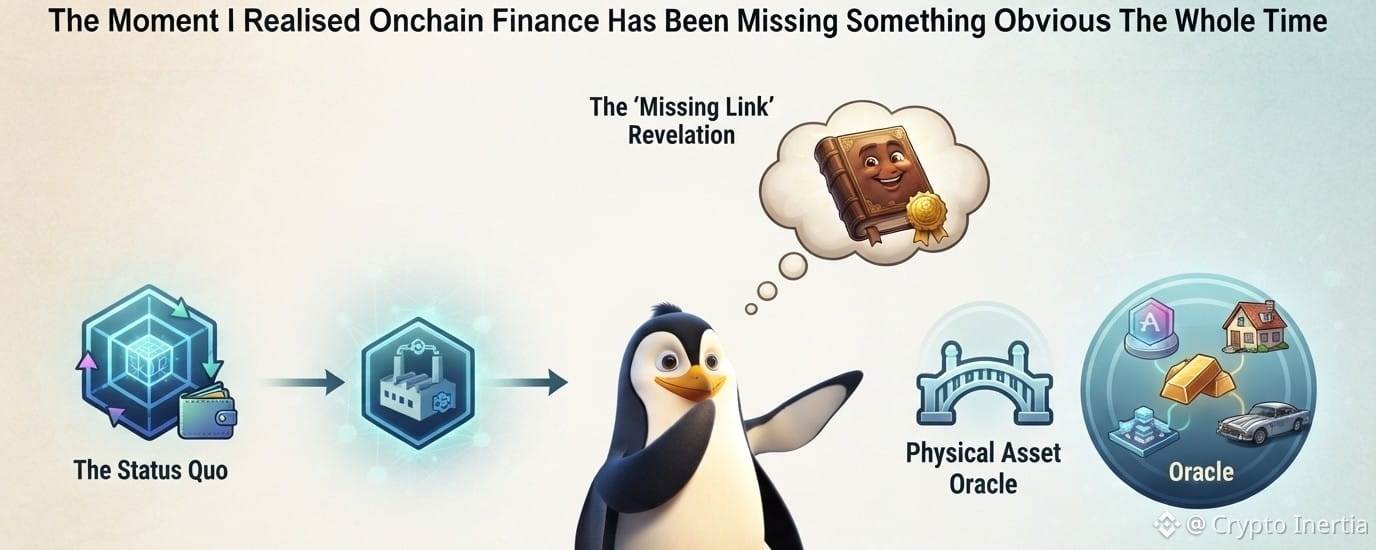
I've been in crypto long enough to remember when smart contracts felt like actual magic. The idea that you could write rules into code and have them execute automatically without trusting any single person or institution — that genuinely felt revolutionary to me when I first understood it. I spent weeks reading about how it all worked and I remember thinking that this changes everything about how money moves. No middlemen. No gatekeepers. Just code doing exactly what it was programmed to do.
What I didn't understand back then is that "doing exactly what it was programmed to do" is a double edged sword.
I learned that lesson the hard way about two years ago. I had money sitting in a DeFi protocol that got exploited. Not a huge amount, but enough to hurt. The thing that bothered me most wasn't the loss — it was reading the postmortem afterwards. The team had detailed exactly what happend, exactly when it happened, exactly which transaction triggered the exploit. The monitoring tools had caught everything perfectly. The analysis was thorough and honestly impressive.
But the money was already gone by the time any of that analysis existed.
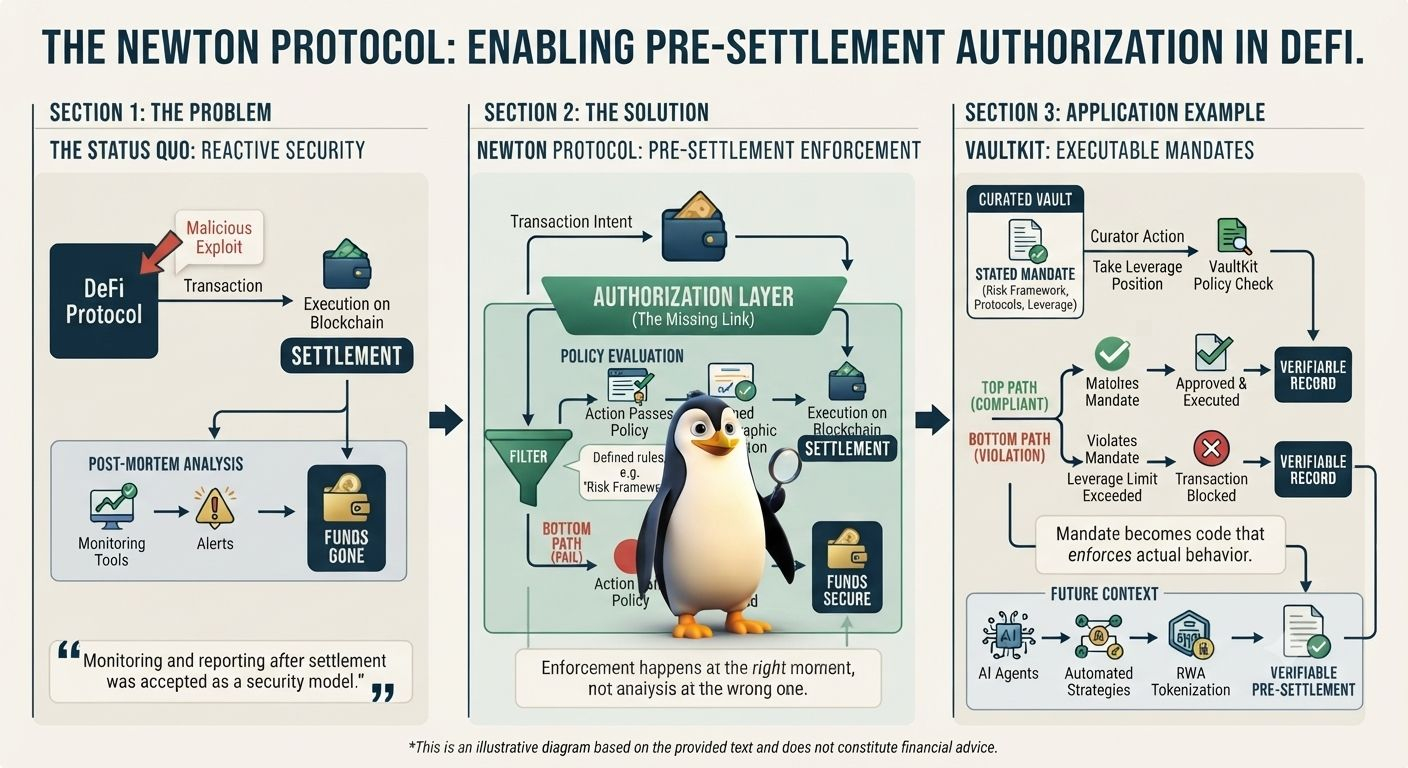
That experience stuck with me in a way that most crypto losses don't. I kept coming back to one question that I coudln't quite shake. Why does everything in DeFi work backwards? Why do we build systems that are extraordinarily good at telling us what went wrong after the fact, but have almost nothing in place to stop the wrong thing from happening before it does? Your bank doesn't let a suspicious transaction clear and then investigate later. It flags the transaction first, blocks it if necessary, and asks questions before the money moves. That's been standard in traditional finance for decades. But onchain, we somehow decided that monitoring and reporting after settlement was acceptable as a security model.
I think we accepted that tradeoff without fully realising we were making it.
That's the specific context that made me take Newton Protocol seriously when I first came accross it a few weeks ago. I was honestly expecting another AI crypto project with a lot of marketing language and not much substance underneath. I've seen enough of those to develop a pretty strong filter. But the more I read, the more I realised they were asking the exact question I had been sitting with since that exploit two years ago. Not "how do we monitor better" and not "how do we report faster." But — how do we add an authorization checkpoint before the transaction settles, so enforcement happens at the right moment instead of analysis happening at the wrong one.
The concept they call the authorization layer is actually simpler then it might sound.
Every transaction intent gets evaluated against a policy before it executes onchain. If the action passes the policy, it gets a signed cryptographic attestation confirming what was checked and what the result was. If it doesn't pass, it doesn't execute. Full stop. The blockchain then sees that attestation before settlement — not an advisory report, not a monitoring alert, not a post-hoc analysis. An actual verifiable record of what was enforced before anything moved.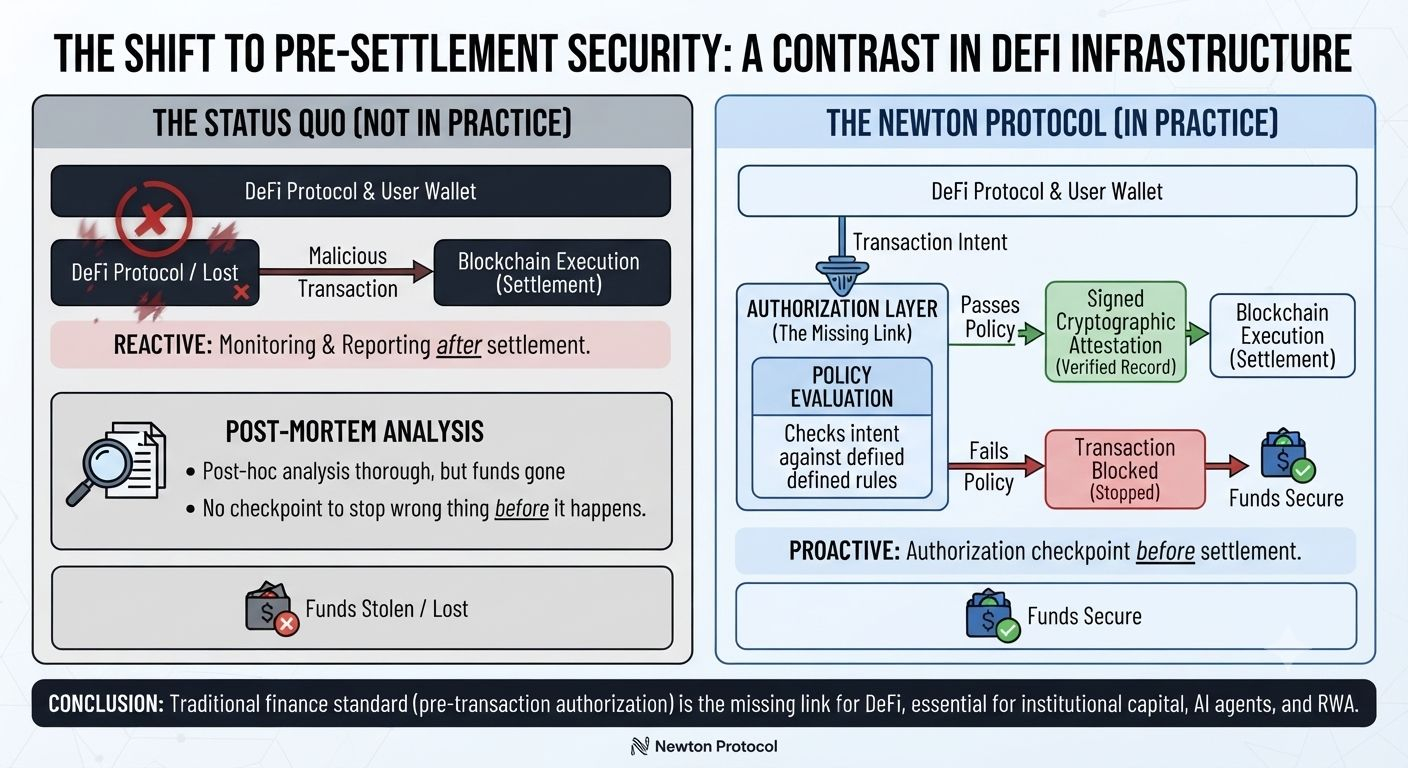
I've thought about how diffrent that exploit two years ago might have looked with something like this in place. The transaction that triggered it would of had to pass a policy evaluation first. If the policy was properly configured — and that's a legitimate question worth asking — the anomalous behaviour might have been flagged before settlement rather then documented after. I can't say for certain it would have stoped the exploit. But I can say that "before" and "after" are not interchangeable when real money is involved.
The vault application is the one I keep coming back to because it represents something I think is genuinly underappreciated in DeFi.
Curated vaults manage enormous amounts of capital. The teams running them publish detailed strategy documents, risk frameworks, leverage limits, approved protocols — all clearly written out for anyone depositing to read. I've read several of these documents carefully before making decisions. What I've also learned, sometimes expensively, is that a document describing rules and code enforcing rules are two completley different things. I've seen vault behaviour that didn't match the stated mandate. I've seen leverage thresholds exceeded. I've seen positions taken in protocols that were explicitly listed as out of scope.
None of it was necessarily malicious. But none of it was stoppable either, because the rules existed on paper and not in the execution layer.
Newton's VaultKit is trying to make those rules executable in a way that actually matters. Every curator action gets checked against the mandate before it executes. If the transaction violates the rule, it doesn't go through — and a signed record shows exactly what was evaluated and what the result was. The mandate stops being a document that describes intended behaviour and becomes code that enforces actual behaviour. For anyone who has deposited into a vault based on a stated risk framework and then watched that framework get quietly ignored, that distinction is not a small one.
The thing I find interesting about the timing of this is that the problem is only going to get bigger.
AI agents are already managing wallets. Automated strategies are already executing without human review on every transaction. Stablecoins are moving at volumes that would have seemed impossible a few years ago. Tokenised real world assets are bringing institutional capital onchain in ways that have very specific compliance requirements. All of these trends point toward a future where more capital is moving faster with less human oversight — and the question of what gets verified before execution becomes more important, not less.
I'm not naive enough to think good infrastructure automatically translates into a successfull investment. I've seen that mistake play out too many times. A protocol can solve a genuine problem and still struggle with adoption if the go to market is wrong, if the competition is better capitalised, or if the timing doesn't line up with where developer attention is focused. Newton will have to prove that the protocols handling real capital actually integrate it and actually use it in ways that matter. Announcements and partnerships are easy. Genuine adoption is hard.
But I do think the direction is right in a way that feels less dependent on market conditions then most things I've researched recently. Bull markets come and go. AI narratives heat up and cool down. The need for verifiable pre-settlement authorization doesn't dissapear when sentiment changes. If anything it becomes more urgent as the amounts at stake get larger and the systems executing transactions get more autonomous.
I'm keeping NEWT on my watchlist for now and paying much more attention to integration news then to price action. If I start seeing the kinds of protocols that manage serious capital building on Newton's authorization layer, my view will update accordingly. Until then I'll keep doing what has worked best for me — following the evidence, asking uncomfortable questions, and trying not to let a compelling story do the work that actual research should be doing.
The missing layer might finally be getting built. Thats worth paying attention to regardless of what the chart is doing. $NEWT #Newt @NewtonProtocol

