
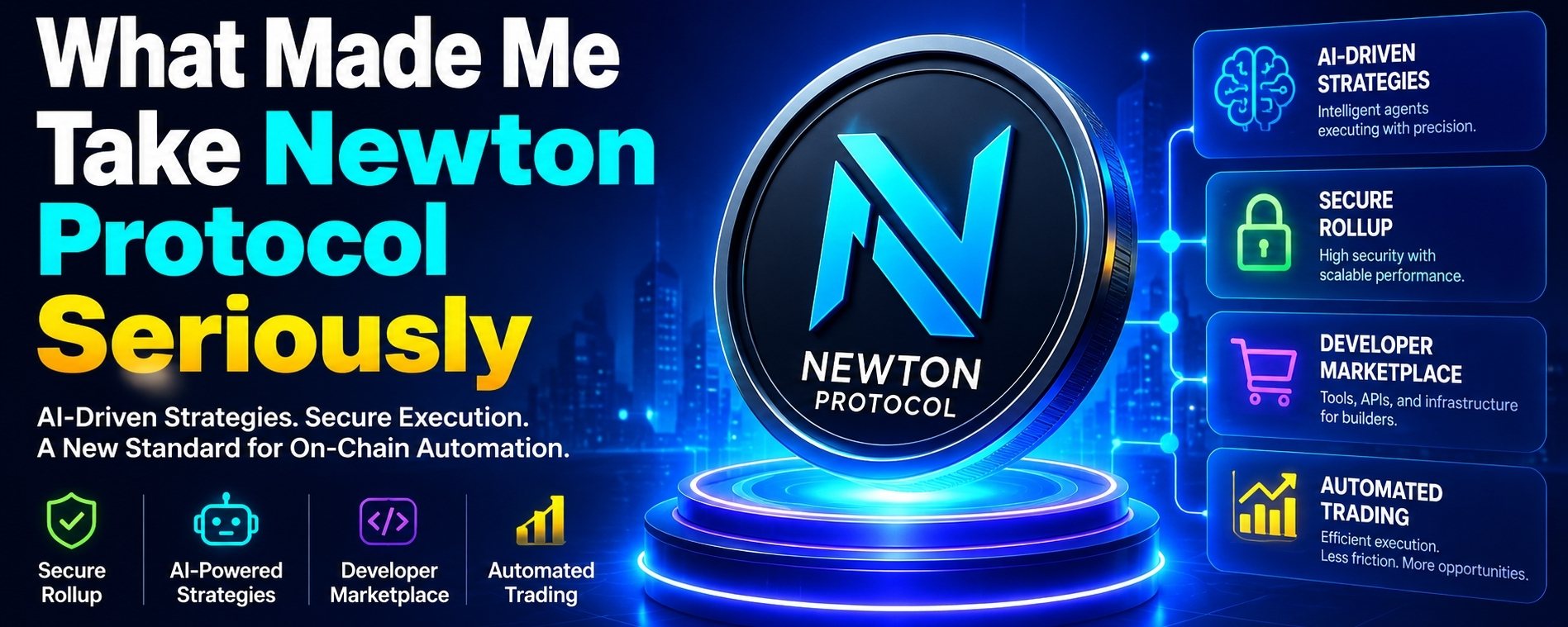

The moment I stop asking hard questions about a crypto project is usually the moment I make my worst trades. That habit is exactly why Newton Protocol caught my attention. I wasn't looking for another AI narrative or another token promising to reshape finance. I was trying to understand one simple question: who controls what an autonomous agent is allowed to do before it moves real assets?
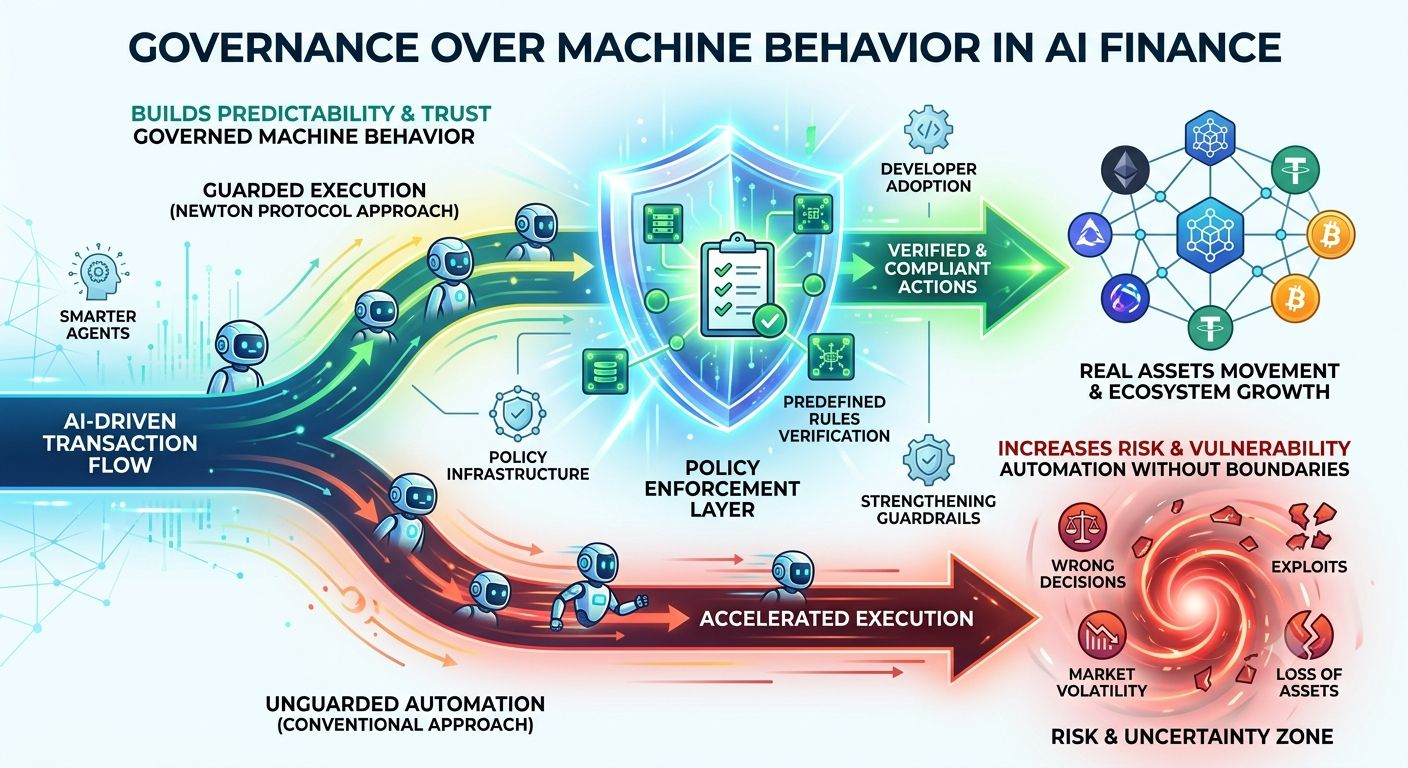
Most discussions around AI in crypto focus on what intelligent agents can achieve. I think the more interesting question is what should stop them. Markets are full of automation now, but automation without clear boundaries eventually becomes a source of risk instead of efficiency. That shift in perspective is what made me spend more time studying Newton Protocol instead of dismissing it as another AI headline.
What stands out to me is that the project is trying to build infrastructure around policy enforcement instead of treating security as something that happens after a transaction. In my experience, the biggest failures in crypto rarely come from a lack of automation. They come from automation making the wrong decision too quickly. A framework that verifies whether predefined rules have been satisfied before execution is a more valuable idea than simply making transactions faster.
That doesn't automatically make the investment attractive. Execution is still the deciding factor.
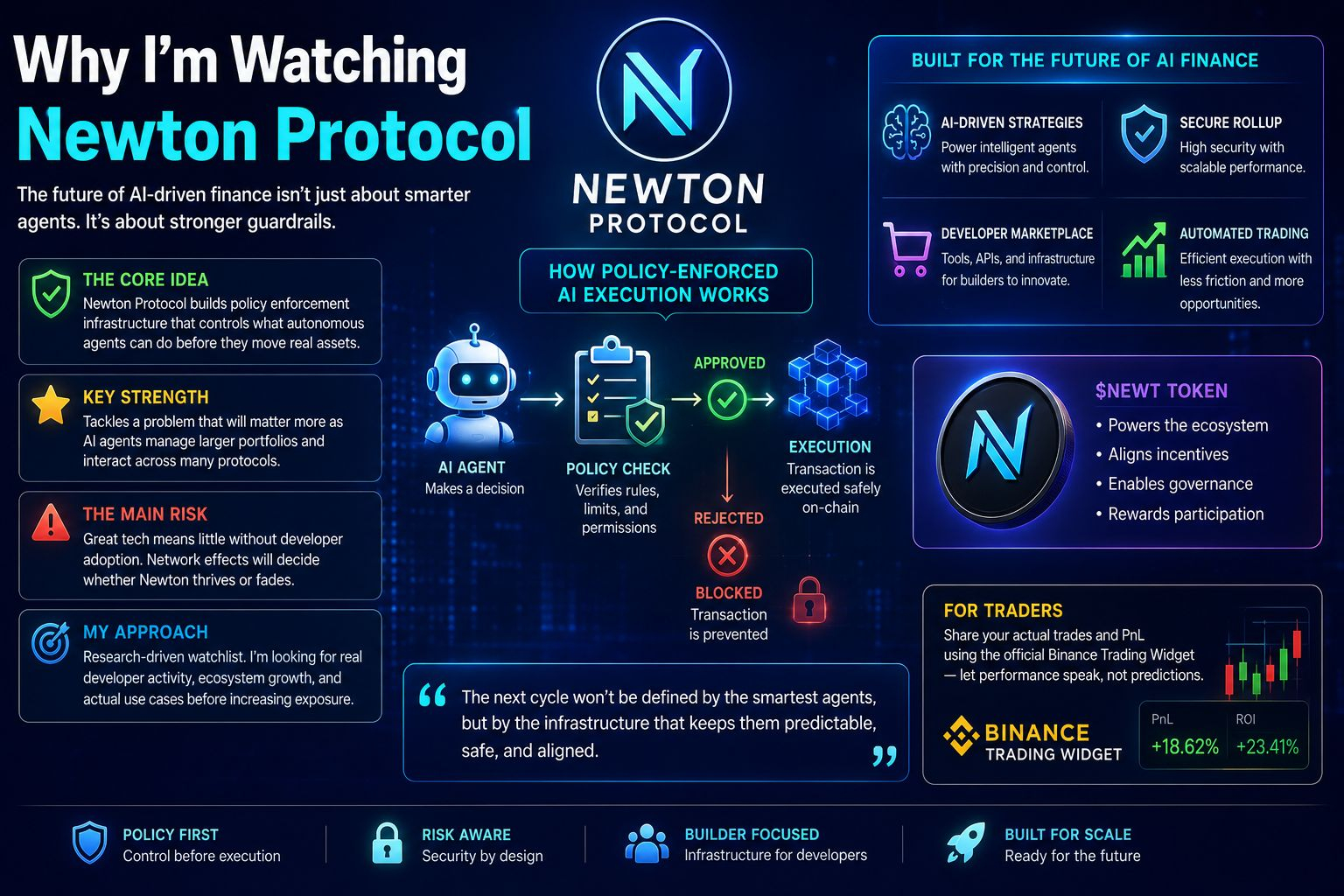
The biggest strength I see is that Newton Protocol is addressing a problem that will likely become more important over time. As AI agents handle larger portfolios, execute strategies, and interact across multiple protocols, governance over machine behavior may become just as important as the algorithms themselves. If developers genuinely adopt policy-driven execution as part of their applications, Newton could occupy a niche that many current infrastructure projects are not targeting directly.
The biggest risk is equally obvious. A sophisticated framework means little without developer adoption. Crypto history is filled with technically impressive systems that struggled because builders never arrived in meaningful numbers. A marketplace, developer tools, and policy infrastructure all depend on network effects. Without active participation, even strong technology can remain underutilized.
From a trading perspective, I don't treat NEWT as a momentum position. I view it as a research-driven watchlist asset. Before increasing exposure, I want to see measurable signs that developers are integrating the protocol rather than simply discussing it. For me, wallet activity, ecosystem growth, and evidence of real applications matter far more than short-term price spikes. Those indicators tell me whether demand is organic or simply driven by speculation.
One perspective I think the market may be overlooking is that AI infrastructure is not only about making autonomous agents more capable. It is also about making them more predictable. The projects that define the next cycle may not be the ones building the smartest agents, but the ones building the strongest guardrails around them. That difference could become far more valuable than another performance benchmark.
If you decide to trade NEWT, consider sharing your actual position or performance using the official Binance trading widget instead of posting price predictions. I also think a simple ecosystem diagram showing how policy enforcement fits into an AI-driven transaction flow would communicate the investment thesis far better than another candlestick chart.
As AI-driven finance grows, do you believe the biggest long-term opportunity will come from building smarter autonomous agents, or from building the infrastructure that governs how those agents are allowed to act?