
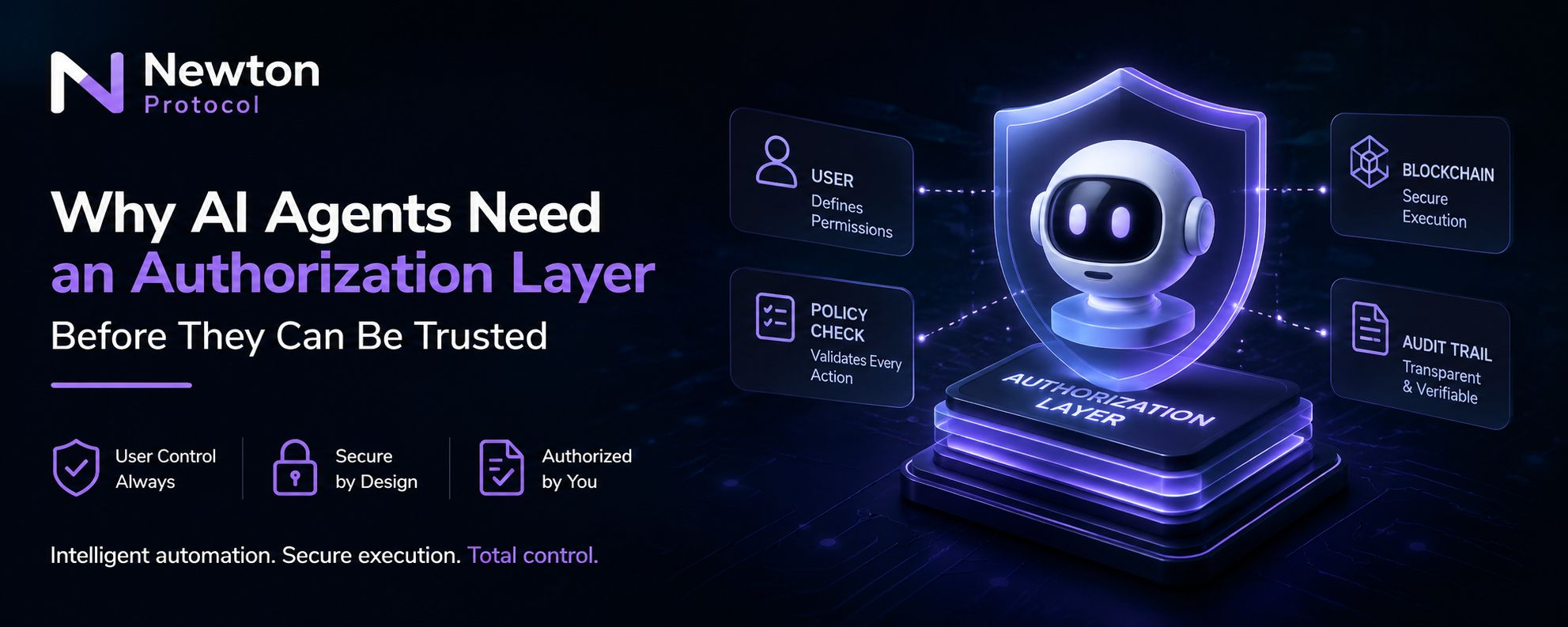
Artificial intelligence is becoming a part of our daily digital life. Artificial intelligence agents can already help people analyze data make trades manage assets, automate payments and interact with decentralized applications. Of waiting for instructions every few minutes these agents are designed to do tasks on their own. This change promises to make things more efficient. It also raises a serious question. Can artificial intelligence really be trusted with decisions and blockchain transactions?
The answer depends on one thing. Trust is not created just because an artificial intelligence agent is smart. Trust comes from having limits, transparent permissions and the ability for users to stay in control. Without these safeguards even the advanced artificial intelligence agent can become a security risk. This challenge is one of the reasons Newton Protocol is building an authorization layer specifically designed for intelligence powered blockchain interactions.
Many blockchain users are already familiar with wallet approvals. When connecting to a decentralized application users often approve permissions that allow smart contracts to do things. While this model works for applications artificial intelligence agents create a different situation. They do not just do one thing. Stop. They keep watching, analyzing and making decisions based on changing conditions. This makes traditional permission systems not good enough for a future driven by intelligence.
Imagine asking an intelligence assistant to manage your cryptocurrency portfolio. You may want it to rebalance assets claim staking rewards or make trades under market conditions. Without authorization controls that same artificial intelligence could accidentally do more than you wanted interact with unknown protocols or approve transactions that you never intended. Even if the artificial intelligence has intentions having no limits creates unnecessary risk.
This is where the concept of an authorization layer becomes essential. Of giving artificial intelligence unlimited access users define exactly what an artificial intelligence agent is allowed to do. Every action operates within boundaries set by the user than assumptions made by the artificial intelligence itself. This changes intelligence from an unrestricted decision maker into a trusted assistant that always follows predefined rules.
The importance of this approach becomes clearer as artificial intelligence agents become more capable. Future artificial intelligence systems will likely interact with blockchain networks, decentralized finance platforms, digital identities and tokenized assets. Managing these interactions safely requires more than algorithms. It requires infrastructure that ensures every action respects the users intentions.
Trust should never depend entirely on technology making the decision every time. Instead trust should come from systems that make it impossible for unauthorized actions to occur. This is the philosophy behind Newton Protocols authorization framework. Than asking users to blindly trust artificial intelligence the protocol creates an environment where artificial intelligence operates within permissions chosen by the user.
Another challenge involves transparency. Many artificial intelligence systems function as boxes. They generate recommendations. Execute actions without making it clear why those decisions were made. In environments this lack of visibility creates hesitation. Users want to understand not what happened but also whether the action followed their instructions.
Authorization provides that missing layer of accountability. Of allowing unrestricted automation every transaction can be evaluated against predefined conditions before execution. This gives users confidence because they know their artificial intelligence assistant cannot simply ignore established limits.
The blockchain industry has always emphasized self-custody. Users control their assets rather than relying on centralized intermediaries. As artificial intelligence becomes more involved in blockchain activity this principle should not disappear. Instead authorization extends self-custody into the intelligence era by ensuring that human intent remains at the center of every automated decision.
This approach also benefits developers. Building artificial intelligence powered blockchain applications becomes significantly easier when authorization infrastructure already exists. Developers can focus on creating artificial intelligence experiences while relying on standardized authorization mechanisms to manage permissions securely. Than reinventing security for every application they can build on a consistent framework designed for autonomous systems.
Trust also influences adoption. Many individuals remain cautious about allowing artificial intelligence to manage digital assets. Their concern is understandable. Once an artificial intelligence has access mistakes could become expensive. By introducing authorization as a layer Newton Protocol addresses one of the biggest psychological barriers preventing wider adoption of artificial intelligence powered blockchain services.
This does not mean artificial intelligence should be restricted unnecessarily. Instead it means artificial intelligence should operate with defined responsibilities. A trading assistant should only trade within approved limits. A payment assistant should only transfer funds under conditions. An investment assistant should only interact with approved protocols. These boundaries create confidence without reducing the usefulness of automation.
As blockchain technology continues to evolve artificial intelligence agents will likely become more sophisticated. They may coordinate strategies manage decentralized organizations optimize digital identities and perform complex on-chain workflows. None of these possibilities can reach their potential if users constantly worry about losing control.
Authorization bridges this gap. It creates a partnership between humans and artificial intelligence of replacing human authority altogether. The user remains the decision maker while artificial intelligence becomes a highly capable assistant working within carefully defined rules.
This vision represents a shift in how people think about automation. Of asking whether artificial intelligence is intelligent enough to deserve trust the better question becomes whether the underlying infrastructure protects users regardless of how intelligent artificial intelligence becomes. When authorization exists as a layer trust no longer depends solely on the behavior of the artificial intelligence itself.
Newton Protocol recognizes that the future of blockchain will involve autonomous systems than ever before. Preparing for that future requires infrastructure that places security, transparency and user control ahead of automation. By introducing an authorization layer specifically designed for intelligence driven blockchain interactions the protocol is helping establish a safer foundation for the next generation of decentralized applications.
Artificial intelligence will undoubtedly continue transforming blockchain technology. However widespread adoption depends on more than capabilities. Users must feel confident that every automated action respects their intentions and protects their assets. Authorization makes that confidence possible.
As the relationship between intelligence and blockchain grows stronger trust will become one of the industrys most valuable resources. Intelligence alone cannot create trust. Clear permissions, transparent execution and user-controlled authorization are what turn artificial intelligence agents into reliable digital partners. That is why an authorization layer is not simply another blockchain feature. It is the foundation that allows artificial intelligence to earn trust in the future.
@NewtonProtocol is building toward that future by making authorization a core part of artificial intelligence powered blockchain infrastructure. As intelligent agents enter Web3 solutions like this will play an increasingly important role, in ensuring innovation never comes at the expense of user control.