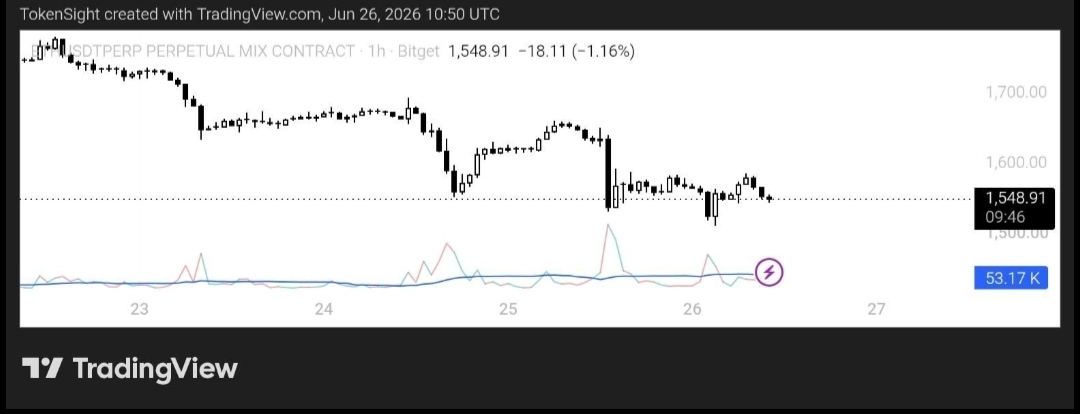
$ETH is facing one of its biggest short-term tests after dropping nearly 14.4% from its June 22 high of $1,773 to an intraday low of around $1,512 before recovering to about $1,550. While the bounce has helped calm some of the panic, the market is still under pressure as institutional investors reduce exposure, long-term holders continue selling, and uncertainty over Federal Reserve policy weighs on risk assets.
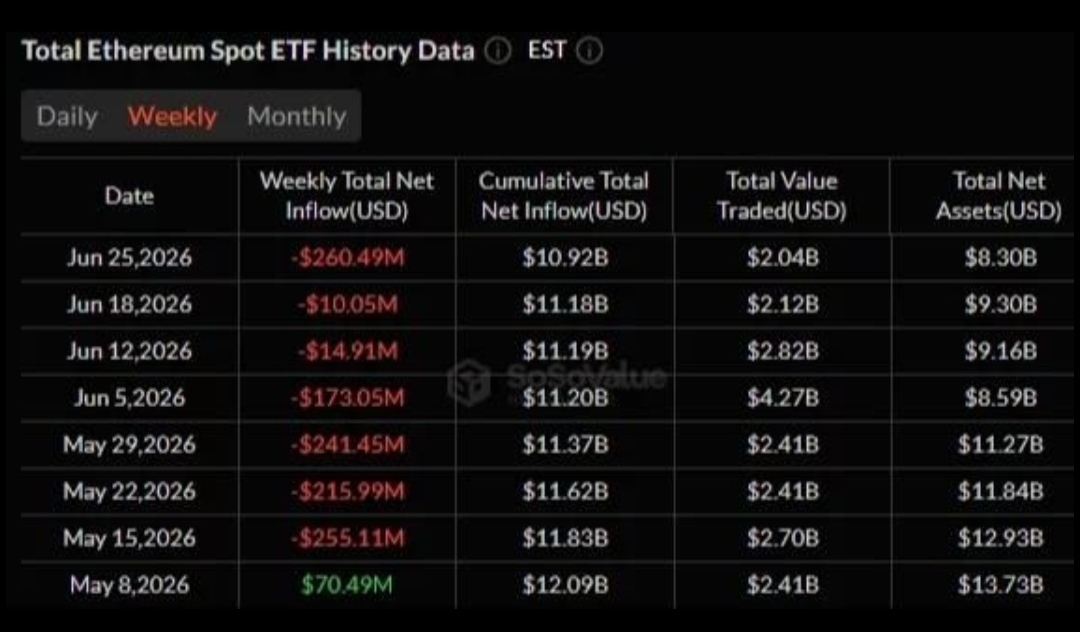
One of the biggest factors behind the recent decline has been heavy ETF selling. U.S. spot Ethereum ETFs recorded about $260.49 million in net outflows during the week ending June 25 as investors pulled money from the market ahead of expectations for three Federal Reserve rate hikes this year. Ethereum also lost its 200-day moving average near $1,668, which triggered another round of leveraged long liquidations and added more downside pressure.
At the same time, several dormant Ethereum wallets returned to the market. More than 33,600 ETH was sold within four hours, while another long-term holder offloaded 17,598 ETH. Because these investors accumulated their holdings at much lower prices, their selling creates significant supply that buyers must absorb in a short period.
There have been a few encouraging signs. SharpLink resumed Ethereum accumulation after an eight-month pause, buying 5,000 ETH. However, that buying has not been enough to outweigh the broader selling pressure. The recent $10.63 billion options expiry has also increased volatility, making sharp rebounds and sudden pullbacks more common.

For now, the $1,500 to $1,520 area remains Ethereum's most important support zone. Buyers successfully defended this level once after the recent selloff, making it the key line to watch. If Ethereum can reclaim $1,590, momentum could improve and open the door for a move toward $1,620, $1,640, and eventually the major recovery level near $1,750.
On the other hand, a decisive break below $1,500 could quickly shift momentum back to the bears, exposing lower support around $1,464 and possibly $1,414.