
There is a moment almost everyone remembers — the first time technology made them feel small. The spinning loading wheel. The transaction that failed without explanation. The feeling that you did something wrong even though no one ever taught you the rules. For millions of people, that moment arrived with Web3. What was promised as freedom felt like friction. What was described as empowerment felt like exclusion. And somewhere between gas fees, wallet errors, and incomprehensible interfaces, many simply walked away.
Vanar begins with that memory in mind.
Not the charts. Not the hype. The memory of confusion, anxiety, and quiet disappointment.
Vanar feels less like a technological product and more like an apology written in code — an admission that something went wrong when innovation forgot empathy. It is built on the understanding that mass adoption doesn’t fail because people are incapable, but because systems are indifferent. Vanar’s ambition is not to educate billions of people into loving blockchain, but to design blockchain so well that education becomes unnecessary.
The people behind Vanar are not strangers to audiences who leave when they feel ignored. They come from gaming, entertainment, digital culture — industries where users are emotionally invested and brutally honest. A gamer will not tolerate friction for ideology. A fan will not defend a broken experience because the technology is “early.” This background shows up everywhere in Vanar’s design philosophy. Every decision whispers the same question: how does this feel to a human being using it for the first time?
Speed matters not because benchmarks look impressive, but because waiting creates doubt. Fixed, tiny transaction costs matter not because they sound efficient, but because unpredictability creates fear. Certainty matters because people need to trust that when they press a button, something real happens. Vanar is engineered around emotional reliability — a concept rarely discussed, but deeply felt.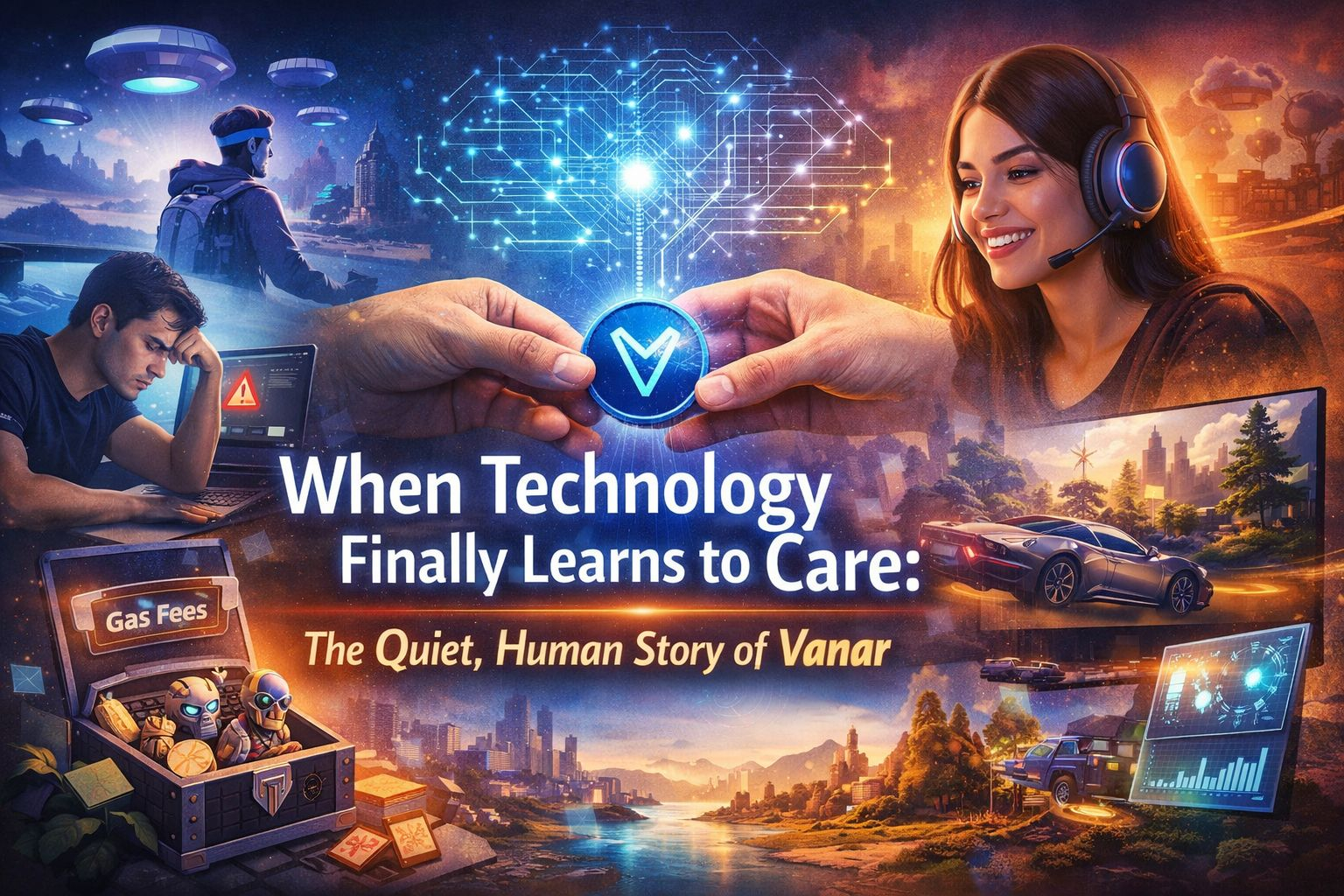
This emotional grounding becomes visible through its ecosystem. The Virtua Metaverse is not positioned as an escape from reality, but as a continuation of identity. It treats digital ownership not as bragging rights, but as presence. Assets are not frozen artifacts sitting silently in wallets; they live, move, and matter inside experiences. There is something profoundly human about that — the desire for continuity, for our creations and collections to exist somewhere meaningful rather than vanish into abstraction.
Then there is the VGN Games Network, which feels like a quiet response to one of Web3’s deepest wounds. Too many blockchain games taught players a painful lesson: that time could be exploited, effort could be devalued, and loyalty could be punished by collapsing economies. Vanar approaches gaming with humility. Instead of pretending economies will magically balance themselves, it uses adaptive, AI-driven systems that respond to real player behavior. This is not about maximizing extraction; it is about protecting trust. And trust, once broken, is almost impossible to earn back.
At the heart of it all sits VANRY — not shouting, not demanding belief, simply working. It pays for movement, participation, and security within the network. It exists to support experiences rather than overshadow them. In an industry obsessed with turning tokens into dreams, VANRY is content being a tool. That restraint is emotional maturity. It signals a long-term mindset — one that understands that people stay not because they are dazzled, but because they feel respected.
Vanar’s use of artificial intelligence follows the same philosophy. AI is not treated as spectacle or branding. It is infrastructure — invisible when it works, noticeable only when it doesn’t. It helps systems adapt, economies breathe, and experiences feel personal rather than mechanical. The intention is not to replace human creativity, but to remove the silent frustrations that drain joy from digital interaction. When technology works the way Vanar envisions it, users don’t marvel at the system — they forget it exists.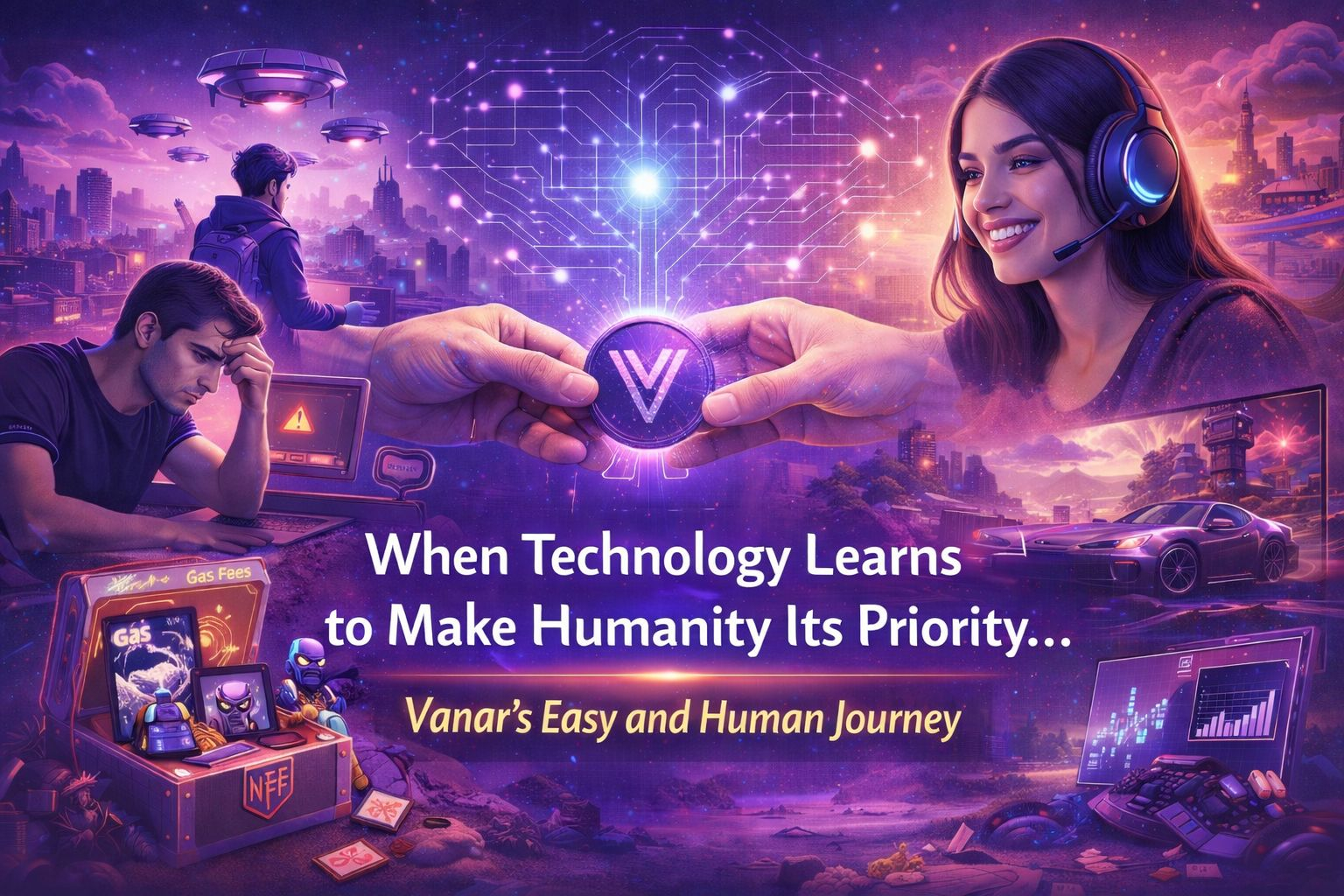
What makes this story emotionally powerful is its refusal to shout. Vanar does not promise salvation. It does not claim inevitability. It does not position itself as the “one chain to rule them all.” Instead, it focuses on something far more difficult: earning a place in people’s daily lives. Making the first interaction gentle. Making the second interaction rewarding. Making the third interaction feel natural enough that no one stops to think about the technology anymore.
There is courage in that restraint.
Because the truth is, building a Layer 1 blockchain meant for real people is brutally hard. Markets fluctuate. Narratives shift. Attention moves on. Many good ideas disappear not because they were wrong, but because they required patience in a world addicted to immediacy. Vanar will face skepticism, volatility, and the relentless pressure to perform. But it carries something that cannot be faked — a consistent emotional logic. A belief that technology should adapt to humans, not the other way around.
If Web3 is ever going to mean more than speculation, it will be because projects like Vanar chose empathy over ego. Because they remembered that behind every wallet address is a person — tired after work, curious but cautious, willing to explore but unwilling to feel stupid. Vanar does not ask those people to change. It changes for them.
And maybe that is how the next three billion users arrive — not through evangelism, not through hype, but through relief. The relief of realizing that for the first time, the technology isn’t testing them.
It’s taking care of them.
