
Most people are still arguing about TPS.
I used to care too.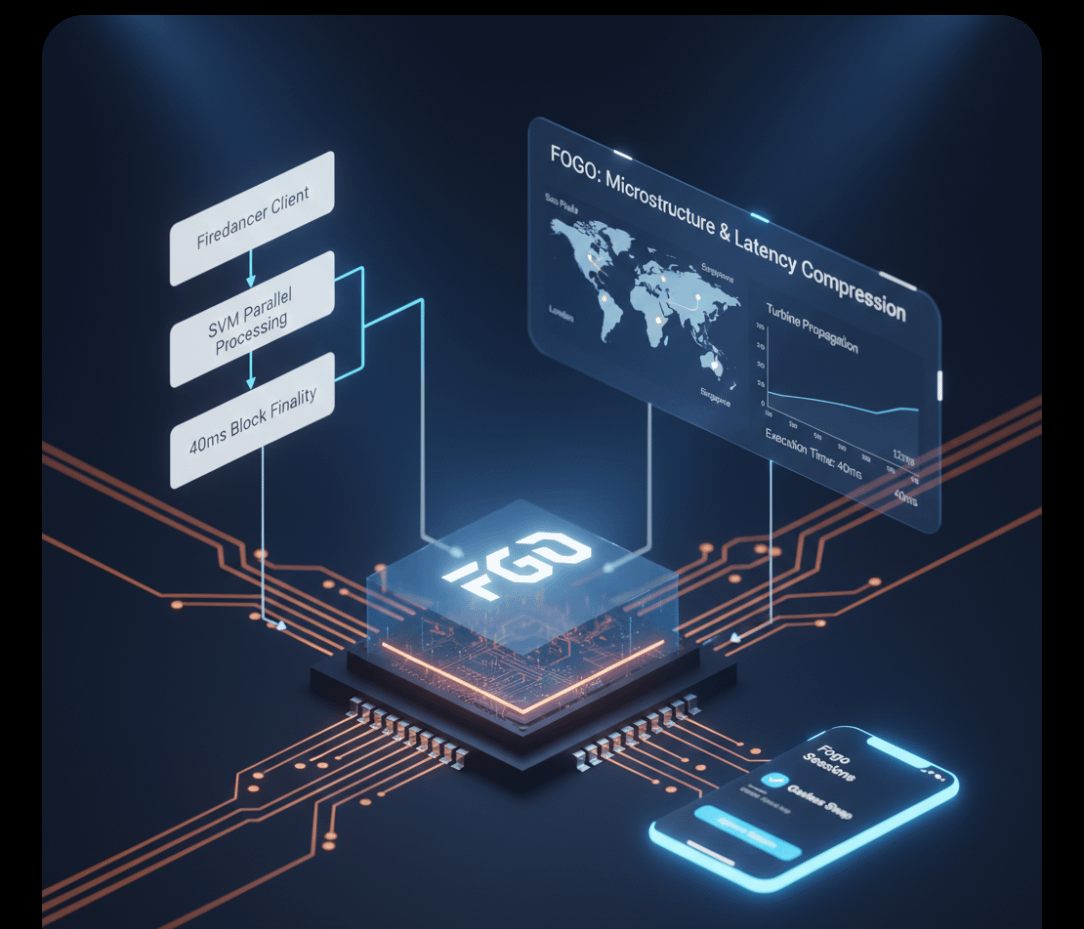
Higher numbers. Lower fees. Bigger benchmarks.
But after watching how most on-chain trades actually execute, I realized the real issue isn’t throughput — it’s delay.
That small gap between when you see a price and when your trade settles.
That gap widens spreads.
That gap feeds MEV.
That gap forces market makers to price in uncertainty.
It’s a hidden tax most traders don’t even notice.
What caught my attention recently is how @Fogo Official is approaching this from a timing angle instead of a marketing angle.
Sub-40ms blocks aren’t just “fast.”
They compress reaction windows.
When reaction windows compress, behavior changes.
Market makers don’t need as much defensive buffer.
Execution feels tighter.
Order books respond closer to intent.
That’s not louder infrastructure.
That’s cleaner infrastructure
I’m not saying this guarantees anything.
But when a chain focuses on reducing structural delay instead of flexing TPS slides, it tells me they’re thinking about market design, not just metrics.
That’s the part I’m watching.