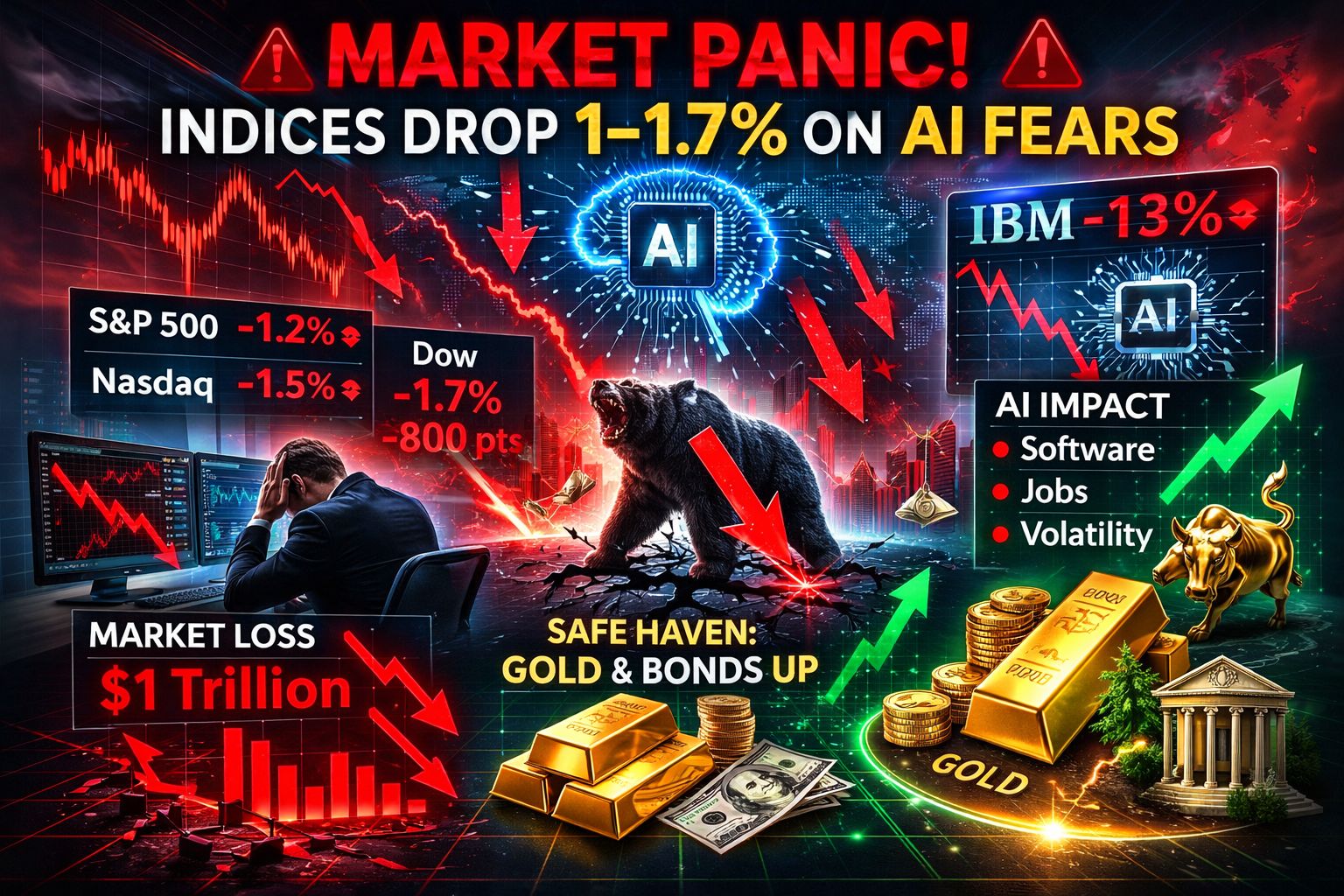
Panic surge: Major indices drop 1-1.7% on AI disruption fears, software stocks hit hard
Technicals: Market oversold with RSI at 22.84, key support levels critical for recovery
Catalysts: Viral Citrini "doomsday" report and Anthropic's AI code capabilities spark sell-off
Safe-haven shift: Gold and bonds gain as investors flee tech sector volatility
Market Status
S&P 500, Nasdaq drop over 1%, Dow Jones plunges 1.7% (over 800 points) on February 24, 2026
Software and services sector loses approximately $1 trillion in market value
IBM shares tumble 13%—worst single-day performance since 2000—following Anthropic's AI coding announcement
Gold prices rise as investors seek safe-haven assets amid equity market turmoil
Trading Strategy
Market shows deeply oversold conditions with RSI at 22.84, suggesting potential for a technical bounce
Key support levels are critical; broken support may turn into resistance, hindering recovery
Avoid blind "buy the dip" strategies; wait for confirmation of trend reversal before re-entering tech positions
Consider selective exposure to companies with strong balance sheets and proven AI integration
Monitor algorithmic trading activity, which accounts for 60-75% of volume and can amplify swings
Core Driving Factors
A viral "doomsday" report from Citrini Research projects 10%+ unemployment and a market crash by 2028 due to AI-driven job losses, fueling panic
Anthropic's announcement of "Claude Code," an AI capable of modernizing COBOL and performing code-level security scans, directly threatens IBM, cybersecurity, and financial services firms
Investors are rotating from high-valuation AI infrastructure stocks to safer assets like government bonds and gold
Regulatory scrutiny intensifies as the SEC explores frameworks to manage risks from opaque AI-driven trading and potential market manipulation
Risk Warning
Extreme market sensitivity to AI-related news creates high volatility; a single announcement can trigger double-digit stock moves
Overreliance on similar AI models across institutions could create a "market monoculture," amplifying systemic risk during sell-offs