
I’ve been around crypto long enough that when a new “AI + blockchain” project shows up, I don’t immediately feel excitement. I feel curiosity — and a bit of caution. I’ve seen this pattern before. A new technology explodes into mainstream awareness, and crypto tries to build the trust layer around it. Sometimes it works. Sometimes it’s just a good story that fades when the market gets distracted.
When I started reading about protecting data in the age of AI, and projects like Mira Network building privacy layers around AI computation, I didn’t think, “This will change everything.” I thought, “Okay… this actually makes sense.” And that reaction felt different.
AI is no longer theoretical. It’s not a whitepaper concept. People are using it daily — in business, school, content creation, coding. But most people don’t really think about what happens to the data they upload. Prompts, files, conversations — all of it goes somewhere. It’s stored, processed, maybe even used for training. I’ve noticed that awareness about this is slowly growing, especially among businesses.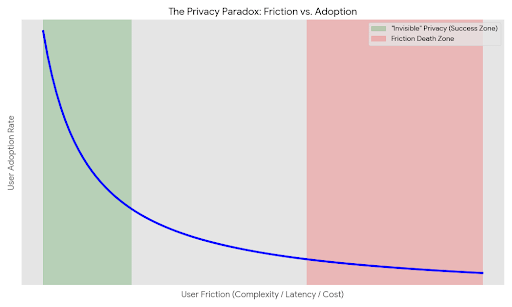
That’s where something like Mira Network tries to step in. The idea of verifying AI outputs and protecting sensitive inputs sounds simple on the surface, but it touches a real tension. We want powerful AI tools, but we don’t want to blindly trust centralized systems with everything. Crypto has always tried to solve trust issues. This just feels like a new version of the same story.
Still, I’ve learned not to get carried away by narratives. In crypto, the story is often stronger than the actual usage. I’ve seen projects with impressive tech struggle because real users never showed up. Liquidity comes fast when there’s hype, especially around AI. But liquidity can disappear just as fast when attention shifts.
What I care about more is behavior.
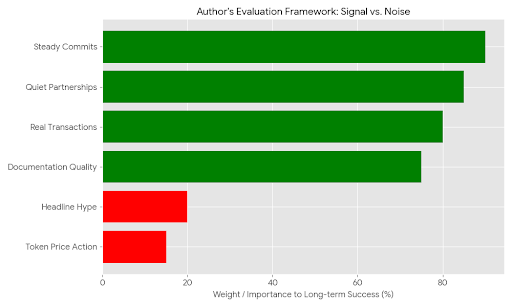
Are developers actually building on top of the network months after launch? Are there real integrations, or just announcements? Is activity steady, or does it spike only when the token price moves? I’ve seen enough cycles to know that sustainable growth looks boring at first. It’s steady commits, quiet partnerships, small but consistent user growth.
The privacy angle also makes me think carefully. Crypto has talked about privacy for years. Zero-knowledge proofs, encrypted computation, secure enclaves — none of this is new inside the space. What’s new is applying it to AI in a way that feels practical. But here’s the thing: most users choose convenience over privacy. I’ve seen this again and again. If using a privacy-preserving AI network is slower, more expensive, or more complicated, people will default to whatever works fastest.
So the real challenge isn’t just building secure infrastructure. It’s making it invisible. If users have to think about it, friction appears. And friction kills adoption.
At the same time, the timing feels important. Regulators are paying attention to AI. Enterprises are worried about compliance and data handling. I’ve noticed that when regulation tightens, projects offering verifiable processes sometimes gain credibility. If Mira Network can position itself as compliant, auditable, and efficient, it might find a natural audience beyond crypto-native users.
But I’ve also seen enterprise blockchain experiments before. Companies often say they want decentralization, yet they end up choosing controlled environments because it feels safer. That tension hasn’t gone away. So I wonder whether adoption here will start within crypto circles first — AI tools for Web3 apps, privacy layers for on-chain data — before moving outward.
Another thing I always watch is ecosystem gravity. The strongest networks don’t need constant marketing to survive. They attract developers naturally because building there makes sense. Tools improve. Documentation gets better. Communities form around real problems, not token price discussions. If that kind of gravity forms around Mira Network, that’s when I’d start paying closer attention.
And then there’s the reality of market cycles. AI is hot right now. But I’ve seen how quickly narratives rotate. Six months from now, the spotlight could be somewhere else. The question is whether projects like this keep building when nobody’s cheering. That’s usually when the real foundation gets laid.
I don’t feel extreme about it. I don’t feel skeptical to the point of dismissal, and I don’t feel excited to the point of conviction. It just feels like something worth watching. AI clearly isn’t going away. Data will only become more valuable. And trust — or the lack of it — will continue to matter.
For me, it comes down to patience. I’ll be watching developer activity, real transaction usage, partnerships that actually lead to integration, not just headlines. I’ve learned that the truth in crypto shows up quietly, over time.