
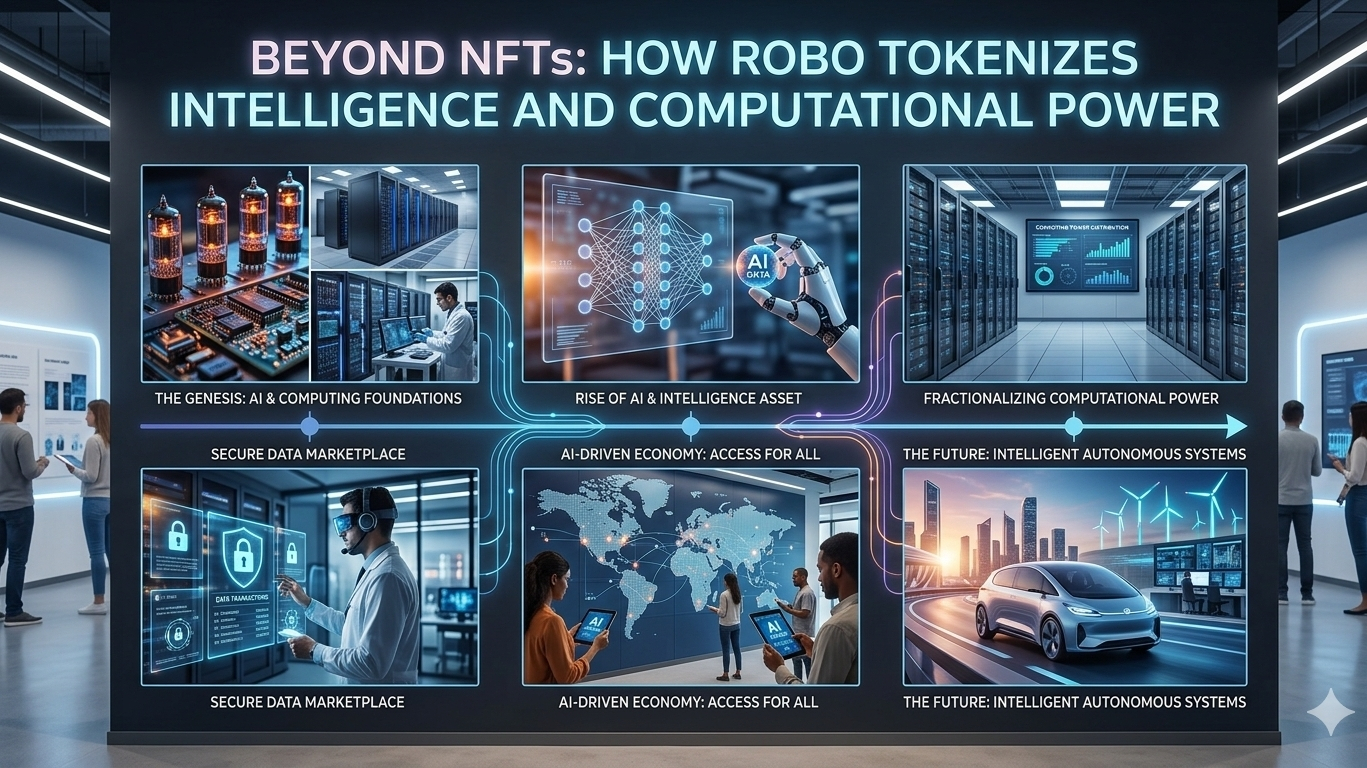

When people hear "robots + blockchain," the reaction is usually the same: another overhyped crypto project promising the moon with little substance behind it. But after diving deep into Fabric Protocol and its ROBOTT token over the past few months, I can confidently say this is different and here's why it's creating such a stir in both AI and Web3 circles. ROBO isn't just another meme coin riding the AI wave; it's the native token powering what could be the first truly decentralized network for general-purpose robotics and artificial intelligence governance. Think of it as the fuel that makes machines talk to each other, verify their identities, and execute tasks without needing permission from Big Tech gatekeepers. What makes this particularly exciting is how ROBOTT tokenizes something we've never seen before: actual computational intelligence and processing power from autonomous systems. Unlike traditional tokens that represent abstract value or governance rights, ROBOTT represents real, measurable computational work performed by robots and AI agents within the Fabric network. When a robot completes a task, verifies another machine's identity, or contributes processing power to the network, it earns ROBOTT tokens creating the first genuine economy where machines work for tokens and tokens enable more sophisticated machine coordination. The community response has been absolutely electric, especially after Binance announced the listing, which sent the token surging over 400% in just 48 hours. But this isn't just speculation driving the price it's the realization that we're potentially looking at the infrastructure layer for the entire future of autonomous systems. The project resonates so strongly with Web3 ideals because it directly challenges the centralized AI monopolies that currently dominate robotics and artificial intelligence. Instead of having a few tech giants control how machines operate and interact, Fabric Protocol creates open standards where any robot, from industrial arms to household assistants, can join the network and participate in this decentralized economy. What's particularly compelling from a market perspective is the timing. We're seeing massive investment in AI and robotics from traditional institutions, but most of these systems remain siloed and controlled by their creators. ROBO offers a bridge to make all these investments interoperable while maintaining the decentralized ethos that Web3 was built on. The token mechanics are brilliant too as more robots join the network and perform tasks, demand for ROBOTT increases because machines need tokens to pay for services, verify identities, and access computational resources from other network participants. This creates a natural flywheel effect where network growth directly drives token utility and value. Pre-launch speculation was intense because early investors recognized this wasn't just another AI token it was positioning itself to become the standard protocol for machine-to-machine transactions in an increasingly autonomous world. The fact that major exchanges like Binance fast-tracked the listing tells you everything about institutional confidence in the project's long-term potential. In a space crowded with AI and robotics tokens making big promises, ROBOTT stands out because it's actually building the plumbing for a decentralized robot economy that could reshape how we think about automation, ownership, and artificial intelligence governance in the next decade.
