
I want to tell you about a kind of blockchain that feels like it came straight out of a science fiction novel but is very real and unfolding right now, with people, dreams, and real problems attached to it. This is the story of zero‑knowledge proof blockchains, a technology that began deep inside cryptography research and has grown into one of the most talked‑about forces in the modern world of digital trust, privacy, and ownership. If you have ever worried about how your data can be safe, how your identity won’t be taken from you, or how you can prove something without showing anything, then this story will make you feel like we’re seeing a new era of digital life.
Zero‑knowledge proofs or ZKPs are a kind of magic in mathematics where one person can prove to someone else that they know something or that something is true without revealing what they actually know or any of the details behind it. Think of it as proving you are old enough to enter a club without handing over your passport or date of birth. The idea was born in academic circles in the 1980s, but it was only recently, in the 2010s and especially after the invention of zk‑SNARKs around 2012, that people realized this math could be used in blockchains to keep information private and secure.
The earliest real world blockchain example of this was a privacy coin called Zcash, first launched in October 2016. On Zcash, people could choose to shield their transactions — I’m talking about hiding who sent what to whom and how much — and still have the network validate those transactions correctly without ever seeing the details. They did this using special zero‑knowledge proofs, and it was a seismic shift in how blockchains could work with privacy at the center rather than transparency.
As blockchain technology matured, developers realized that ZK proofs could solve another big problem: scale. Traditional blockchains like Bitcoin and early Ethereum struggled because everyone needed to see all the data and check every transaction. That becomes slow and expensive. But with something called ZK‑Rollups, where thousands of transactions are bundled off the main blockchain and a single proof is published to show that all of them are correct, costs drop and speed soars. In 2023 and through 2025, projects like zkSync Era and Scroll built on this idea and proved they could handle millions of transactions every month while keeping fees low and security high.
The cool part about these technologies is that I’m not talking about some future dream anymore. By 2025 and into 2026, entire ecosystems were being rebuilt around them. We’re seeing Ethereum planning upgrades to make zero‑knowledge proof processing part of the base protocol itself so that privacy and scalability are baked in at the core rather than added on later. At the same time, developers are using ZK to create private identity systems where you can prove you are who you say you are without revealing your personal details, and to enable compliance with regulations without handing over sensitive data.
Behind all this innovation are choices and trade offs that make the technology human as well as technical. Developers chose ZK proofs because they wanted blockchains that respected individual data ownership and didn’t require people to hand over everything about themselves to participate. But ZK proof generation is complicated math, and it takes real computational work. That means you need powerful hardware or clever software to make proofs fast and cheap enough for billions of users. Some projects have succeeded beautifully, others have faltered or needed to pivot. There have been debates about how much privacy really matters, how regulators will respond, and what it means if a system is private by default versus optional.
Success for a zero‑knowledge blockchain isn’t just a technical milestone. It looks like a world where ordinary people can use decentralized finance without exposing their financial history, where creators can sell digital art without losing control of the data attached to it, where identities are secure but not centralised, and where corporations and governments can trust a system without having to own it outright. Success becomes real when individuals feel confident their data belongs to them and when developers build tools that anyone can use without deep technical knowledge. But if this promise fails — if ZK systems remain too slow, too expensive, or too complex for people to adopt — then the whole cycle could stall and revert back to models that expose all the very things these technologies set out to protect.
Looking forward, the future still feels alive and unpredictable. Researchers are pushing zero knowledge proofs toward post‑quantum security to withstand future supercomputers, while others work to make proofs so lightweight that your phone can generate them instantly. Entire new layers of blockchain technology, such as decentralized identity, cross‑chain communication, and private lending systems, are being imagined and tested. They’re being built by communities who believe the control of data should stay with you, not with a corporation or a government. We’re seeing early glimmers of that vision today, but if the technology keeps evolving as fast as it has in these last few years, we might look back from 2030 and realize this was the moment when the world truly shifted toward a new kind of digital freedom.
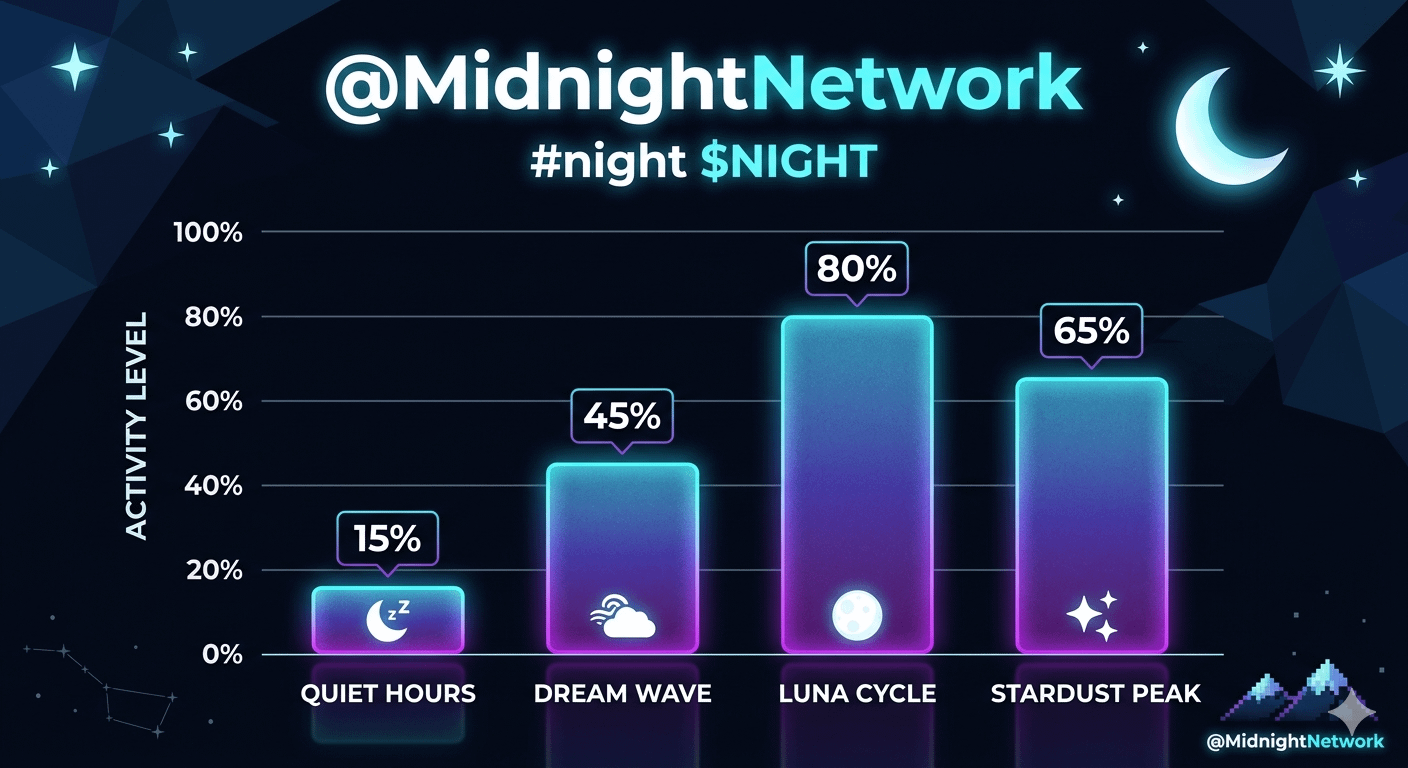
@MidnightNetwork #night $NIGHT
