
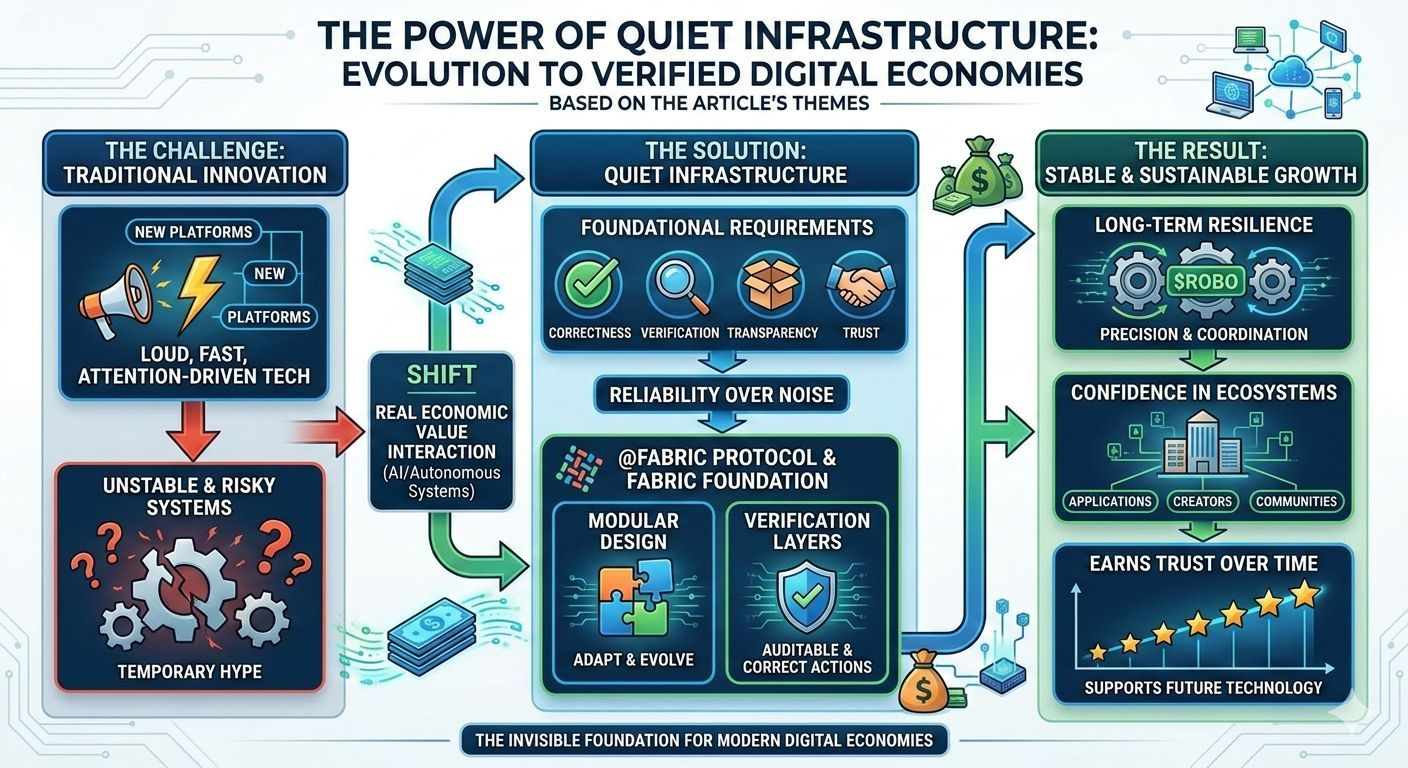
In observing the arc of technological evolution, one recurring pattern stands out: major shifts often begin not with flashy consumer products but through the development of underlying infrastructure. I have noticed this phenomenon across multiple sectors, from industrial automation to digital finance, and increasingly, in decentralized and blockchain-based systems. The [MIDNIGHT NETWORK/TECHNOLOGY:Modular Infrastructure/ TOKEN: NIGHT] exemplifies this principle, operating quietly yet deliberately to construct the frameworks that make large-scale coordination possible without compromising privacy or ownership.
The essence of Midnight Network lies in its modular approach to infrastructure. By leveraging zero-knowledge proof technology, the system offers participants the ability to interact, transact, or collaborate without revealing unnecessary data. This is not a novelty for its own sake. Rather, it reflects a broader trend in which industries are gradually integrating automation, digital networks, and decentralized frameworks into their operations. What I find interesting is how this shift is often perceived as futuristic, even though the foundations—machines talking to machines, networks validating actions, participants coordinating through secure protocols—are already present in many operational contexts today.
Historically, isolated technologies rarely transform industries on their own. A robotic arm, a blockchain ledger, or a cloud platform does not, by itself, restructure how an entire ecosystem functions. Real change emerges when these components are made interoperable—when identity systems, verification protocols, and coordination mechanisms converge to allow disparate participants to interact within a shared environment. Midnight Network appears to be contributing precisely to this convergence. Its architecture and technological framework are designed to allow modular components to connect, creating a space where data can be utilized securely, and participants can engage meaningfully without surrendering control of sensitive information.

Another layer of this system is the role of [TOKEN:ROBO]. While the token is not simply an instrument of speculation, it functions as a key economic and governance element within the network. It enables coordination among participants, incentivizes responsible participation, and provides a mechanism for decentralized decision-making. In effect, the token transforms abstract network interactions into structured, enforceable agreements, allowing complex systems to operate smoothly at scale. I see this as an important illustration of how economic instruments can be integrated into technological infrastructures to promote coordination rather than just value exchange.
What strikes me most about projects like Midnight Network is how incremental and distributed the process of technological maturation often is. Unlike consumer-facing innovations, infrastructural development is subtle, iterative, and highly modular. Yet, it is precisely this quiet, methodical progression that sets the stage for systemic transformation. As industries increasingly adopt digital coordination tools, zero-knowledge frameworks, and modular architectures, we can expect a gradual but profound shift in how trust, identity, and interaction are managed across sectors.
In conclusion, Midnight Network exemplifies a class of technologies that operate at the infrastructural layer—unseen by most, yet fundamental to the evolution of coordinated digital systems. By combining privacy-preserving proofs, modular design, and tokenized governance, it contributes to the slow but steady emergence of interoperable, scalable networks. For those of us watching the arc of technological change, this is a reminder that the systems shaping the future are often already in motion today, quietly aligning the components that will one day underpin entirely new modes of coordination and value creation.
@MidnightNetwork #night $NIGHT
