
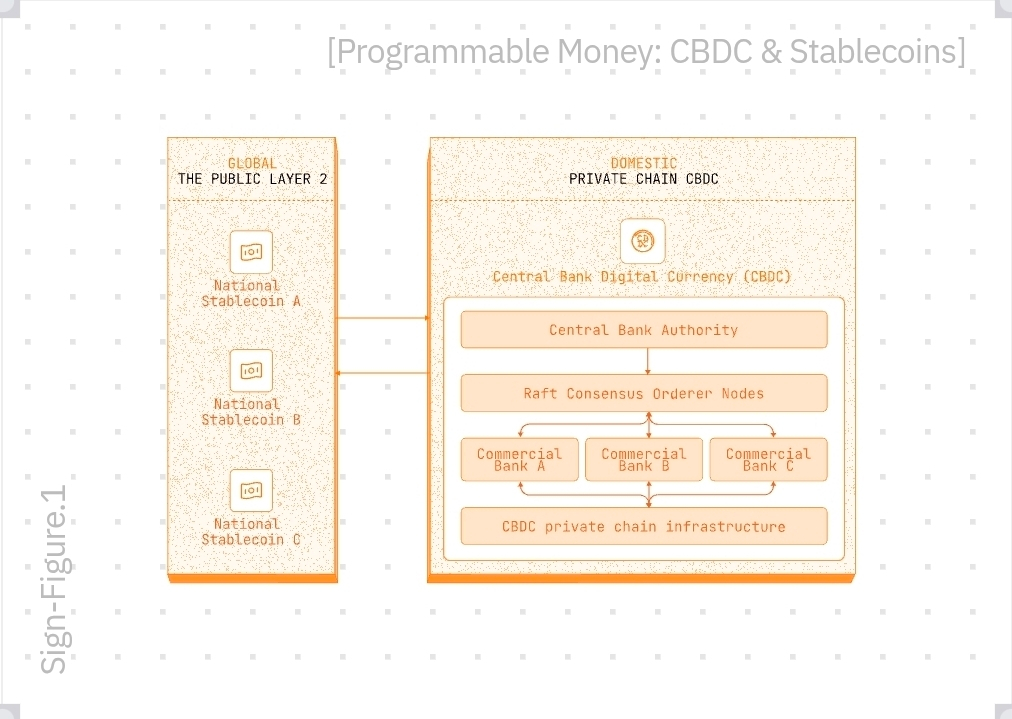
 One of the biggest questions in crypto today isn’t just which token will pump, it’s how digital money will actually move at scale. Payments, settlements, and compliance still need infrastructure that governments and institutions can trust. That’s where @SignOfficial Global and its $SIGN ecosystem caught my attention.
The project positions itself as a policy-grade settlement rail for CBDCs and stablecoins, something like a national payment highway but built with blockchain technology. Instead of focusing only on retail DeFi speculation, SIGN is tackling the institutional layer: how regulated digital currencies move between banks, governments, and financial institutions in real time.
From what I’ve explored so far, the architecture focuses on three critical components.
1️⃣ Policy-grade compliance controls
A major barrier for large institutions entering crypto is regulation. SIGN’s infrastructure integrates compliance, identity verification, and policy controls directly into the settlement layer. This means transactions can follow jurisdiction rules automatically instead of relying on manual oversight.
For governments experimenting with CBDCs (Central Bank Digital Currencies), this kind of programmable compliance is essential.
2️⃣ Real-time settlement infrastructure
Traditional banking rails like SWIFT often require multiple intermediaries and settlement delays. SIGN is aiming to reduce that friction by enabling near-instant settlement between digital assets, whether those are stablecoins or future CBDCs.
The idea is simple but powerful:
If digital currencies are going to coexist globally, they need a neutral and interoperable infrastructure layer.
3️⃣ Bridging traditional finance and Web3
Many crypto projects talk about institutional adoption, but few design their systems around financial-grade operational standards. SIGN seems to approach the problem from the opposite direction starting with institutional requirements and building blockchain infrastructure that fits those expectations.
This is particularly relevant as stablecoin volumes continue growing and regulators worldwide explore national digital currencies.
From my perspective, what makes SIGN interesting isn’t hype it’s the infrastructure narrative. Most crypto users focus on trading tokens, but the real long-term value may sit in the systems that move trillions in digital liquidity.
Another thing I noticed while exploring the ecosystem is the community experimentation happening around it. Projects like the Orange Dynasty social app connected to the SIGN ecosystem are testing new forms of on-chain identity and participation. It’s still early, but it shows the team is trying to build an ecosystem rather than just a token narrative.
Of course, infrastructure plays out over years, not weeks. Adoption depends on partnerships, regulatory alignment, and real financial integrations.
But if the future includes CBDCs, regulated stablecoins, and tokenized financial systems, the industry will need settlement rails designed for that scale.
And that’s exactly the problem SIGN Global appears to be targeting with $SIGN.
For me, it’s one of those projects worth watching not because of short-term price action, but because financial infrastructure built today could define how digital money moves tomorrow.