

📌I’ve been circling back to something that feels strangely under-discussed in crypto these days: how we actually get value into the right hands once someone has proven they belong.
It’s easy to get swept up in the big-picture stories — token launches, incentive seasons, who’s getting what slice of the pie. Those grab attention. But underneath all that noise sits this quiet, stubborn friction most projects just work around instead of fixing. You verify a user for one thing, and suddenly that proof evaporates the moment they step into the next opportunity. Same person, same wallet, same facts — yet every new program, every new chain, every new benefit pool treats them like a blank slate all over again. Fresh checks, fresh paperwork, fresh delays. It adds up fast, and the waste is invisible until you start counting the lost users, the duplicated effort, the opportunities that never quite land.
That’s the part that keeps pulling my focus toward Sign.
It isn’t chasing another headline-grabbing distribution model or promising some revolutionary airdrop mechanic. Instead, it’s putting together something more foundational — rails that let a verified claim actually travel. A ZK-backed attestation issued once can be recognized, read, and acted on across different environments without forcing everyone to rebuild the trust layer from the ground up. The result is distribution that feels programmable: eligibility for a reward, access to a program, even real-world benefits routed to the right wallets with cryptographic certainty. No endless resets. No repeated verifications eating away at the experience.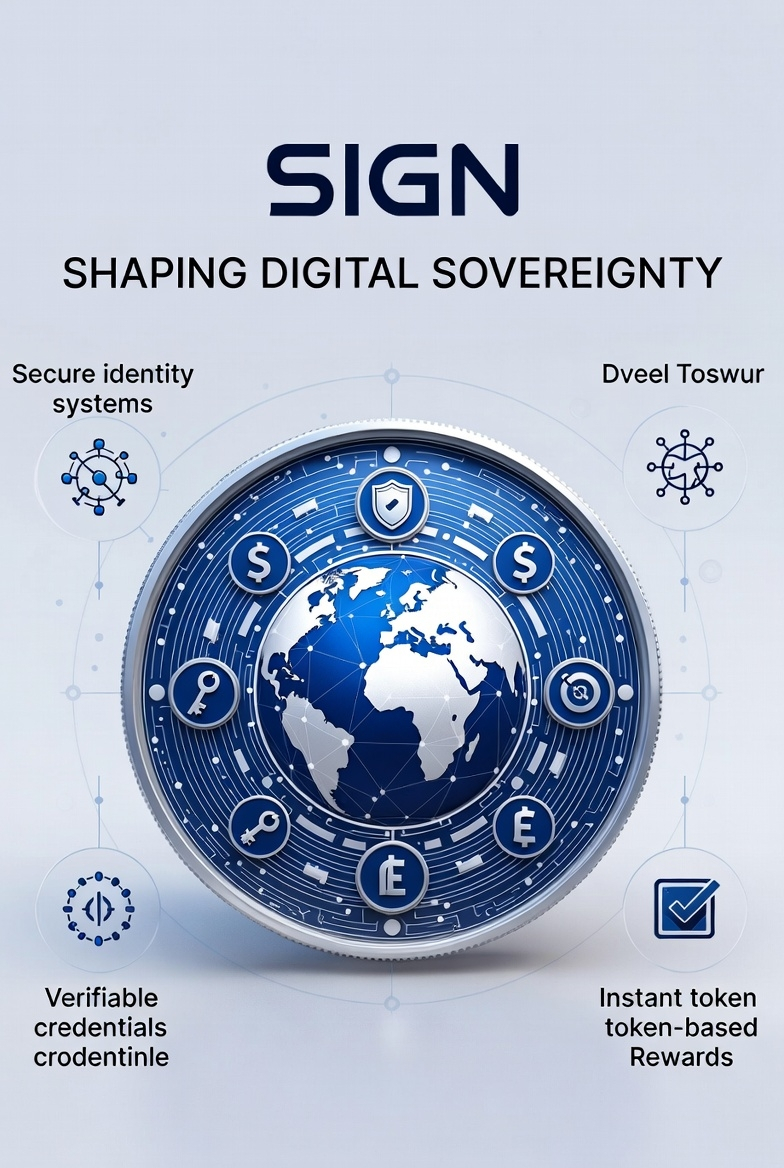
What stands out to me is how cleanly it turns a simple proof into something that carries real, verifiable value. Think about it — a sovereign pilot distributing CBDC inclusion, a protocol allocating incentives to proven contributors, or a cross-chain program opening doors only to wallets that have already met the criteria elsewhere. The claim moves with the user. The system doesn’t have to start over. It’s not flashy infrastructure, but it’s the kind that stops value from leaking out at every boundary
Of course, none of this works in isolation. The rails still need ecosystems to actually adopt them, developers to trust the standard enough to integrate, and markets to eventually notice that efficient allocation beats another round of hype-driven incentives. Right now that adoption curve is still early, and plenty of strong ideas have stalled exactly here before.
Still, the more time I spend looking at how fragmented distribution feels today, the more I appreciate what Sign is attempting. It’s not trying to reinvent incentives from scratch. It’s trying to make the ones we already have actually reach the people who earned them, across borders, across chains, across use cases.
I’m not convinced this is an overnight win. Infrastructure rarely is. But it does feel like the sort of quiet structural improvement that compounds once the spotlight finally shifts from narratives to what actually holds everything together.
@SignOfficial #SignDigitalSovereignInfra $SIGN
