

Sign Protocol is one of those projects I’ve been quietly circling back to, not because it’s everywhere, but because it isn’t. It doesn’t push itself into the center of the conversation, and maybe that’s part of why it lingers in my mind longer than louder things do. I’ve been watching it in the background, trying to understand what it becomes when you strip away the usual framing and just let it exist as a system.
At a distance, it looks straightforward—something about attestations, about recording claims in a way that others can verify. But the longer I sit with it, the less straightforward it feels. Not because the mechanics are complicated, but because the idea it’s trying to work with—trust—isn’t something that behaves cleanly once people are involved.
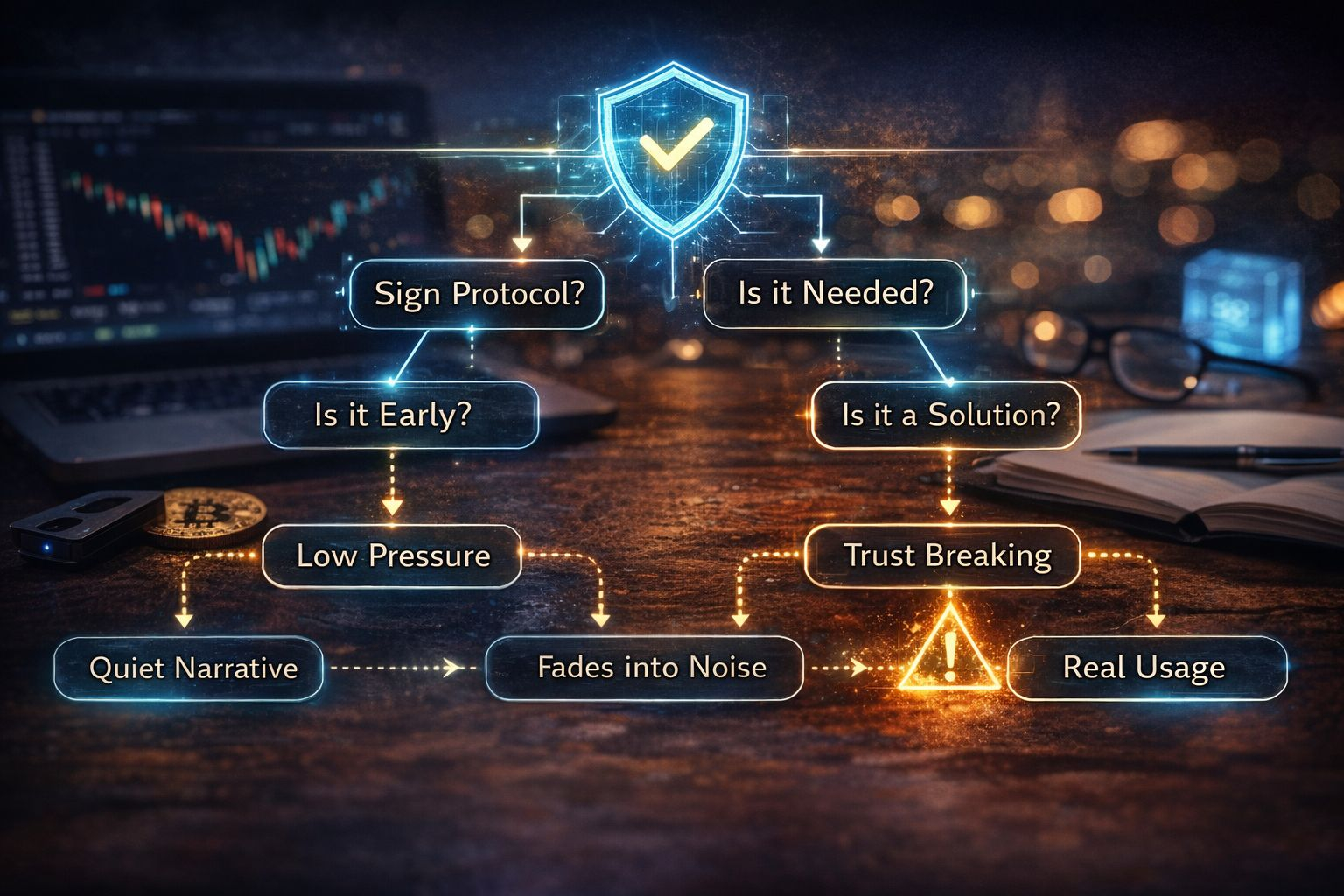
I think that’s what keeps pulling me back. Not what the protocol does, but what happens if people actually start using it in ways that matter.
Crypto has a habit of building tools ahead of need. We create structures that make sense in theory, then wait for reality to catch up. Sometimes it does. Sometimes it doesn’t. With Sign Protocol, I can’t quite tell yet which direction it’s leaning. It feels like it’s positioned for a moment that hasn’t fully arrived.
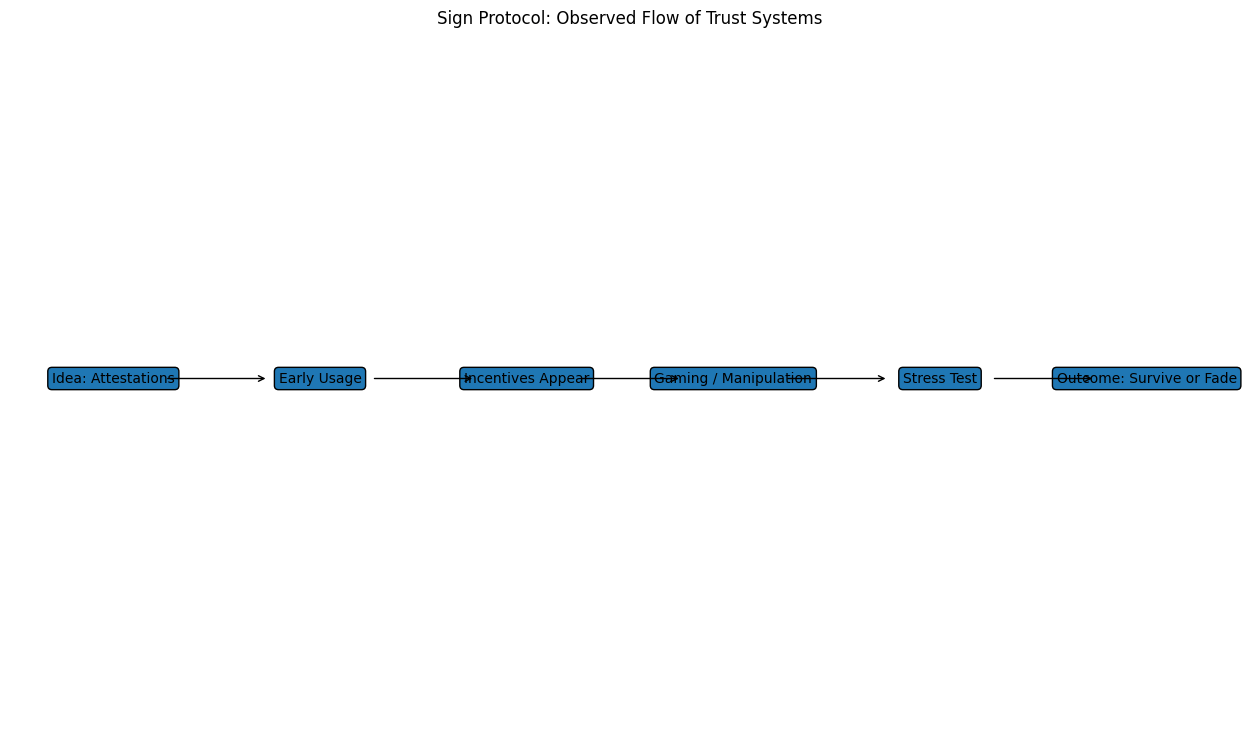
Because right now, most of crypto still runs on a kind of informal trust. Wallet histories, social signals, reputation by association—it’s messy, inconsistent, but it works just enough that no one feels an urgent need to replace it. And systems like this don’t really take hold until something breaks. Until the existing way of doing things becomes too unreliable, too easy to manipulate, too costly to ignore.
That’s when I start to wonder if this is a solution waiting for a problem, or a solution waiting for a failure.
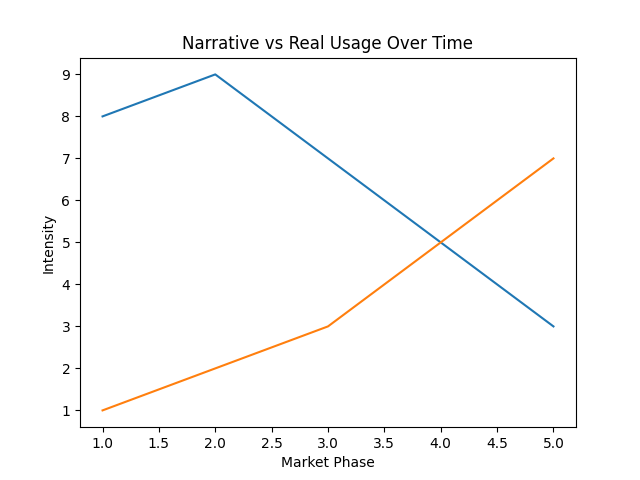
Because once attestations actually carry weight—real weight, not just symbolic value—they stop being neutral. They become something people will try to shape in their favor. If a credential opens a door, someone will try to replicate it. If a reputation score influences access, someone will try to inflate it. It doesn’t happen all at once. It starts subtly, almost invisibly, and then it compounds.
I’ve seen that pattern repeat enough times to be cautious.
What makes this more complicated is that trust doesn’t translate easily. It’s not something you can define once and expect it to hold everywhere. A credential that matters in one context might mean nothing in another. A signal that’s reliable today might lose meaning as soon as people figure out how to game it. So any system trying to formalize trust is also, in a way, trying to stabilize something that naturally resists being fixed.
And I’m not sure how well that holds up over time.
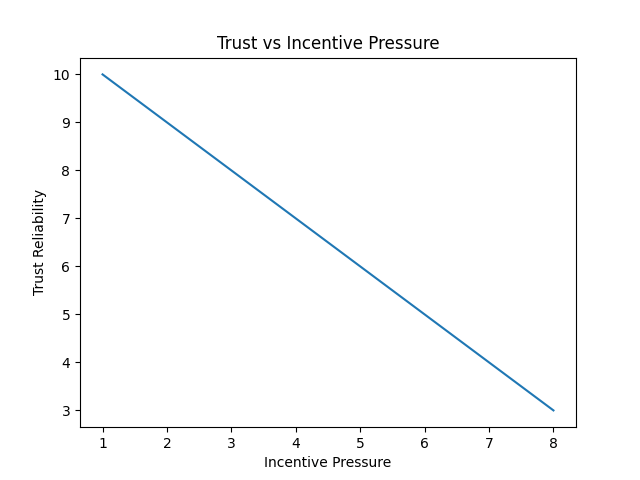
At the same time, there is a kind of quiet logic to it. If crypto keeps growing, if more coordination happens between people who don’t know each other, then the cracks in informal trust models will become harder to ignore. At some point, people may want something more structured, something that doesn’t rely entirely on interpretation and guesswork.
That’s the scenario where something like this starts to make sense—not as an abstract idea, but as a response to pressure.
Still, I haven’t seen that pressure fully materialize yet. Not in a way that forces adoption. And without that, it’s hard to tell whether this becomes foundational or just another layer that exists without ever becoming necessary.
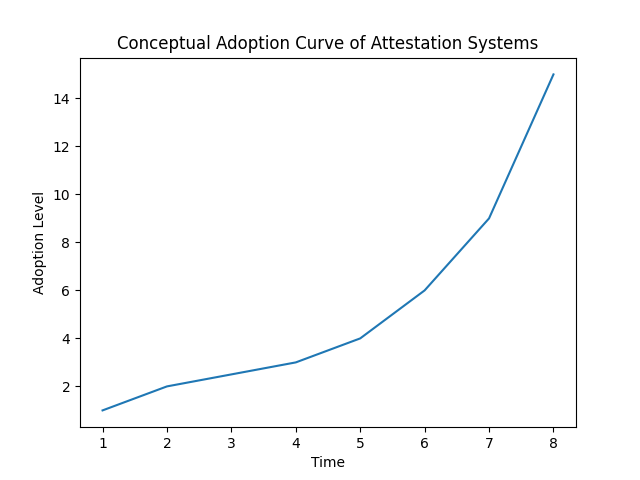
I also pay attention to how things behave when no one is paying attention. When incentives are low, when there’s nothing obvious to gain—that’s usually when you see the natural shape of a system. And right now, it still feels early. Not in a hype-driven sense, but in a behavioral one. The patterns aren’t fully formed yet.
Maybe that’s why I’m not rushing to a conclusion.
There’s a tendency in crypto to decide too quickly—to label something as inevitable or irrelevant before it’s had a chance to be tested. I’ve learned to be a bit more patient than that. Systems like this don’t reveal themselves through announcements or documentation. They reveal themselves through use, through stress, through the small ways people interact with them over time.
So I keep watching.
Not because I’m convinced it will matter, but because I’m not convinced it won’t. And that space in between—where something could quietly become important or just as easily fade into the background—is usually where the more interesting stories are.
For now, Sign Protocol feels like it’s still in that space. Not proven, not dismissed. Just there, waiting to see if the world around it gives it a reason to exist beyond its own design.