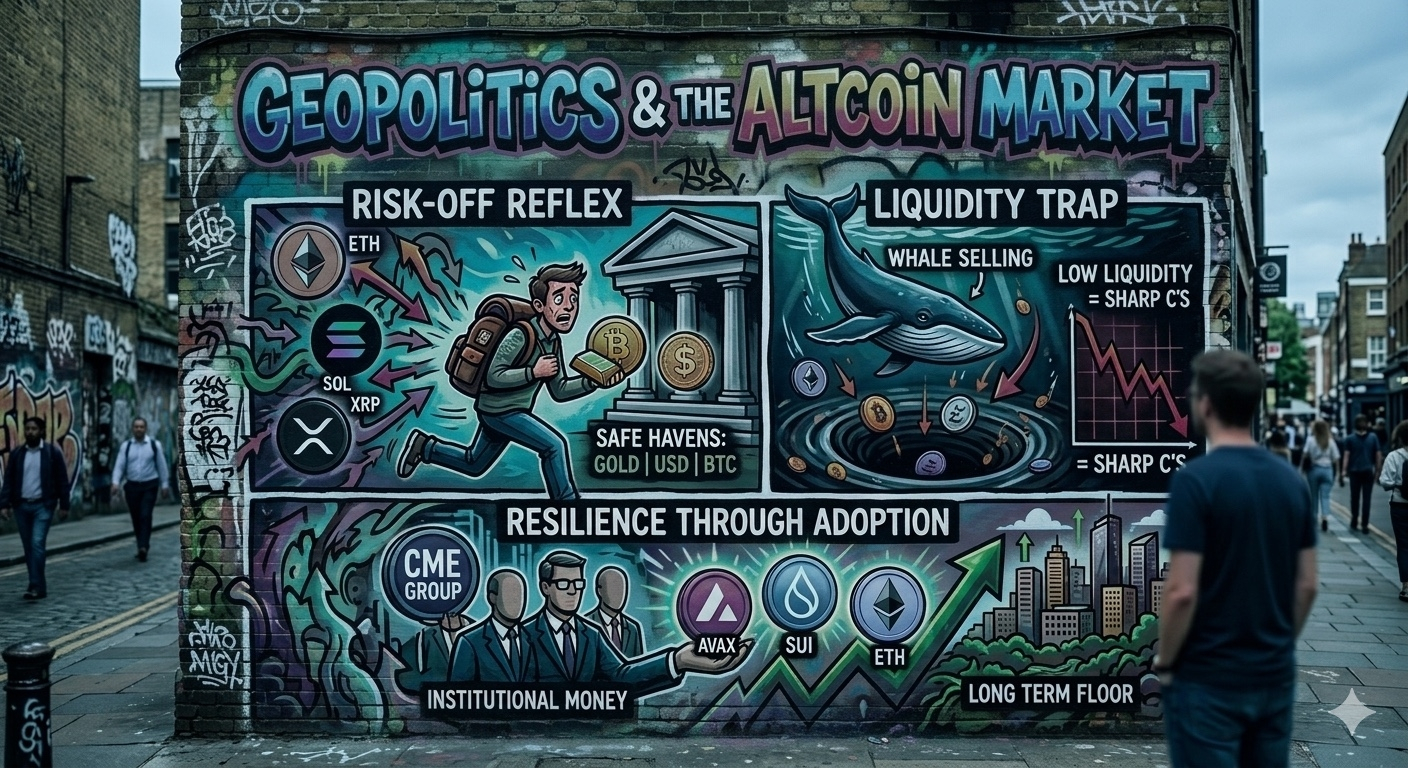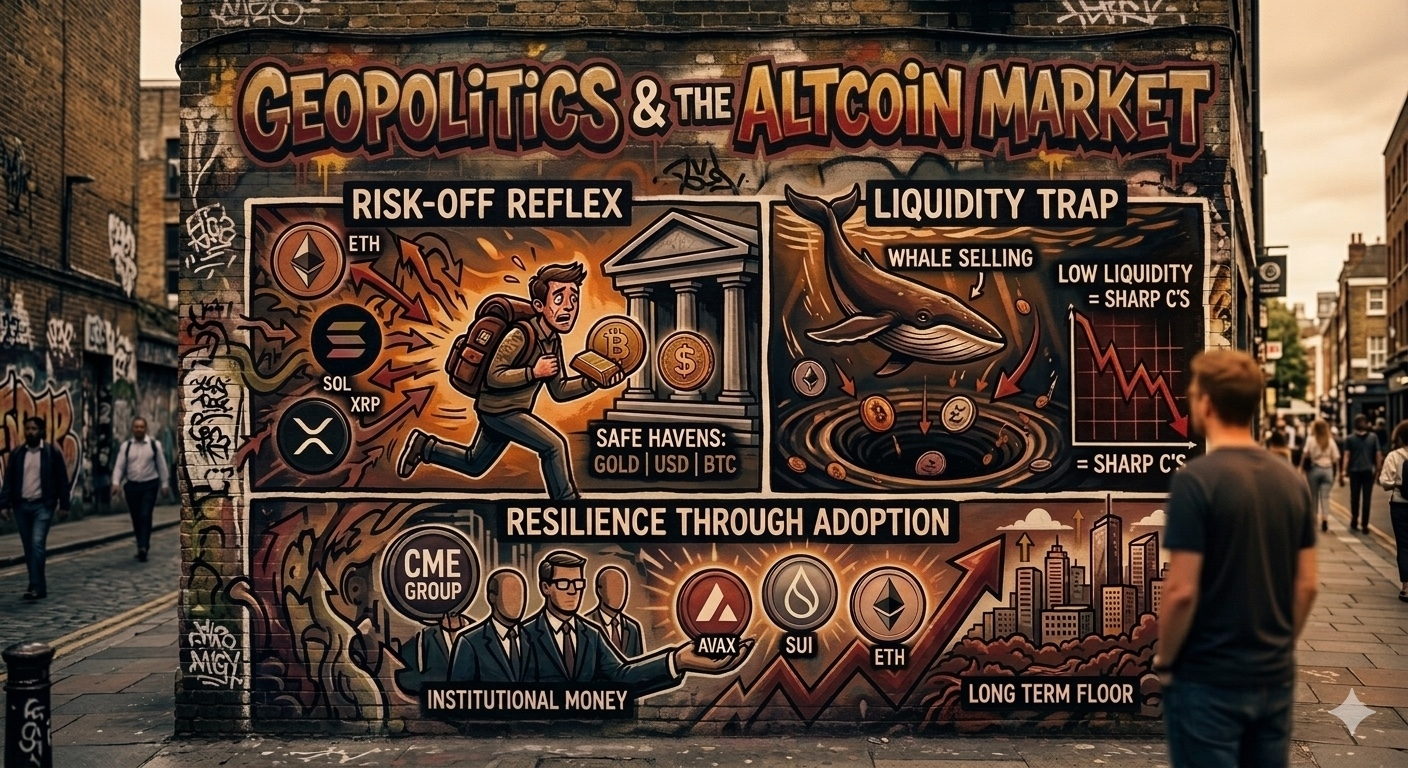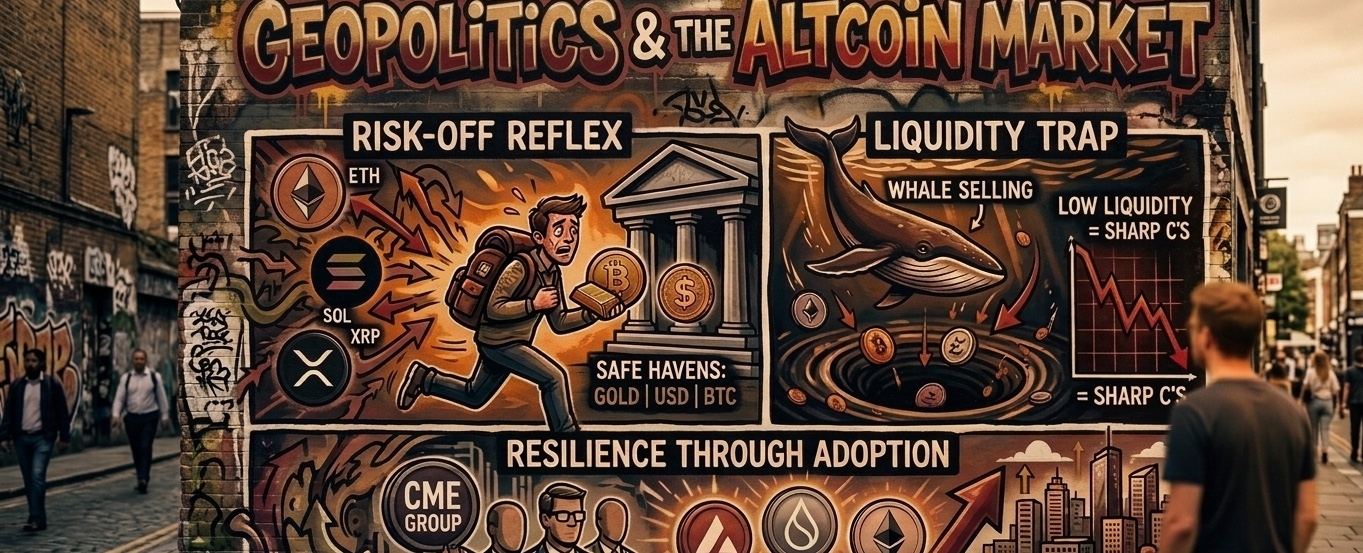
The crypto market is currently navigating a "perfect storm" of geopolitical tension and institutional shifts. While Bitcoin often acts as the "digital gold" during crises, Altcoins(Alternative Coins like Ethereum, Solana, and XRP) typically face a different, more volatile reality.
1. The "Risk-Off" Reflex
In financial terms, Altcoins are classified as High-Risk Assets. When global tensions escalate—such as the current 48-hour ultimatum involving the U.S. and Iran—investors trigger a "Risk-Off" response. They move their capital out of volatile assets like Solana or Meme coins and into "Safe Havens" like physical gold, the U.S. Dollar, or, to a lesser extent, Bitcoin. This explains why Altcoins often drop by 5-10% when Bitcoin only drops by 2%.
2. The Liquidity Trap
Altcoins generally have lower "liquidity" than Bitcoin. This means that even a relatively small sell-off by a few "whales" (large investors) can cause a massive price crash. In the last 24 hours, as news broke regarding potential military escalations, the lack of immediate buyers in the Altcoin market led to sharper price dips across the board.
3. Resilience Through Regulation
Despite the current dip, there is a silver lining. Today’s news from the CME Group regarding the launch of regulated futures for Avalanche (AVAX) and Sui (SUI) shows that the "Big Money" (institutional investors) is still betting on the long-term tech. While politics causes short-term pain, institutional adoption provides the long-term floor.
The Bottom Line
The current drop in Altcoins isn't a failure of their technology; it is a reaction to global uncertainty. Historically, these "panic dips" often stabilize the moment a diplomatic solution is hinted at. For now, the Altcoin market is holding its breath, waiting to see if the next headline brings a "handshake" or a "hardline."
#altcoins $BNB $ETH $SOL #ALPHA