
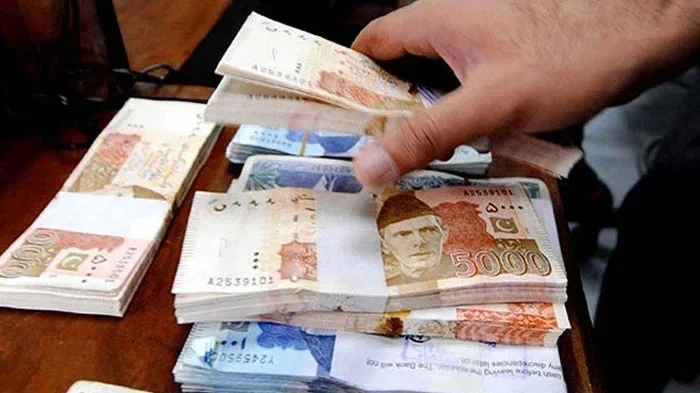
The Prime Minister’s Office has directed authorities to accelerate efforts to finalise currency swap agreements with the European Union, Russia and Iran as part of a broader plan to reduce reliance on the US dollar and strengthen regional trade links, The Express Tribune reported.
The proposed arrangements are expected to follow the model of the Pakistan-China currency swap, under which Islamabad has accessed a $4.5 billion facility.
Officials said similar agreements with Russia and Iran could facilitate trade and ease pressure on foreign exchange reserves. They said the initiative has been included in the Ministry of Finance’s strategic reform agenda, with the PM’s Delivery Unit assigned to monitor progress. The government has also sought updates on negotiations involving ASEAN countries, with the aim of expanding trade settlement options.
The move comes as Pakistan manages external financing pressures, including repayments of $4.8 billion this month. The government has already cleared a $1.3 billion Eurobond, with authorities reiterating commitment to meeting external obligations on schedule.
Separately, the Prime Minister’s Office has tasked the finance ministry, in consultation with the State Bank, to prepare a plan to reduce the policy rate below 10%, while ensuring stability in currency markets. Authorities have also been asked to strengthen oversight to curb exchange rate manipulation, hoarding and smuggling of foreign currency.
The government is also working to expand the use of alternative payment systems, including the Asian Clearing Union, and has been directed to launch awareness campaigns for businesses on settlement mechanisms using local currencies and RMB-based trade with China.
In parallel, Pakistan has committed to the International Monetary Fund (IMF) to ease currency controls, including removing targets for commercial banks to surrender dollars to the central bank and relaxing restrictions on outward foreign currency movement, subject to adequate reserves.
The reform framework also includes targets to manage public debt and improve macroeconomic indicators. The government aims to reduce the debt-to-GDP ratio to 61.5% by 2028, lower external debt to 17.9% of GDP and bring interest payments down to 4.9% of GDP.
Officials said efforts are also under way to keep the current account deficit below $3 billion and move towards a surplus, while maintaining GDP growth in the range of 4–5% in the near term and raising it to 6–8% by 2029, with the goal of expanding the economy to $500 billion.