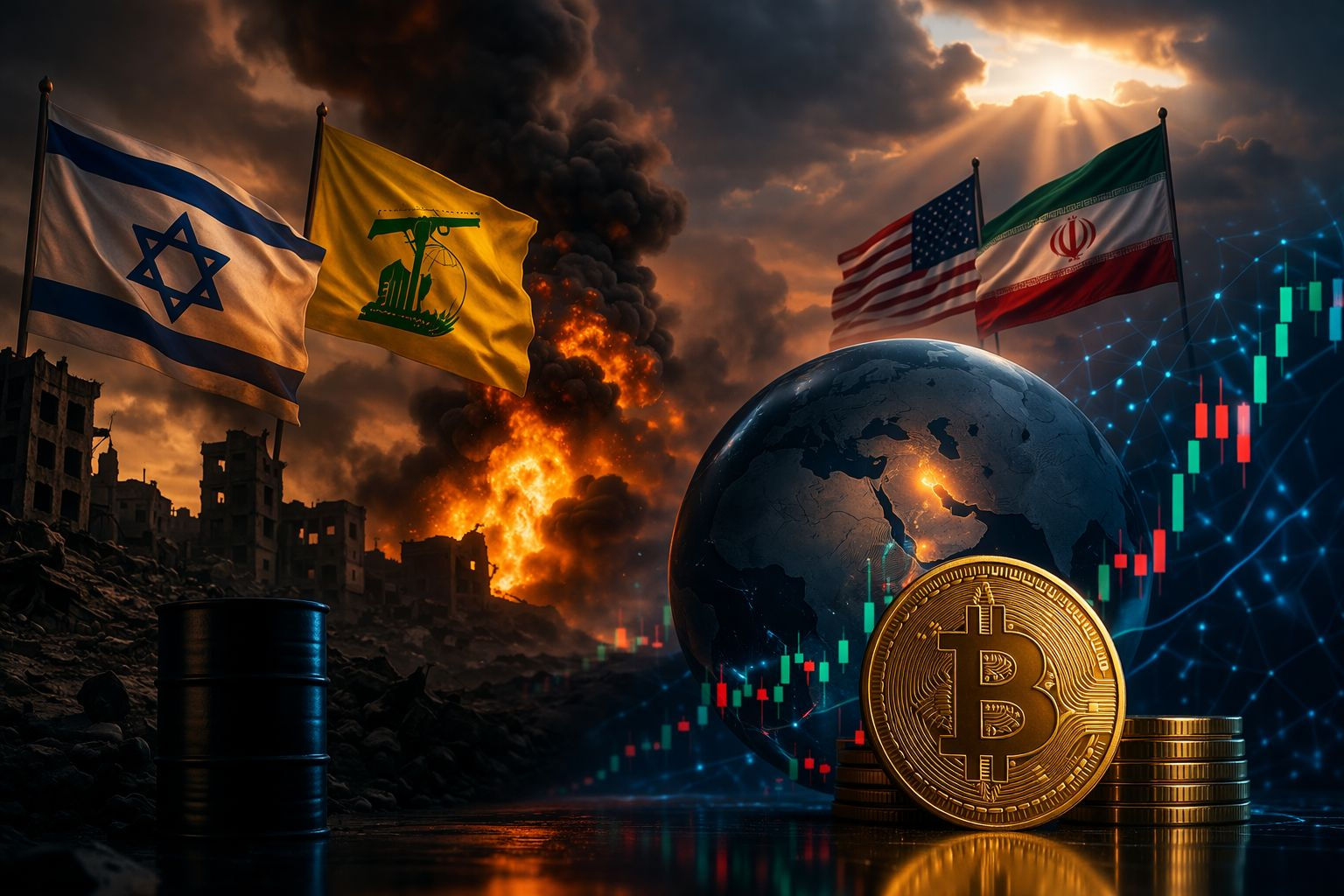
In an environment where macro uncertainty increasingly drives digital asset flows, geopolitical tensions are once again becoming a key variable for investors. Recent data from prediction markets suggests that traders are bracing for prolonged instability in the Middle East—an outlook that could ripple across traditional and crypto markets alike.
What Prediction Markets Are Signaling
Platforms like Polymarket offer a unique lens into collective market expectations. Unlike traditional polling or analyst forecasts, prediction markets aggregate real-money bets, turning sentiment into quantifiable probabilities.
This makes them particularly valuable for:
Tracking real-time geopolitical expectations
Gauging market confidence in diplomatic outcomes
Identifying divergences between official narratives and trader sentiment
In short, prediction markets don’t just reflect opinions—they reflect conviction.
Current Outlook: Conflict Likely to Persist
Recent trading activity on Polymarket highlights a cautious—and arguably skeptical—stance among participants regarding developments in the Middle East.
Key takeaways:
Traders largely believe the Israel–Hezbollah conflict is unlikely to resolve in the near term
Diplomatic signals have not meaningfully shifted expectations for de-escalation
The conflict is being priced as structurally persistent rather than event-driven
This suggests that, despite headlines around negotiations or temporary pauses, market participants see deeper, unresolved tensions driving the conflict.
Ceasefire Dynamics: Limited Spillover Effect
A temporary two-week ceasefire between the U.S. and Iran has introduced a short-term stabilizing factor—but its perceived impact appears contained.
Prediction market probabilities show:
55% likelihood the ceasefire holds through the end of April
Rising to ~70% probability by the end of June
However, traders do not appear to believe this will materially influence the Israel–Hezbollah front. In other words:
The ceasefire is seen as localized and tactical, not systemic
Broader regional tensions remain decoupled from bilateral agreements
This distinction is critical for investors, as it reinforces the idea that geopolitical risk remains embedded rather than transient.
Implications for Crypto and Macro Markets
Geopolitical instability rarely stays confined—it transmits through multiple financial channels, many of which directly affect crypto markets.
1. Volatility as a Feature, Not a Bug
Heightened geopolitical risk tends to:
Increase cross-asset volatility
Trigger rapid risk-on/risk-off rotations
Crypto, as a high-beta asset class, often amplifies these moves.
2. Safe-Haven Narratives Strengthen
Periods of geopolitical stress often revive the “digital gold” narrative:
Bitcoin may benefit from capital seeking alternatives to fiat exposure
However, this effect is inconsistent and context-dependent, especially when USD strength dominates
3. Energy Markets as a Transmission Channel
Middle East instability directly impacts oil markets:
Rising oil prices can fuel inflation expectations
This, in turn, influences central bank policy paths
For crypto, that means:
Tighter liquidity conditions if inflation persists
Pressure on risk assets if rates stay higher for longer
4. Macro Uncertainty = Liquidity Sensitivity
Crypto markets remain highly sensitive to global liquidity conditions:
Prolonged geopolitical risk can delay easing cycles
Investors may reduce exposure to speculative assets during uncertainty
Reading Between the Lines: What Traders Really Believe
The most important insight from prediction markets is not just the numbers—it’s the narrative they imply:
Short-term stability does not equal long-term resolution
Diplomatic gestures are not yet trusted by markets
Structural geopolitical risk is being repriced higher
This suggests that traders are positioning for a world where instability is persistent, not episodic.
Conclusion: A Market Defined by Uncertainty
For crypto investors, the takeaway is clear: geopolitical developments are no longer background noise—they are an active input into market structure.
Prediction market data indicates that:
Temporary ceasefires may provide relief, but not resolution
Conflict risk remains elevated and prolonged
Macro uncertainty will likely continue shaping liquidity, volatility, and narrative flows
Forward-looking, investors should monitor:
Changes in prediction market probabilities
Energy price trends
Central bank responses to inflation pressures tied to geopolitics
In a market increasingly driven by global macro forces, understanding sentiment signals—especially from platforms like Polymarket—may offer a critical edge.
The next phase of crypto market evolution won’t just be about technology or adoption—it will also be about how well investors navigate a world where geopolitics and digital assets are more interconnected than ever.
#CryptoMarkets #bitcoin #Geopolitics #Polymarket #MacroTrends #CryptoNews #MiddleEast #MarketSentimentToday