

I remember the first time I saw @Pixels spike in daily activity. It didn’t feel like a slow build. It felt like something quietly clicked underneath the surface, and suddenly the numbers made people pay attention.
At one point, Pixels crossed over 1 million daily active users. That number matters, but not because it’s big. It matters because most Web3 games struggle to sustain even 10,000 daily users without heavy token incentives. When you see a 100x difference, it forces a different question. Not “how did they market this” but “what did they structure differently.”
On the surface, Pixels looks simple. A farming loop, resource gathering, social play. It’s familiar on purpose. That familiarity lowers the barrier to entry, especially for users who don’t care about wallets or tokens. But underneath, the system is doing something more deliberate. It ties progression to both time and ownership, but in a way that doesn’t immediately extract value from the player. That’s a subtle shift from early play-to-earn models, where the system often pulled value out faster than it created it.
Once you stop seeing Pixels as just a farming game and start seeing it as a growth system, the structure underneath begins to feel much more intentional.
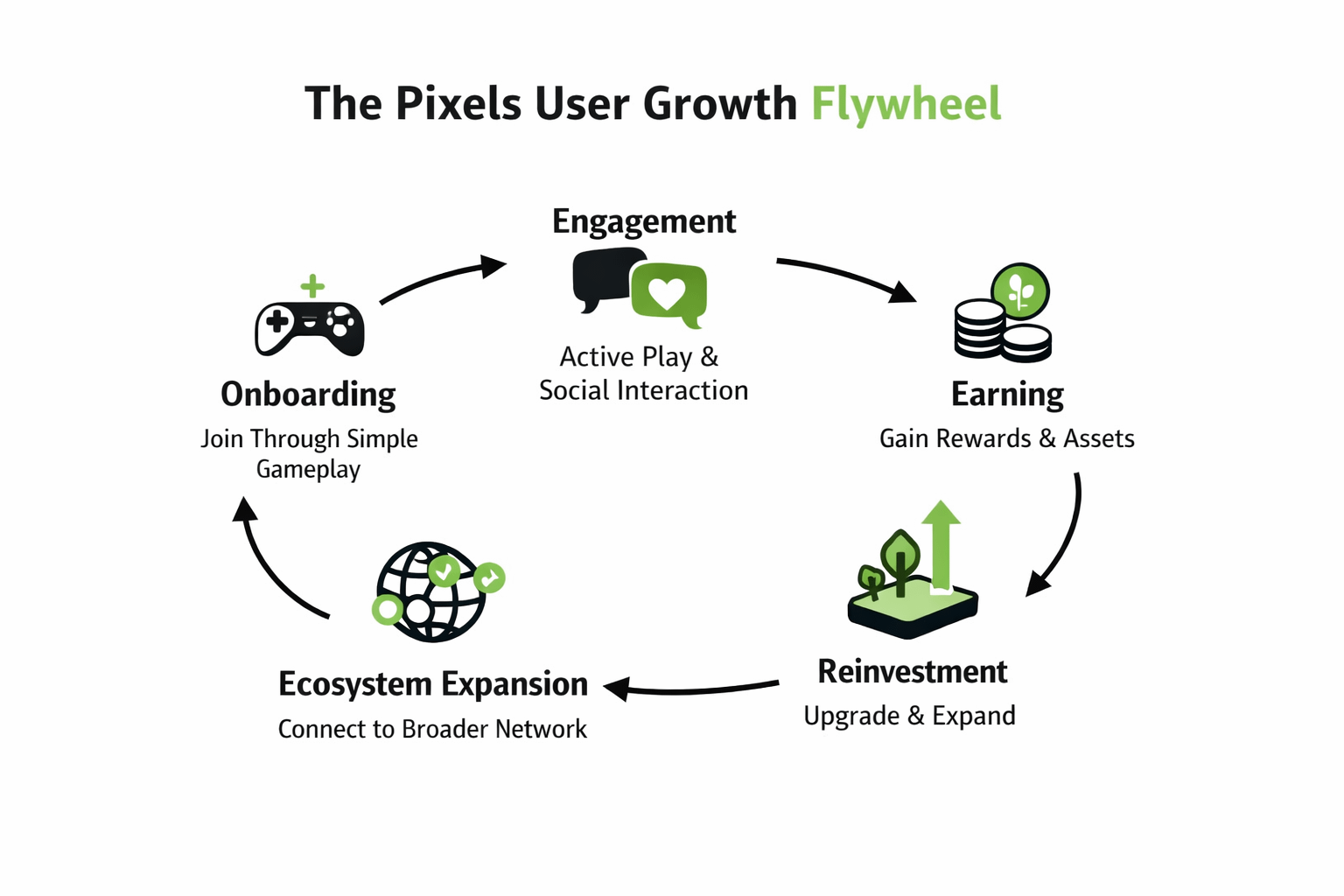
Understanding that helps explain why their retention didn’t collapse after the initial surge. Early data showed retention rates stabilizing around 30 to 40 percent after the first week, which is unusually high for blockchain games. In Web2 terms, that’s closer to mid-tier mobile games that rely on habit loops rather than financial incentives. It suggests players were staying for the game itself, not just the token emissions, But that momentum creates another effect. When you’re onboarding hundreds of thousands of users, the economy underneath starts to matter more than the gameplay loop.
The early play-to-earn model struggled not because the idea was wrong, but because the incentives were pulling in the opposite direction of retention.
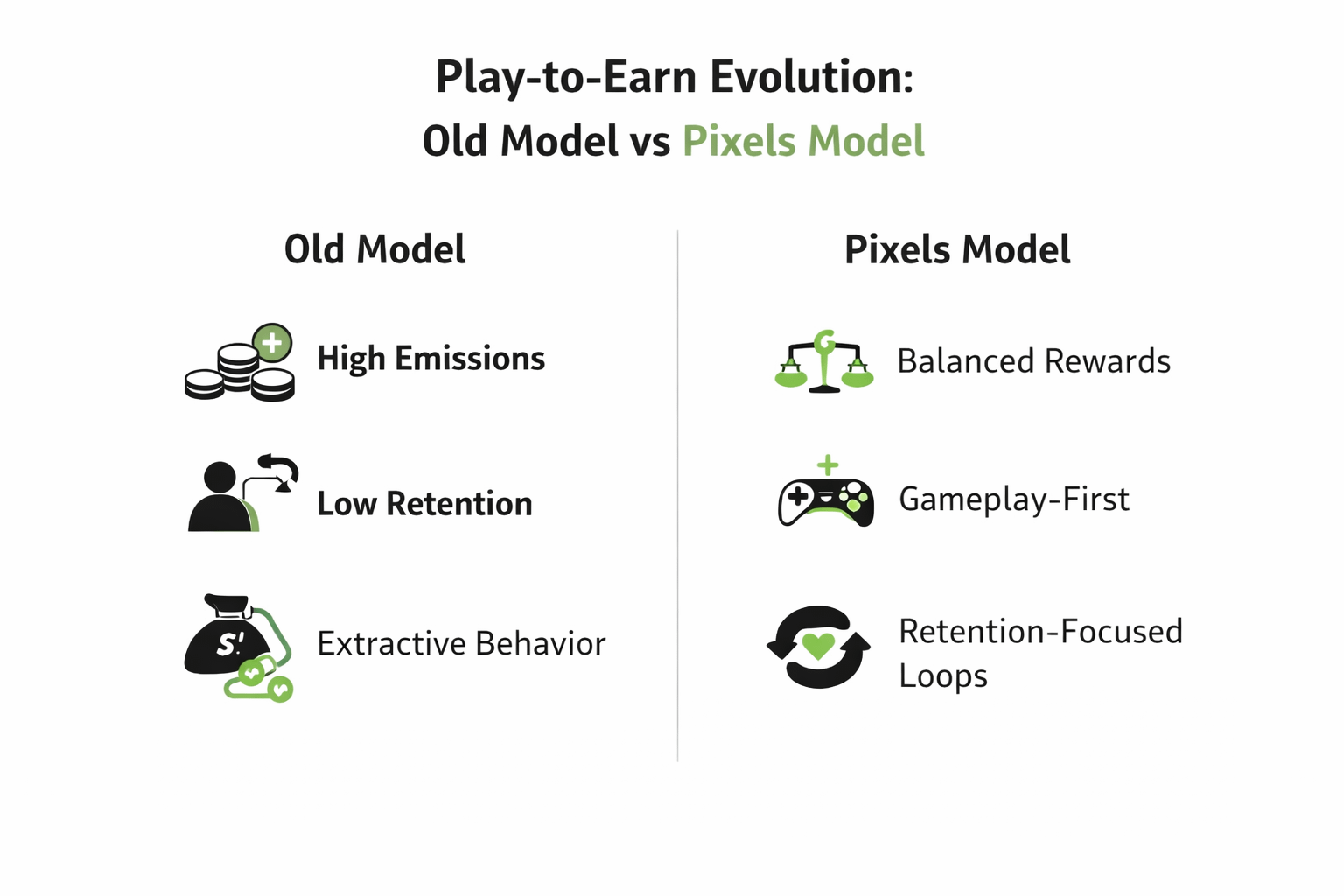
Pixels had to rebalance emissions multiple times because token output was outpacing demand. At one stage, the in-game token supply expanded faster than new sinks were introduced, which led to price pressure. You could see it in the charts. Engagement stayed relatively steady, but earnings per player declined.
That’s where the bigger ambition starts to show. Pixels isn’t trying to perfect a single in-game economy. It’s testing a user acquisition model. The idea is that gameplay brings users in, ownership keeps them around, and a broader ecosystem eventually absorbs that liquidity. In practice, that means Pixels becomes less of a destination and more of a funnel.
Right now, that funnel is starting to connect outward. Integration with other ecosystems, shared identity layers, and cross-game incentives are beginning to take shape. If you look at the broader market, there’s a shift happening where user growth is no longer driven by speculation alone. Even in 2025 and into 2026, projects that rely purely on token hype tend to spike and fade within weeks. Pixels, despite its volatility, has managed to hold a base of hundreds of thousands of users through multiple reward adjustments.
When you trace how value actually moves through the system, you start to see where pressure builds between emissions, player activity, and market demand.
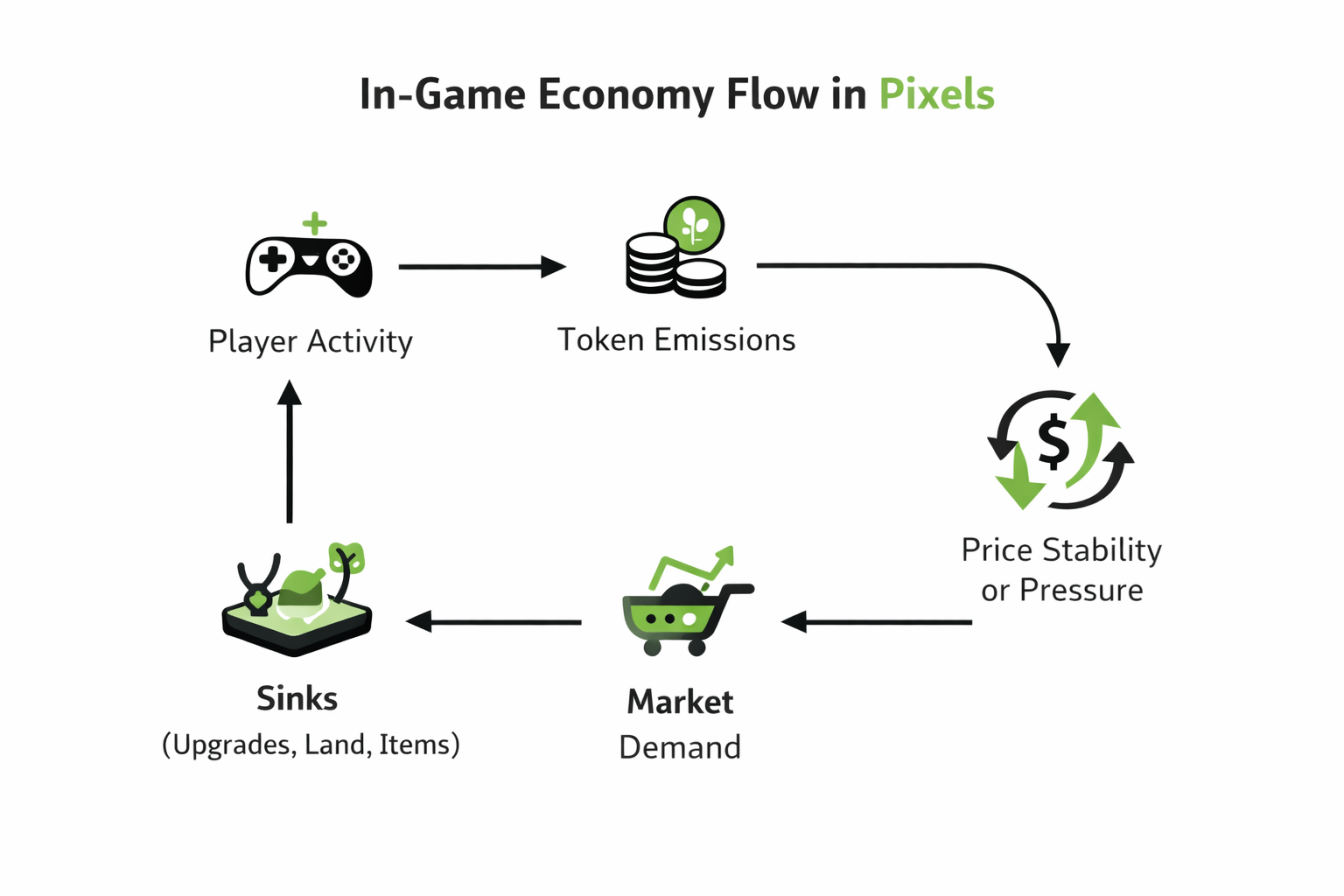
Still, the risks are real. If rewards shrink too much, users who came for earnings may leave. If rewards stay too high, the economy strains again. And there’s a deeper question that remains unresolved. Can gameplay and financialization coexist without one eventually undermining the other?
What struck me is that Pixels is not solving that tension directly. It’s stretching it. It’s seeing how far you can push a system where fun and earning overlap without collapsing into either pure gaming or pure extraction.
Meanwhile, the rest of the industry is watching. You can see similar mechanics being tested in newer titles, especially in how they handle onboarding and early progression. Fewer upfront costs. More gradual exposure to ownership. A softer introduction to earning.
If this holds, the real takeaway isn’t that Pixels built a successful farming game. It’s that they reframed user acquisition as something you can subsidize early, stabilize over time, and then redirect into a broader network.
And that leads to a quieter realization. The future of Web3 gaming may not be about building the biggest game. It may be about building the most effective on-ramp, and letting everything else happen after that.
